



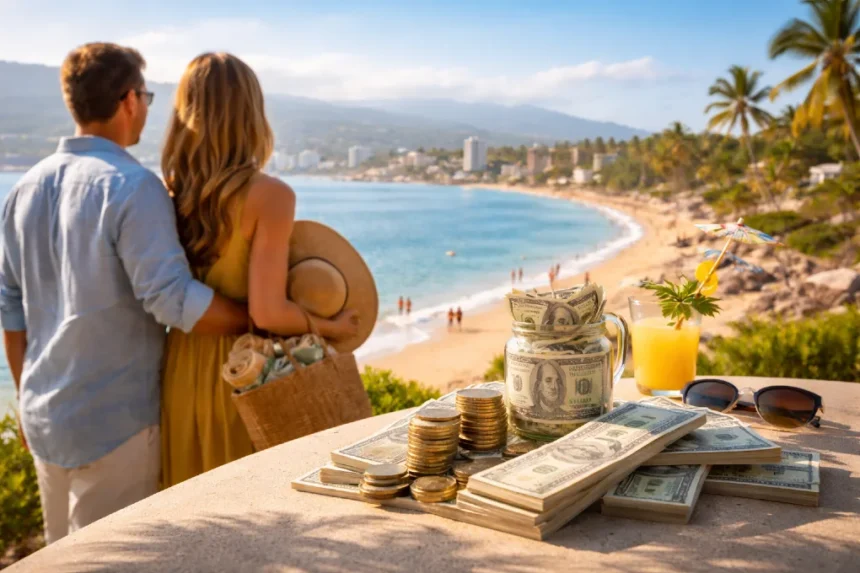
Beach destinations rise and fall with traveler confidence, airline access, hotel demand, and how much visitors are willing to spend once they arrive. Right now, Puerto Vallarta Tourist Spending is moving in the right direction on all of those fronts. The city has remained one of Mexico’s most resilient coastal destinations, drawing strong visitor numbers, healthy hotel occupancy, and steady demand across restaurants, tours, nightlife, shopping, and cruise activity. In simple terms, more people are coming, and they are continuing to put money into the local tourism economy.
- Why Puerto Vallarta Tourist Spending Is Rising
- What the Latest Data Says About Spending Momentum
- Where Tourists Are Spending More Money in Puerto Vallarta
- Why Beach Travel Keeps Fueling Higher Spend
- A Real-World Example of How Spending Builds
- What This Means for Travelers
- What This Means for Local Businesses
- Common Questions About Puerto Vallarta Tourist Spending
- The Bigger Picture
- Conclusion
That matters for more than just travel headlines. When Puerto Vallarta Tourist Spending climbs, it shapes airfare pricing, hotel development, local employment, restaurant growth, beach club demand, transportation services, and even the visitor experience itself. Travelers feel it in room rates and restaurant tabs. Local businesses feel it in higher demand and longer busy seasons. Investors and tourism officials see it as a signal that Puerto Vallarta is not just popular, but economically durable.
The numbers behind that momentum are hard to ignore. Jalisco reported that in 2024 the state received more than 33.2 million visitors and generated more than 76.5 billion pesos in tourism revenue, while Puerto Vallarta alone surpassed 6 million visitors. On the municipal side, official local documents cite tourism economic activity in Puerto Vallarta at 41.322 billion pesos in 2023, which helps show the scale of spending flowing through the destination even before the latest travel surge.
Why Puerto Vallarta Tourist Spending Is Rising
There is no single reason for the current surge. Puerto Vallarta Tourist Spending is rising because several travel trends are stacking up at the same time.
First, beach travel has remained highly attractive even as travelers become more selective with budgets. Many people are still prioritizing warm-weather trips, shorter-haul international vacations, and destinations that combine beaches, dining, nightlife, and walkable experiences in one trip. Puerto Vallarta fits that profile unusually well. It offers a resort market, an established hotel zone, luxury villas, an active cruise port, a major airport, and a city core that still feels more personal than some larger beach destinations. That mix tends to increase spending because visitors are not limited to one all-inclusive property or one type of travel product.
Second, accessibility has strengthened the destination’s spending power. The Puerto Vallarta airport continues to serve as a major gateway for both domestic and international travelers, and Grupo Aeroportuario del Pacífico reported ongoing passenger traffic growth at Puerto Vallarta in 2025, including stronger domestic momentum in several monthly updates. More arriving passengers generally translates into more room nights, restaurant checks, tour bookings, rides, and retail purchases.
Third, occupancy remains a strong signal. Puerto Vallarta has repeatedly ranked among the top beach destinations in Mexico for hotel occupancy during important holiday windows. Jalisco reported the city as number one nationally in hotel occupancy during recent holiday periods, including strong Easter and long-weekend performance. Strong occupancy does not just mean hotels are full. It often means people are traveling during higher-rate periods, staying in premium inventory, and spending more once they are in-market.
What the Latest Data Says About Spending Momentum
Any serious discussion of Puerto Vallarta Tourist Spending has to start with credible indicators rather than guesswork.
Here are the most useful signals currently available:
| Indicator | Latest useful benchmark | What it suggests |
|---|---|---|
| Puerto Vallarta visitors | More than 6 million in 2024 | Large and still-growing visitor base |
| Tourism economic activity | 41.322 billion pesos in 2023 | Spending scale was already significant before the latest boom |
| Easter and spring holiday performance | Jalisco reported 4.618 billion pesos statewide during Semana Santa and Pascua, with Puerto Vallarta leading hotel occupancy nationally | Puerto Vallarta remains one of the state’s strongest spending engines during peak travel windows |
| Airport traffic | Puerto Vallarta passenger traffic kept rising in multiple 2025 monthly updates | Air access is supporting continued demand |
| Cruise arrivals | More than 350,000 cruise passengers arrived in the first half of 2023, according to Jalisco citing ASIPONA | Cruise tourism continues to feed local day-trip spending |
These figures do not all measure the exact same thing, but together they tell a consistent story. Visitor volume is strong. Access remains active. Hotels are filling. Seasonal spending spikes are substantial. Cruise traffic adds another layer of demand. When those indicators move together, they usually point to a destination with real economic momentum rather than just social media buzz.
Where Tourists Are Spending More Money in Puerto Vallarta
When people search for Puerto Vallarta Tourist Spending, they often picture hotel bills alone. In reality, the spending story is much broader.
Hotels and vacation rentals
Accommodation remains the biggest anchor. As occupancy climbs, average room rates often firm up as well, especially during holidays, winter sun season, and popular event periods. Puerto Vallarta’s appeal across luxury hotels, boutique stays, all-inclusives, condo rentals, and villa inventory means the destination captures several spending tiers rather than relying on one traveler segment. Strong national occupancy rankings reinforce that lodging remains one of the core revenue drivers.
Dining and nightlife
Puerto Vallarta’s food scene is a major spending engine. Visitors are not just paying for beach views. They are paying for oceanfront dining, tasting menus, casual taco stops, rooftop cocktails, nightlife, and entertainment districts that extend spending late into the evening. A destination that can hold travelers outside the hotel for longer stretches usually captures more local revenue, and Puerto Vallarta performs well on that front because dining and nightlife are part of the destination’s identity, not just add-ons. This is an inference based on the destination’s mix of high visitor volume, strong occupancy, and tourism-led local economy.
Tours, excursions, and marine activities
Beach travel spending rises fast when travelers move beyond the room. In Puerto Vallarta, that includes boat tours, snorkeling, diving, whale watching in season, sport fishing, beach clubs, jungle excursions, ATV outings, and nearby day trips. Cruise passengers also add to this category because they tend to buy shorter, experience-based products in a concentrated time frame. The steady flow of cruise arrivals supports this layer of spend even when those visitors are not staying overnight.
Transportation and mobility
As a destination grows, transportation takes a larger share of the tourism wallet. Airport transfers, taxis, rideshare options, rental cars, water taxis, and regional movement all benefit from more arrivals. Travelers may not think of this as a headline category, but it scales with visitation and often increases when people spread their activities across hotel zones, downtown, marinas, and nearby beach communities. That is another reason airport growth matters for Puerto Vallarta Tourist Spending.
Shopping and local services
Shopping is a quieter but important part of the equation. Visitors spend on artisanal goods, resort wear, jewelry, spa treatments, convenience purchases, pharmacy items, and impulse buys tied to longer stays. The more comfortable and diverse the visitor base becomes, the more this category expands.
Why Beach Travel Keeps Fueling Higher Spend
The phrase “beach travel boom” is not just marketing language. It reflects a real shift in traveler behavior.
Many travelers are still placing a premium on destinations that offer:
- Easy airport access
- Warm weather and beach downtime
- Good dining and nightlife
- Flexible trip styles from budget to luxury
- Strong social appeal for couples, groups, and multigenerational travel
Puerto Vallarta performs well in each of those areas, which helps explain why Puerto Vallarta Tourist Spending keeps climbing instead of flattening. A destination does not need every traveler to spend extravagantly. It needs a large, steady mix of visitors who keep booking rooms, buying meals, adding experiences, and extending trips. Puerto Vallarta has been doing that with increasing consistency.
A Real-World Example of How Spending Builds
Imagine a five-night trip for two travelers arriving from the United States or Canada.
They book a mid-to-upper range hotel. They pay airport transfers, eat breakfast out a few times, do two paid excursions, spend on rooftop drinks, visit a beach club, take a day trip, and buy gifts before leaving. They may not think of themselves as luxury travelers, but the total spend climbs quickly.
Now multiply that pattern across millions of visitors and mix in cruise arrivals, holiday weekends, weddings, long stays, and premium resort guests. That is how Puerto Vallarta Tourist Spending turns from a travel story into a major local economic force. The city’s scale makes even moderate per-trip spending add up fast.
What This Means for Travelers
Rising Puerto Vallarta Tourist Spending is not just a statistic for tourism officials. Travelers feel it directly.
Here is what visitors should realistically expect when a destination is booming:
- Better availability is not guaranteed during peak windows
- Popular hotels can command firmer rates
- Top restaurants and tours fill earlier
- Premium experiences become easier to justify for operators
- High-demand neighborhoods often get more expensive first
What This Means for Local Businesses
For local operators, Puerto Vallarta Tourist Spending growth can be both exciting and demanding.
Restaurants may see stronger average checks, but also higher labor and supply pressure. Hotels may benefit from occupancy and rates, but they must keep service quality up. Tour operators may gain volume, yet face higher expectations around online booking, bilingual service, and experience design.
The long-term winners are usually the businesses that do three things well:
- Keep service reliable
- Make booking easy
- Deliver a clearly differentiated experience
In a destination with millions of visitors, travelers have choices. Growth alone does not guarantee success. Execution still matters.
Common Questions About Puerto Vallarta Tourist Spending
Is Puerto Vallarta attracting more visitors than before?
Yes. Jalisco reported that Puerto Vallarta surpassed 6 million visitors in 2024, which reinforces the city’s strong demand base.
Does higher visitation always mean higher spending?
Usually not automatically, but in Puerto Vallarta the supporting indicators are strong. Hotel occupancy, airport traffic, seasonal tourism revenue, and the scale of the local tourism economy all suggest that visitor growth is translating into meaningful spending.
Are cruises still important to the local economy?
Yes. Cruise arrivals continue to matter because they bring large volumes of same-day visitors who spend on tours, transport, food, and shopping. Jalisco reported more than 350,000 cruise passengers in the first half of 2023.
Will Puerto Vallarta keep growing?
No destination grows in a perfectly straight line, but Puerto Vallarta still has strong fundamentals: air access, hotel demand, beach appeal, and broad traveler recognition. Those factors support continued tourism relevance, even if year-to-year performance fluctuates.
The Bigger Picture
What makes Puerto Vallarta Tourist Spending especially interesting is that it reflects more than beach demand alone. It reflects a destination that has matured. Visitors are not only coming for sand and sunsets. They are spending across a layered travel economy that includes accommodations, restaurants, marine activities, wellness, nightlife, transport, and cruise-linked commerce. That is a stronger model than one built on a single travel product.
Conclusion
The latest data makes the trend hard to miss. Puerto Vallarta Tourist Spending keeps climbing because the destination continues to attract high volumes of travelers, maintain strong hotel performance, expand access through air and cruise traffic, and convert beach demand into real local economic activity. Jalisco’s tourism figures, Puerto Vallarta’s own economic data, and airport traffic reports all point in the same direction: this is a destination with momentum, not just hype.
In the broader tourism economy, Puerto Vallarta is becoming a clear example of how beach travel demand can turn into sustained spending power when a destination has the right mix of accessibility, appeal, and visitor confidence.