


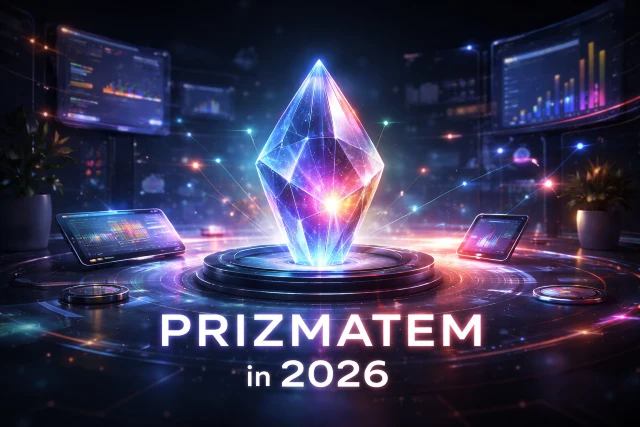
If you’ve been seeing Prizmatem pop up in searches, social posts, or random tech discussions lately, you’re not imagining it. The word has started showing up across the web, but here’s the twist: people aren’t always using it the same way.
- What is Prizmatem in 2026?
- Why Prizmatem is getting attention right now
- Prizmatem meanings you’ll see online (and how to interpret them)
- Real-world uses of Prizmatem style thinking and technology
- Prizmatem in UI and product design
- Prizmatem in data visualization and analytics
- Prizmatem in AR, VR, and smart glasses
- Prizmatem in display innovation (the tech side)
- Prizmatem and the business buzz: why companies care
- What to expect next from Prizmatem through 2026 and beyond
- How to use Prizmatem ideas today (without falling for hype)
- FAQ about Prizmatem
- Conclusion
In 2026, Prizmatem is less like a single “product” and more like a fast-growing idea label that different communities apply to different things. In some corners, it’s talked about like a visual tech concept that blends light, color, and adaptive interfaces. In other places, it’s used as a creative framework for “reframing” information the way a prism refracts light into multiple perspectives. And yes, there’s even a site using Prizmatem as a brand identity around the “prism of ideas” theme.
So what’s actually happening, why is it trending now, and what should readers (and builders) realistically expect next?
Let’s break it down in a way that’s useful, grounded, and not hype-driven.
What is Prizmatem in 2026?
Right now, Prizmatem is best described as an emerging internet term used to describe:
- Layered visual experiences (adaptive color, responsive lighting, prismatic effects)
- Multi-perspective thinking (breaking a problem into “angles” and recombining insights)
- Next-gen interface design (more dynamic, environment-aware UI)
- Brand identity in content spaces (the “prism of ideas” storytelling angle)
Because the term is used loosely, it helps to think of it like other trend-terms that started broad, then narrowed once real tools and standards appeared.
A quick reality check
As of early 2026, there isn’t one universally accepted technical standard, academic definition, or single vendor product officially recognized as “Prizmatem.” Much of the online content around it comes from blogs and explainers, which often describe similar themes with different wording. That’s why the smartest approach is to focus on what those themes map to in real technology: display innovation, photonics, XR, AI-driven rendering, and adaptive interfaces.
Why Prizmatem is getting attention right now
A trend like Prizmatem usually takes off when multiple forces line up at the same time. In 2026, they definitely have.
1) Displays are becoming context-aware
We’re moving beyond screens that just “show content.” Research and industry work is heading toward displays that can sense their environment and adjust locally, not just globally.
A concrete example is the concept of “sensing pixels” where each pixel has an input channel to detect local lighting, shadows, and even enable effects like better legibility or special optical materials.
That direction supports the kind of “responsive, prism-like visuals” people associate with Prizmatem.
Samsung has also highlighted “Sensor OLED Display” work in its Display Week communications, reinforcing that sensing and display tech are converging.
2) XR and smart glasses are accelerating
Even if you personally don’t use VR or AR, the market momentum is real. IDC projected strong growth for AR/VR headsets plus display-less smart glasses in 2025 and pointed to smart glasses as a major driver.
At the same time, market forecasts continue to bet big on AR/VR expansion over the coming years.
When XR grows, so does the demand for interfaces that handle light, overlays, contrast, color adaptation, and real-time responsiveness. That’s basically Prizmatem’s “vibe,” even if people don’t call it that.
3) Hardware headroom is expanding
More powerful chips make richer real-time visuals possible on smaller devices. Industry forecasts show semiconductor growth moving toward nearly $1 trillion in 2026 global sales, indicating major capacity and demand in advanced compute.
That matters because “prismatic” experiences (adaptive visuals, spatial UI, rich effects) are compute hungry.
4) The content economy loves a clean label
Trendy terms spread because they’re memorable. “Prizmatem” is short, brandable, and visually suggestive. A site using the name even frames it directly as a prism for ideas and perspectives.
That makes it sticky for creators, marketers, and bloggers who want a fresh keyword that still feels connected to real tech themes.
Prizmatem meanings you’ll see online (and how to interpret them)
Here’s a practical map of how people talk about Prizmatem today, plus what it often refers to in real-world terms.
| How people describe Prizmatem | What it usually means in practice | Where it shows up |
|---|---|---|
| “A visual technology that manipulates light and color” | Display tech, photonics concepts, adaptive color pipelines | XR, smart displays, digital signage |
| “A modular design framework for dynamic experiences” | UI systems, component design, personalization | Apps, dashboards, product design |
| “A way to think in multiple perspectives” | Problem decomposition, decision frameworks | Business, education, productivity |
| “An AI-powered rendering or style system” | AI-assisted graphics, real-time rendering workflows | Creative tools, media, marketing |
The takeaway: Prizmatem is a wrapper word. It’s being used to point at a cluster of trends instead of one fixed object.
Real-world uses of Prizmatem style thinking and technology
Even if the term stays fuzzy, the applications behind it are very concrete. Here are the areas where “Prizmatem-like” ideas are already useful in 2026.
Prizmatem in UI and product design
Design teams are under pressure to ship experiences that feel personal without becoming chaotic. Prizmatem, as a mindset, fits nicely here: show the right “facet” of information at the right time.
Common patterns:
- Adaptive emphasis: highlight what matters now (not everything at once)
- Layered detail: summary first, drill-down on demand
- Context cues: adjust contrast, layout, and density based on environment and user intent
Actionable tip for teams:
When you’re designing a complex screen, try a “three-layer build”:
- One sentence summary (what is happening)
- One action row (what should the user do)
- One expandable detail layer (why it matters)
That structure creates the “prism effect” without turning your UI into a maze.
Prizmatem in data visualization and analytics
Analytics tools often fail for a simple reason: they show numbers but don’t reveal meaning.
A Prizmatem-style dashboard focuses on:
- multiple viewpoints (trend, segment, anomaly, forecast)
- fast switching between “angles”
- a stable narrative so users don’t feel lost
Example scenario: e-commerce revenue drop
Instead of showing one revenue chart, a prism approach instantly offers:
- traffic vs conversion vs AOV
- product category heatmap
- geo split
- time-of-day pattern
- confidence flags (data freshness, sampling limits)
This multi-faceted view reduces the time from “something’s wrong” to “here’s what changed.”
Prizmatem in AR, VR, and smart glasses
This is where the word feels most literal. XR experiences depend on light, contrast, and the user’s physical environment.
IDC notes strong growth expectations around smart glasses and combined AR/VR categories, driven by new launches and rapid category expansion.
On the broader market side, forecasts continue projecting significant AR/VR growth through the next decade.
Where Prizmatem fits in XR:
- readability in mixed lighting
- adaptive overlays that don’t blind the user outdoors
- layered UI that respects depth and attention
- comfort-first design (less visual noise, fewer hard edges)
If you build XR content, the “prism” idea is basically the interface rulebook: present information as layers, not walls.
Prizmatem in display innovation (the tech side)
If you want the strongest “this is real” anchor for Prizmatem, it’s display research.
The “sensing pixels” concept describes displays that can detect local shadows and adapt per pixel, plus enable effects like fluorescent-like rendering and sensing applications in healthcare contexts.
That’s the kind of enabling tech that can turn “prismatic visual experiences” from a metaphor into a feature set.
On the industry side, Samsung has discussed Sensor OLED Display work publicly, signaling ongoing investment in sensing-plus-display directions.
Prizmatem and the business buzz: why companies care
Businesses don’t adopt trends because they sound cool. They adopt them because they:
- cut training time
- increase conversion
- reduce errors
- improve engagement
PwC’s work on AR/VR has argued these technologies can significantly impact the economy by 2030, with AR delivering the larger share of that value in their estimates.
You don’t need to agree with every number to understand the point: immersive and layered experiences are increasingly treated as a business capability, not a gimmick.
In plain terms: Prizmatem is trending because it matches what businesses want next, which is “make complex things feel simple without hiding the truth.”
What to expect next from Prizmatem through 2026 and beyond
Trends usually move through phases. Here’s the realistic outlook for Prizmatem.
1) The term will either narrow or split
Two outcomes are likely:
- Narrowing: Prizmatem becomes associated with one category (for example, adaptive visuals in XR)
- Splitting: Prizmatem becomes two conversations: one for creative thinking, one for visual tech
Either way, search intent will get clearer, and that’s good for readers.
2) More “adaptive color and contrast” features will go mainstream
The paper on sensing pixels notes how most devices today already use ambient light sensors for global brightness adjustment, but also highlights a future where per-pixel adaptation enables richer interactions and better legibility.
Expect more consumer-facing features that feel like:
- content that stays readable in harsh sun
- overlays that adjust instantly to shadows
- UI that shifts based on where you’re looking or what you’re doing
3) Compute growth will keep enabling richer visuals
WSTS and SIA reporting points to strong semiconductor growth projections for 2026, with memory and logic leading categories, which supports more advanced on-device rendering and sensor processing.
Translation: more devices will be capable of “Prizmatem-like” experiences without cloud dependency.
4) Expect more commercialization around next-gen displays
MicroLED and other advanced display discussions are increasingly framed around commercialization timelines.
As these technologies mature, more products will compete on visual quality, power efficiency, and environmental responsiveness, all core ingredients in what people imagine Prizmatem to be.
How to use Prizmatem ideas today (without falling for hype)
If you’re a reader, creator, developer, or product person, here’s how to make Prizmatem useful right now.
For creators and bloggers
- Treat Prizmatem as a “topic umbrella,” not a single definition
- Anchor posts to real technologies: XR, photonics, adaptive displays, AI rendering
- Use examples: smart signage, AR training, healthcare visualization, interactive learning
For developers (including .NET builders)
You don’t need special hardware to start building “Prizmatem style” experiences. You can implement the mindset in software:
- Layered UI: progressive disclosure, expandable panels, contextual cards
- Personalization: user preference profiles, accessibility-first color themes
- Responsiveness: ambient-light like adjustments (simulated), high-contrast modes, dynamic typography scaling
- Real-time pipelines: efficient rendering, caching, sensible refresh intervals
A simple practical approach:
- Build a UI that has “modes” (summary, focus, deep dive)
- Use one state store and clean boundaries between layers
- Track user intent signals (scroll depth, dwell time, repeated actions)
That’s how you create a prism effect without forcing complexity.
For businesses and teams
- Start with one workflow where “layered visibility” matters (support dashboards, quality checks, training)
- Measure success with one metric (time-to-decision, error rate, completion time)
- Expand only after the first use case proves value
FAQ about Prizmatem
Is Prizmatem a real technology or just a buzzword?
In 2026, Prizmatem is mainly an emerging term used online to describe a mix of ideas: adaptive visuals, layered interfaces, and multi-perspective thinking. The underlying technologies are real, but the label isn’t yet standardized.
Why are people connecting Prizmatem to light and “prisms”?
Because the prism metaphor is a clean way to explain “one thing, many perspectives.” In tech, it maps naturally to photonics, display behavior, and XR overlays where light and perception matter.
Where is Prizmatem most likely to become “real” as a product category?
If it consolidates, the strongest landing spot is likely immersive experiences and next-gen display interaction, because those areas already rely on adaptive rendering, sensing, and layered UI concepts.
Should you invest in Prizmatem tools right now?
Instead of chasing a tool with the label, invest in the capability: adaptive UI, strong visualization patterns, and XR-ready design thinking. Those skills stay valuable even if the term fades.
Conclusion
Prizmatem in 2026 is trending because it captures something people genuinely want: experiences that adapt, reveal meaning in layers, and let you understand complex systems from more than one angle. The term itself is still evolving, but the forces behind it are not. XR growth, sensing-plus-display innovation, and rising compute power are pushing the digital world toward more responsive, human-friendly visuals.
If you’re building or writing in this space, treat Prizmatem like a compass, not a destination. Use it to explore adaptive design, layered interfaces, and the real science behind light-driven experiences. For a quick grounding in the core science, revisit photonics basics near the end of your research so the “prism” metaphor stays connected to reality.