



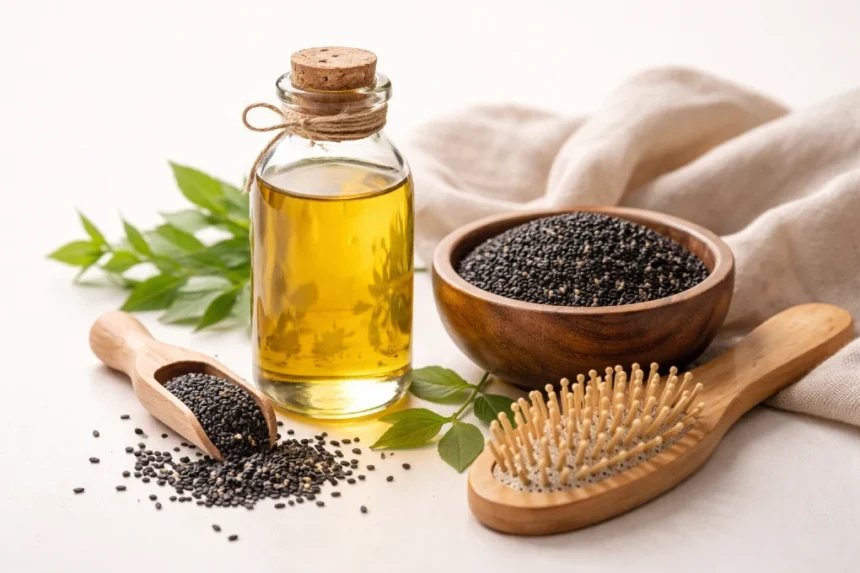
If you have been looking for a simple, time-tested way to care for your hair without overloading it with heavy styling products, Oil Gingelly deserves a close look. Known for its smooth texture, nourishing feel, and traditional place in home beauty rituals, this sesame-based oil has become a trusted option for people who want softer strands, a calmer scalp, and hair that looks naturally healthy. When used the right way, Oil Gingelly can support shine, reduce dryness, and make your hair care routine feel less complicated and more effective.
- What Is Oil Gingelly?
- Why Oil Gingelly Works So Well for Hair
- Oil Gingelly Benefits for Hair
- Oil Gingelly for Natural Shine
- Oil Gingelly for Hair Strength
- Oil Gingelly for Scalp Care
- Who Should Use Oil Gingelly for Hair?
- How to Use Oil Gingelly for Hair the Right Way
- How Often Should You Use Oil Gingelly?
- Oil Gingelly for Hair Growth: What Is Realistic?
- Common Mistakes to Avoid
- Best Ways to Pair Oil Gingelly With Your Routine
- FAQ About Oil Gingelly for Hair
- Final Thoughts
Hair care trends come and go, but some remedies stay relevant because they actually fit real life. That is exactly why gingelly oil keeps showing up in scalp massages, pre-wash treatments, and weekend self-care routines. It is practical, affordable, and surprisingly versatile.
What Is Oil Gingelly?
Oil Gingelly is another name commonly used for sesame oil, especially in South Asian households. It is extracted from sesame seeds and is valued for its naturally rich fatty acid profile and plant compounds. Reviews of sesame oil note that it contains unsaturated fatty acids along with lignans such as sesamin, sesamolin, and sesamol, compounds often linked with antioxidant stability.
That matters for hair care because a good oil is not just about making hair look glossy for a few hours. The best oils also help reduce the rough, dry feel that builds up from washing, sun exposure, heat styling, and friction.
In simple terms, Oil Gingelly is often used to:
- soften dry hair
- improve the appearance of dull strands
- support a more comfortable scalp
- make detangling easier
- add slip before washing
- reduce the harsh feel caused by frequent shampooing
Why Oil Gingelly Works So Well for Hair
The appeal of Oil Gingelly comes down to both texture and composition. It is usually lighter than very thick oils, but still rich enough to coat the hair shaft and reduce dryness. Sesame oil also contains a high proportion of unsaturated fats, especially linoleic and oleic acids. One nutrition review reports sesame oil as being particularly rich in linoleic acid, followed by oleic acid.
For hair, that translates into a few practical advantages:
1. It helps hair feel smoother
Dry hair often looks frizzy because the cuticle is raised and uneven. A light coat of oil can help strands feel softer and appear shinier by improving surface smoothness.
2. It can support the scalp’s moisture balance
A dry, tight scalp is uncomfortable. Dermatology guidance from Cleveland Clinic notes that dry scalp happens when the scalp loses too much moisture, and gentle care matters when managing it. A modest amount of Oil Gingelly used as a scalp massage oil may help reduce that dry, uncomfortable feeling for some people.
3. It can make pre-wash care more protective
Research on hair oils has shown that certain oils can reduce water-related stress on hair fibers during washing, a process sometimes referred to as hygral fatigue. Evidence is strongest for coconut oil in this area, not sesame oil specifically, but the broader takeaway is still useful: pre-wash oiling can help limit the stress hair goes through during wash day.
So while Oil Gingelly should not be marketed as a miracle growth treatment, it does make sense as a pre-shampoo oil for reducing dryness and improving manageability.
Oil Gingelly Benefits for Hair
People usually start using Oil Gingelly because they want better texture, more shine, or a calmer scalp. Those are realistic goals, and they align well with how oils are typically used in hair care.
Here are the biggest benefits.
Oil Gingelly for Natural Shine
When hair loses moisture or gets rough from heat and friction, it stops reflecting light evenly. That is when it starts looking dull. Oil Gingelly creates a light coating over the strands that can improve the way hair catches light, making it look smoother and shinier.
This is one reason hair oiling remains popular even today. Cleveland Clinic notes that hair oiling may help with hydration and shine, though results vary by hair type and routine.
If your hair tends to look rough after shampooing, a small amount of Oil Gingelly before washing or a tiny amount on the ends after drying can make a visible difference.
Oil Gingelly for Hair Strength
Let’s keep this realistic. Oil Gingelly does not turn weak hair into instantly thick hair overnight. What it can do is reduce some of the daily stress that makes hair feel weaker over time.
Hair becomes more fragile when it is:
- overwashed
- repeatedly heat styled
- exposed to sun and pollution
- detangled roughly
- left dry for long periods
Using Oil Gingelly as part of a regular pre-wash routine may help reduce breakage caused by rough handling because softer hair is generally easier to comb and less likely to snap during detangling. Evidence from hair-oiling research supports the broader idea that oils can protect hair fibers from some forms of mechanical and wash-related damage, even though the best-studied oil in this area is coconut oil.
That means the strength benefit is often indirect but still meaningful. Less dryness and less friction often lead to less breakage.
Oil Gingelly for Scalp Care
A healthy scalp creates a better environment for healthy-looking hair. That does not mean oil can cure every scalp issue, because it cannot. But Oil Gingelly can still be useful for basic scalp comfort.
The American Academy of Dermatology emphasizes that scalp care matters and that the right routine can help keep both scalp and hair healthier. If your scalp feels mildly dry or tight, a gentle massage with Oil Gingelly before shampooing may help soften buildup and reduce the uncomfortable dry feeling.
That said, not every flaky scalp is simply “dry.” Conditions such as dandruff and seborrheic dermatitis are common and may need targeted treatment. The National Eczema Association says seborrheic dermatitis, commonly associated with dandruff, affects about 3 to 10 out of 100 people. The AAD also notes that persistent flaking or itching may require dandruff shampoo or a dermatologist’s evaluation.
So Oil Gingelly is best for routine scalp nourishment, not as a replacement for medical treatment.
Who Should Use Oil Gingelly for Hair?
Oil Gingelly is usually a good fit for:
- dry hair
- frizzy hair
- curly or wavy hair
- hair exposed to frequent washing
- scalp that feels mildly dry
- people who prefer traditional or minimal-ingredient hair care
It may be especially helpful if your hair feels rough after shampooing or tangles easily.
It may be less ideal if:
- your scalp gets greasy very quickly
- you have active scalp acne or heavy buildup
- you are sensitive to sesame
- you have severe dandruff, scalp redness, or inflamed patches
Patch testing matters. Sesame allergy is real, so it is smart to test a small amount behind the ear or on the inner arm before using Oil Gingelly widely on the scalp.
How to Use Oil Gingelly for Hair the Right Way
The best results usually come from using Oil Gingelly in a simple, consistent way. You do not need a complicated ritual.
Pre-wash scalp and hair treatment
This is the easiest and most effective method for most people.
- Warm a small amount of Oil Gingelly until it feels slightly lukewarm, not hot.
- Part your hair into sections.
- Apply a little oil to the scalp with fingertips.
- Massage gently for 5 to 10 minutes.
- Smooth the remaining oil through the mid-lengths and ends.
- Leave it on for 30 minutes to 2 hours.
- Wash with a gentle shampoo.
This method works well because it gives the scalp a relaxing massage and gives the hair some slip before water and shampoo hit the strands.
Overnight oiling
Some people like leaving Oil Gingelly on overnight. This can work for very dry hair, but it is not necessary for everyone. If you try it, use a small amount and protect your pillowcase.
Post-wash finishing oil
A tiny drop of Oil Gingelly rubbed between the palms can be applied to dry ends after washing. This helps tame frizz and adds shine. Use very little, especially on fine hair.
How Often Should You Use Oil Gingelly?
There is no single perfect schedule. It depends on your hair type.
Here is a practical starting point:
| Hair Type | Recommended Use |
|---|---|
| Dry or curly hair | 2 times a week |
| Normal hair | 1 time a week |
| Oily scalp | Once every 7 to 10 days |
| Damaged ends | Small amount on ends as needed |
If your hair feels heavy, greasy, or hard to wash clean, reduce the amount rather than quitting completely. With Oil Gingelly, more is not always better.
Oil Gingelly for Hair Growth: What Is Realistic?
This is where a lot of articles overpromise. Oil Gingelly can support a healthier hair routine, but it is not a proven stand-alone cure for hair loss. There is stronger evidence for some oils improving hair feel and reducing damage than for directly triggering new growth. Dermatology experts generally focus on scalp health, gentle handling, and proper diagnosis when shedding is excessive.
So the honest answer is this: Oil Gingelly may help hair look fuller over time by reducing dryness and breakage, but it should not be marketed as a guaranteed hair regrowth solution.
If you are dealing with sudden shedding, bald patches, severe itch, or scaling, see a dermatologist instead of relying only on oil.
Common Mistakes to Avoid
Even a good oil can disappoint if you use it the wrong way. Here are the mistakes that cause most of the frustration.
Using too much
Heavy oiling can leave the scalp sticky and make shampooing harder.
Scratching the scalp during massage
Massage should feel gentle, not aggressive. Scratching can irritate the scalp.
Leaving it on for too long when your scalp is oily
If your scalp already produces a lot of oil, long oiling sessions may feel uncomfortable.
Expecting it to cure dandruff
Dandruff and seborrheic dermatitis often need targeted treatment. The AAD recommends looking at symptoms carefully and using appropriate care rather than assuming every flaky scalp is simple dryness.
Ignoring product buildup
If you use styling creams, dry shampoo, or hair spray regularly, cleanse properly so Oil Gingelly does not sit on top of buildup.
Best Ways to Pair Oil Gingelly With Your Routine
To get more from Oil Gingelly, combine it with sensible hair habits:
- use a gentle shampoo
- avoid very hot water
- detangle from the ends upward
- limit tight hairstyles
- reduce high-heat styling
- wash scalp buildup regularly
- use a soft towel or cotton T-shirt to dry hair
These habits matter because healthy-looking hair is never the result of one product alone. It is the result of lower friction, better moisture balance, and a calmer scalp over time.
FAQ About Oil Gingelly for Hair
Is Oil Gingelly good for dry hair?
Yes. Oil Gingelly is especially useful for dry hair because it can soften the strands, improve shine, and reduce roughness before washing.
Can Oil Gingelly help with itchy scalp?
It can help if the itch is linked to dryness. But if the itch is persistent, severe, or comes with flakes and redness, it may be dandruff or another scalp condition that needs proper treatment.
Can I use Oil Gingelly every day?
Most people do not need daily use. Once or twice a week is enough for many hair types. Daily use may feel too heavy unless you are applying only a tiny amount to dry ends.
Is Oil Gingelly better than coconut oil?
It depends on your hair and your goal. Coconut oil has stronger research behind hair fiber protection, while Oil Gingelly is often preferred by people who enjoy its texture, traditional use, and scalp massage benefits.
Final Thoughts
Oil Gingelly remains one of the most practical natural oils for people who want hair that feels softer, looks shinier, and responds better to a gentle scalp care routine. It is not a miracle fix, and it should not be used as a substitute for medical treatment when scalp symptoms are persistent. But for ordinary dryness, dullness, and rough texture, it can be a smart addition to a weekly routine.
The real strength of Oil Gingelly is that it fits everyday life. It is simple to use, easy to understand, and rooted in a long tradition of personal care. If your goal is healthier-looking hair with less dryness and more comfort, this oil is worth keeping on your shelf. Near the roots of that tradition is the sesame plant, a small seed with a very big place in both food and beauty culture.