


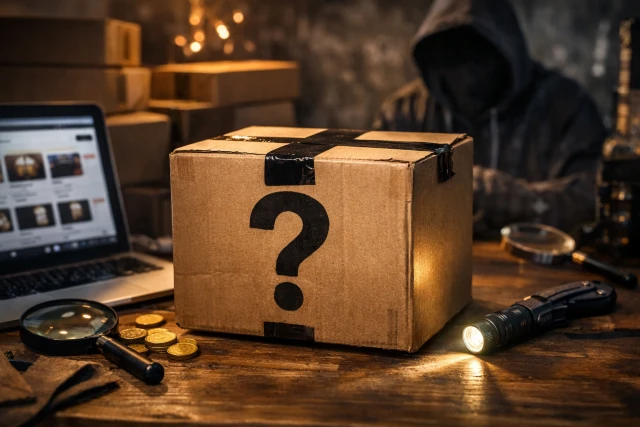
A Mystery Box can feel like a mini holiday in a cardboard package. You pay, you wait, you open, and you hope the value inside beats the price on the checkout screen. That suspense is the whole point. But the same surprise factor that makes a Mystery Box fun can also make it easier for shady sellers to hide behind vague promises, flashy ads, and “limited-time” pressure.
- What a Mystery Box really is (and why scams love the concept)
- Quick definition: legit Mystery Box vs scam Mystery Box
- Mystery Box Tip 1: Start by choosing the right kind of box for your goal
- Mystery Box Tip 2: Do a 60-second seller identity check
- Mystery Box Tip 3: Learn the five red-flag phrases scammers rely on
- Mystery Box Tip 4: Treat social media ads as “leads,” not proof
- Mystery Box Tip 5: Use the “expectation math” to avoid disappointment
- Mystery Box Tip 6: Read the refund and dispute policy like a buyer, not like a fan
- Mystery Box Tip 7: Compare payment methods using a simple risk table
- Mystery Box Tip 8: Spot fake reviews with three quick checks
- Mystery Box Tip 9: Ask one question before buying: “What exactly am I paying for?”
- Mystery Box Tip 10: Learn the three most common Mystery Box scam patterns
- Mystery Box Tip 11: Watch shipping and tracking like a pro
- Mystery Box Tip 12: Use a “documentation habit” that makes refunds easier
- Mystery Box Tip 13: Make “value” measurable with a quick checklist
- A real-world scenario: two buyers, two outcomes
- Mystery Box Tip 14: Know what “too good to be true” looks like in numbers
- Mystery Box Tip 15: Choose sellers that publish clear “what you might receive” details
- FAQs readers actually ask about Mystery Box shopping
- What to do immediately if your Mystery Box seems like a scam
- Conclusion: Enjoy the Mystery Box trend, but shop like you mean it
The good news is you do not need to avoid the Mystery Box trend altogether. You just need a smarter way to shop. This guide walks you through the exact checks real buyers use to separate legit Mystery Box offers from scams, fake listings, and disappointing “junk box” traps. Along the way, you will get practical steps, warning signs, and a few simple habits that dramatically lower your risk.
What a Mystery Box really is (and why scams love the concept)
A Mystery Box is a product sold with undisclosed or partially disclosed contents. Sometimes it is a curated bundle (like snacks, skincare, or gaming accessories). Sometimes it is a “chance-based” box where you might pull a high-value item, but most people will receive lower-value items.
Scammers love the format for three reasons:
- Vagueness is built-in. If the listing never clearly promises specific items, the seller can claim they “delivered as described.”
- Expectation is easy to manipulate. A few influencer clips or staged unboxings can make the offer look far better than reality.
- Disputes get harder. Many buyers struggle to prove “not as described” when the description was already vague.
Meanwhile, online shopping fraud is a growing problem overall, and Mystery Box offers often spread through the same channels as other shopping scams, especially social ads and fake storefronts. The BBB has reported that online purchase scam reports show a high likelihood of consumers losing money in shopping fraud contexts. And the FTC has documented a rise in reported fraud losses and a higher share of reports where people actually lost money.
Quick definition: legit Mystery Box vs scam Mystery Box
A legit Mystery Box usually has:
- Clear company identity (address, contact options, policies)
- Transparent pricing (shipping, taxes, and subscription terms are obvious)
- Defined theme and item types (even if specific items vary)
- A real return or dispute process
- Verifiable reviews across multiple platforms
A scam Mystery Box often has:
- “Too good to be true” pricing for premium brands
- No real business details beyond a pretty website
- Fake reviews or only reviews hosted on the same site
- Confusing subscription billing or hidden recurring charges
- Pressure timers, “only 3 left” tactics, and urgent checkout prompts
Mystery Box Tip 1: Start by choosing the right kind of box for your goal
Before you judge any seller, decide what “success” looks like for you. Most regret happens when people buy a Mystery Box hoping for a jackpot, then feel cheated when they receive normal items.
Ask yourself which buyer you are:
- The “fun unboxing” buyer: You want novelty, not maximum value.
- The “value hunter” buyer: You want realistic savings versus buying items separately.
- The “collector” buyer: You want themed items that match your niche (gaming, anime, tech accessories).
- The “gift” buyer: You want something safe and broadly likable.
If you are a value hunter, avoid any Mystery Box that markets itself like a lottery without clearly stating odds or typical item ranges. Surprise is fine. Unverifiable “win a $1000 phone” claims are where trouble starts.
Mystery Box Tip 2: Do a 60-second seller identity check
Most scams collapse under basic identity checks. Do these before you get emotionally attached to the deal:
Check the site footer and contact page
Look for:
- Company name
- Physical address (not just a contact form)
- Email plus a phone number or ticket system
- Terms, Privacy, Shipping, Returns pages
No address is not automatically a scam, but it raises risk. A Mystery Box seller that hides basic details is asking you to trust them blindly.
Check domain age and “about” consistency
You do not need to be a tech expert. Just look for common inconsistencies:
- “About us” claims 10 years in business, but everything looks brand new
- Site has typos, mismatched logos, or copied text
- Social icons go nowhere or link to empty pages
Look for off-site proof, not just on-site claims
A scammy Mystery Box store often has a beautiful storefront and zero reputation elsewhere. Look for mentions outside their own website, including independent review platforms and consumer protection resources like BBB tools.
Mystery Box Tip 3: Learn the five red-flag phrases scammers rely on
If you see these phrases, slow down and verify twice:
- “Unclaimed packages” + premium brands
- “Government seized goods” with no auction or agency details
- “Guaranteed iPhone/PS5 inside” for a tiny price
- **“Just pay shipping” but it asks for full card details and extra fees
- “Influencer exclusive drop” with no official partner proof
Security researchers have warned that many “free Mystery Box” style promotions are designed to harvest payment details or personal data.
Mystery Box Tip 4: Treat social media ads as “leads,” not proof
Many bad Mystery Box offers begin with a social ad because ads create instant trust through slick visuals and comments.
Here is the rule:
- An ad is not evidence
- Viral unboxings are not evidence
- Comment sections are not evidence
What is evidence is independent verification: consistent reviews, clear policies, and a track record you can find outside the ad platform. Consumer agencies have repeatedly warned that fraudsters use impersonation and convincing branding to trick shoppers online.
Mystery Box Tip 5: Use the “expectation math” to avoid disappointment
This is not about being negative. It is about being realistic.
If a Mystery Box costs $30, and it hints at rare $300 prizes, the seller has to fund those rare wins somehow. Usually that means most boxes contain items worth less than the price paid, or cheap filler goods. That is not automatically a scam if the seller is honest. It becomes a problem when they manipulate expectations.
A healthy listing will tell you things like:
- Product categories included (snacks, stationery, accessories)
- Typical number of items
- Value range or average value (even if approximate)
- What is excluded (no electronics, no luxury brands, etc.)
A risky listing focuses only on the dream outcome.
Mystery Box Tip 6: Read the refund and dispute policy like a buyer, not like a fan
This step alone saves people.
Watch for policy traps
Common traps include:
- “All sales final” even if items arrive damaged
- No timeframe for shipping or delivery
- Return window so short it closes before the box can arrive
- A policy that says “mystery items are not eligible for refunds” with no exceptions
If a Mystery Box seller refuses any accountability, you are taking on all the risk.
Understand subscription terms
Some Mystery Box businesses are subscriptions by default. The listing might feel like a one-time box, but the checkout quietly signs you up for monthly charges.
Before paying, look for:
- A checkbox for recurring billing
- A “trial” that converts to a subscription
- Language like “membership,” “club,” or “vip access”
Consumer protection agencies like the CFPB maintain guidance on fraud and scams and how to respond if you are charged unfairly or tricked into recurring payments.
Mystery Box Tip 7: Compare payment methods using a simple risk table
Payment method choice can decide whether you recover money if things go wrong.
| Payment Method | Best For | Risk Level | Why It Matters |
|---|---|---|---|
| Credit card | Most Mystery Box purchases | Low | Stronger dispute options in many regions |
| PayPal (Goods & Services) | Online sellers | Low to Medium | Buyer protection may apply depending on transaction |
| Debit card | Trusted sellers only | Medium | Can be harder to reverse than credit |
| Bank transfer | Almost never | High | Limited recovery options |
| Crypto / gift cards | Avoid for purchases | Very High | Often used by scammers because refunds are rare |
If a Mystery Box seller pushes you toward bank transfer, crypto, or gift cards, treat it like a flashing warning light.
Mystery Box Tip 8: Spot fake reviews with three quick checks
Fake reviews are common in scammy Mystery Box listings. Use these checks:
- Timing check: Do 50 reviews appear within a few days?
- Language check: Do reviews sound copied, generic, or overly perfect?
- Photo check: Are unboxing photos repeated or suspiciously professional?
Also, do not rely on review widgets hosted only on the seller’s own site. Look for reviews across multiple platforms and communities.
Mystery Box Tip 9: Ask one question before buying: “What exactly am I paying for?”
A trustworthy Mystery Box seller can answer:
- What is the theme?
- How many items are included?
- Are items new, refurbished, or clearance?
- What brands are typical?
- What is the shipping timeframe?
- What happens if something arrives damaged or missing?
If the seller cannot answer basic questions or only replies with hype, the risk goes up.
Mystery Box Tip 10: Learn the three most common Mystery Box scam patterns
Pattern A: The “premium brand” bait-and-switch
You buy a Mystery Box that shows premium electronics. You receive low-quality knockoffs or unrelated items. Sometimes you receive nothing.
Pattern B: The “shipping fee” trap
You are promised a free Mystery Box, but pay shipping. Then extra fees appear, or a subscription starts.
Pattern C: The fake storefront + disappearing support
The store looks legit, takes orders, then vanishes or stops responding.
Consumer watchdogs and cybersecurity researchers have described how “too good to be true” offers are used to harvest payment details or deliver worthless items.
Mystery Box Tip 11: Watch shipping and tracking like a pro
Legit Mystery Box sellers typically provide:
- A tracking number within a reasonable processing time
- A carrier name you can verify
- Updates that match real transit patterns
Red flags:
- Tracking number that never updates
- “Delivered” status but nothing arrived
- A carrier website that looks fake
If you suspect a problem, document everything early. Screenshots matter when you file disputes.
Mystery Box Tip 12: Use a “documentation habit” that makes refunds easier
The best buyers keep a simple evidence folder:
- Order confirmation email
- Product page screenshot (description, price, promised value)
- Checkout screenshot showing subscription terms (if any)
- Tracking page screenshot
- Unboxing photos and a short video clip
If your Mystery Box arrives with damaged or wrong items, clear evidence speeds up disputes with payment providers.
Mystery Box Tip 13: Make “value” measurable with a quick checklist
Instead of guessing, score your Mystery Box using three categories:
1) Usefulness
- Will you actually use most items?
- Are items compatible with your needs (size, device type, skin type)?
2) Authenticity and quality
- Are items branded as expected?
- Do products have proper packaging, seals, and labeling?
- Do any items look counterfeit or suspicious?
3) Fair pricing
- Compare to typical retail pricing
- Check whether shipping inflated the true cost
If you do this consistently, you will get better at spotting bad Mystery Box offers before you buy.
A real-world scenario: two buyers, two outcomes
Buyer 1: “Ali” buys on impulse
Ali sees a social ad offering a Mystery Box with “premium tech” for a low price. The site has a timer and a wall of perfect reviews. Ali checks out quickly using a debit card.
Result: A long shipping delay, weak tracking, and a box filled with cheap accessories that do not match the ad. Support is silent.
Buyer 2: “Sara” buys with a safety routine
Sara sees the same offer, but she:
- Searches the seller name outside the site
- Reads the refund policy
- Checks subscription terms
- Uses a credit card for payment
- Screenshots the product page
Result: She either avoids the purchase entirely or, if she buys, she has evidence ready for a dispute if needed.
The difference is not luck. It is process.
Mystery Box Tip 14: Know what “too good to be true” looks like in numbers
If a Mystery Box claims you can get a $500 item for $20 routinely, ask yourself:
- Why would any business sell guaranteed losses at scale?
- Where is the profit coming from?
- What are the odds?
This matters because fraud losses and scam activity continue to be significant. The FTC has reported increases in reported fraud losses and the share of people who report losing money. Reports from law enforcement and consumer protection organizations consistently emphasize that shopping scams spike around hype-driven sales moments, especially when buyers feel rushed.
Mystery Box Tip 15: Choose sellers that publish clear “what you might receive” details
A quality Mystery Box listing often includes:
- Example item lists (not guaranteed, but realistic)
- Typical categories and quantities
- A range like “4 to 8 items” or “value varies”
- Photos of previous boxes with disclaimers
In contrast, risky sellers show only luxury images with no explanation of how often those items appear.
FAQs readers actually ask about Mystery Box shopping
Are Mystery Box sites legit?
Some are legit, especially curated subscription brands with a long track record. Others are fake storefronts. Your job is to verify identity, policies, and off-site reputation before you pay.
Is buying a Mystery Box basically gambling?
Some Mystery Box models are closer to a “chance-based” system than a curated bundle. If the seller highlights jackpots and rare wins, treat it like entertainment spending and never money you cannot afford to lose.
What is the safest way to pay for a Mystery Box?
Generally, a credit card or a payment method with buyer protection gives you better dispute options than transfers, crypto, or gift cards.
What should I do if I think I got scammed?
Save evidence, contact the seller once (in writing), then escalate through your payment provider. Consumer resources like BBB recovery guidance and FTC scam reporting can also help you choose next steps.
What to do immediately if your Mystery Box seems like a scam
If your Mystery Box purchase feels wrong, do not wait and hope it fixes itself. Act while timelines are fresh.
- Gather proof: screenshots, emails, tracking, unboxing photos.
- Contact the seller: keep it polite, short, and written.
- Check subscription charges: look for unexpected recurring billing.
- Dispute if needed: use your card issuer or payment provider process.
- Report the scam: use trusted consumer reporting tools where applicable.
Conclusion: Enjoy the Mystery Box trend, but shop like you mean it
A Mystery Box should be fun, not stressful. The safest buyers are not the ones with special insider knowledge. They are the ones who follow a simple routine every time: verify the seller, read policies, choose safer payments, and document the purchase.
If you remember only one thing, make it this: you can enjoy the surprise without handing over blind trust. A good Mystery Box experience is built on clarity, not hype. When the offer is honest, the unboxing feels like a win even if you do not hit a jackpot, because you knew what you were signing up for and you kept your expectations grounded in random chance.