


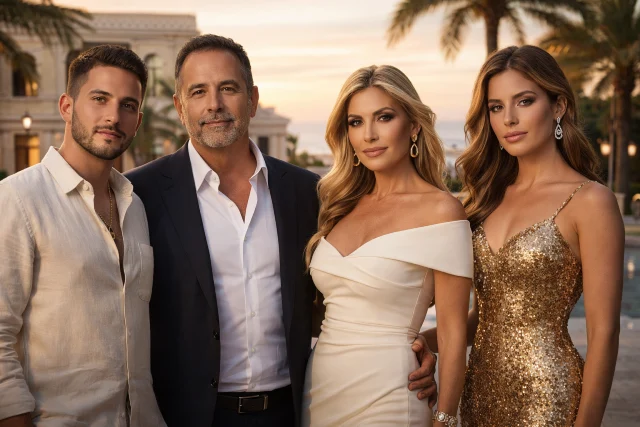
When people search Itzhak Ezratti & Family, they usually know the name from business and wealth headlines, not runway interviews. And that is exactly what makes this topic interesting from a fashion perspective.
- Why Itzhak Ezratti & Family fits the “private luxury” style archetype
- Itzhak Ezratti & Family fashion style: what it usually looks like (and why)
- How luxury looks are changing right now (and what that means for the Ezratti-style audience)
- A practical “luxury look” framework inspired by Itzhak Ezratti & Family
- Table: Quiet luxury vs trend-driven luxury
- Trend influence without being an influencer: how it works
- Style scenarios: what this look can be in real life
- Common questions people ask about Itzhak Ezratti & Family and fashion
- How to build the Itzhak Ezratti & Family style energy without overspending
- Conclusion: what Itzhak Ezratti & Family represents in fashion terms
Itzhak Ezratti & Family are best known publicly through their connection to GL Homes and their presence on wealth rankings, where the family is profiled for real estate success and billionaire status. That kind of background shapes a very specific approach to style: less about chasing every micro trend, more about clothing that signals confidence, consistency, and “I do not need to prove it.”
So, this article looks at Itzhak Ezratti & Family through a fashion lens that actually makes sense: how high net worth families typically dress, why “quiet luxury” keeps winning, how luxury spending is shifting, and what trend influence looks like when a family values privacy.
Why Itzhak Ezratti & Family fits the “private luxury” style archetype
Not every wealthy family becomes a public fashion brand. Some families prefer discretion, limited public visibility, and low drama. Itzhak Ezratti & Family fall into that category, with most mainstream, verifiable information centered on business and net worth reporting rather than personal lifestyle content.
That privacy matters because it changes the fashion conversation:
- The influence is indirect (through buying power, event presence, philanthropy circles, and social networks).
- The style is often consistent (a “uniform” built on tailoring and premium basics).
- The focus is quality and fit over constant trend cycling.
This is also happening while luxury itself is in a reset. Bain’s luxury reporting highlights recent softness and the need for brands to rebuild perceived value, with forecasts pointing toward a return to growth after a dip period.
Itzhak Ezratti & Family fashion style: what it usually looks like (and why)
Because Itzhak Ezratti & Family are not celebrity influencers with lookbooks, a responsible fashion breakdown relies on observable, typical patterns among private, high net worth households rather than invented personal details.
1) Tailoring first, always
In private wealth circles, tailoring is the cheat code. The clothing does not need to shout if the fit is perfect.
Typical staples in this lane include:
- Structured blazers and sport coats
- Well-fitted shirts (often custom or altered)
- Trousers that break cleanly at the shoe
- Dresses with clean lines rather than heavy embellishment
This “tailoring-first” approach reads as timeless, and it photographs well at business and community events without looking like a costume.
2) Quiet luxury over logo culture
A major fashion signal today is restraint: fewer obvious logos, more emphasis on fabric, craftsmanship, and silhouette. This aligns with how many established-wealth families dress because it communicates status to people who recognize the details.
Quiet luxury look cues:
- Neutral palette (black, navy, beige, cream, grey)
- Cashmere, wool, silk, high-grade cotton
- Minimal hardware
- Classic leather goods
- Understated jewelry
This matters more than ever because shoppers are pushing back on pricing when “value” feels weak. Reporting on Bain’s findings describes how consumers are reacting to steep price hikes and are reevaluating whether luxury still feels worth it.
3) Occasion dressing that stays tasteful
High net worth families often move between business settings, charity dinners, community events, and private gatherings. The winning formula is “formal enough, never flashy.”
Common choices:
- Evening wear with classic shapes and elevated fabric
- A signature watch or jewelry piece instead of full-statement looks
- Footwear that looks expensive without being loud
This style has trend influence because it becomes a template in social circles: people copy the energy more than the exact outfit.
How luxury looks are changing right now (and what that means for the Ezratti-style audience)
Luxury is not dead. It is just getting audited by customers.
Luxury is recalibrating after a slowdown
Bain’s luxury analysis notes softness after 2024 and emphasizes that brands need reinvention and stronger value delivery.
What that means in real wardrobes:
- Fewer impulse buys
- More investment in “forever” pieces
- More interest in resale, vintage, and authenticated secondhand
Resale is not a side quest anymore
The global secondhand apparel market is projected to keep growing strongly, with reporting tied to ThredUp and GlobalData pointing to significant expansion and rising consumer adoption.
For families like Itzhak Ezratti & Family, resale can play two roles:
- A smarter way to buy rare pieces and rotate wardrobes
- A more sustainable choice that still preserves luxury standards
Sustainability pressure keeps rising
Fashion is under serious climate scrutiny. McKinsey has estimated the fashion industry accounts for roughly 3% to 8% of global greenhouse gas emissions, and warns emissions could rise significantly without action.
World Resources Institute has also estimated the apparel sector around 2% of annual global greenhouse gas emissions (based on 2019 estimates).
And it is not just climate. The Apparel Impact Institute has reported industry emissions tracking and links between overproduction and rising emissions.
So, even luxury shoppers are more frequently asking:
- Where was this made?
- What is it made from?
- Will it last?
A practical “luxury look” framework inspired by Itzhak Ezratti & Family
If you like the kind of understated, premium style often associated with private-wealth families, use this simple framework.
The 70-20-10 rule for luxury wardrobes
- 70% elevated basics (premium tees, shirts, knitwear, trousers)
- 20% structured pieces (blazers, coats, occasion dresses)
- 10% statement items (a bag, jewelry, signature shoe)
This keeps outfits easy, repeatable, and polished.
Capsule checklist: quiet luxury essentials
- A dark tailored blazer
- A neutral cashmere sweater
- Crisp shirts in white and light blue
- Straight-leg trousers in navy or charcoal
- A clean leather belt
- Minimal sneakers or classic loafers
- One high-quality coat
- One occasion outfit that never fails
Table: Quiet luxury vs trend-driven luxury
| Style Approach | What It Looks Like | Best For | Risk |
|---|---|---|---|
| Quiet luxury | Minimal branding, premium materials, great tailoring | Professional settings, long-term wear | Can look “plain” if fit is off |
| Trend-driven luxury | Seasonal silhouettes, bold patterns, hype items | Fashion-forward events, social media moments | Dates quickly, expensive rotation |
| Heritage luxury | Classic brand codes, iconic accessories | Timeless status signaling | Price increases can outpace value |
This is where Itzhak Ezratti & Family as a concept lands: consistent, discreet, and built around longevity rather than constant novelty.
Trend influence without being an influencer: how it works
Even if Itzhak Ezratti & Family are not posting outfits daily, trend influence can still happen through:
- Community visibility: charity events, business gatherings, upscale venues
- Brand behavior: luxury brands respond to what high-value customers repeatedly buy
- Micro-circles: the “people you trust” effect is stronger than social media for many buyers
- Spending patterns: luxury’s future growth depends heavily on retention and perceived value, not just hype
In other words, influence can be quiet, but still powerful.
Style scenarios: what this look can be in real life
Here are realistic outfit scenarios aligned with the “private luxury” vibe often linked to Itzhak Ezratti & Family searches.
Scenario 1: Business lunch
- Tailored blazer + crisp shirt
- Dark jeans or trousers
- Minimal leather shoes
- One standout accessory (watch or handbag)
Scenario 2: Evening charity event
- Clean, elegant silhouette
- Neutral or jewel-tone palette
- Subtle jewelry, no heavy logos
- A structured outer layer if needed
Scenario 3: Weekend casual, still premium
- High-quality knit or polo
- Slim, clean denim or chinos
- Minimal sneakers
- Light jacket with structure
The goal is not to look “fashion-y.” It is to look put-together, every time.
Common questions people ask about Itzhak Ezratti & Family and fashion
Is there a confirmed public fashion brand tied to Itzhak Ezratti & Family?
Not in major, verifiable public reporting. The strongest mainstream information about Itzhak Ezratti & Family focuses on business and wealth profile coverage rather than fashion ventures.
Why do people associate wealthy families with “quiet luxury”?
Because it is a stable status signal. It relies on fit, fabric, and discretion, which tends to age better than loud branding, especially during periods when consumers question luxury pricing.
Are luxury trends shifting toward resale and secondhand?
Yes. Resale growth projections and reporting tied to major resale research show secondhand expanding rapidly and becoming more mainstream.
What is the biggest fashion shift right now?
Value and accountability. Luxury brands are being pushed to justify pricing and show real differentiation, while sustainability pressure continues to grow.
How to build the Itzhak Ezratti & Family style energy without overspending
You do not need billionaire money to borrow billionaire discipline.
- Buy fewer items, but upgrade fabric and fit
- Tailor affordable pieces for a premium silhouette
- Keep a consistent color palette for easy matching
- Avoid trend overload: one trend piece per season is enough
- Track cost per wear, not just price tags
- Consider resale for premium pieces that hold up over time
This is how you get a luxury look that feels calm, not forced.
Conclusion: what Itzhak Ezratti & Family represents in fashion terms
At the style level, Itzhak Ezratti & Family represents a fashion mindset more than a public wardrobe: privacy, quality, and long-term taste. In a moment when luxury customers are questioning value and brands are trying to rebuild trust, the “quiet luxury” approach makes even more sense.
If you want a practical takeaway, keep it simple: prioritize fit, invest in materials that last, and treat fashion like a personal standard, not a performance. Over time, that kind of consistency becomes its own trend influence, the same way fashion history keeps proving that timeless always returns.