



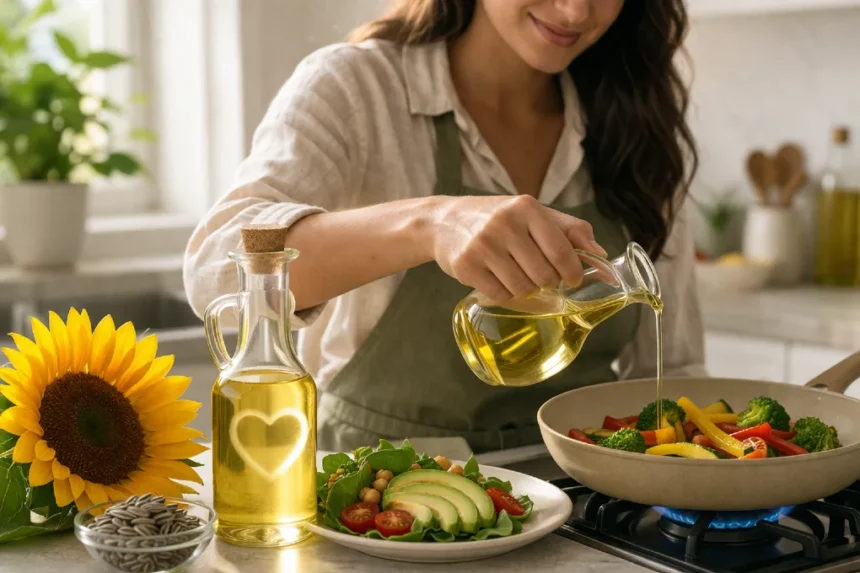
Walk down any grocery aisle and you will notice that cooking oils are no longer a simple pantry staple. Shoppers now compare labels, smoke points, fat profiles, and ingredient quality before they buy. In that shift, High Oleic Sunflower Oil has started to stand out for all the right reasons.
- What Is High Oleic Sunflower Oil?
- Why Fat Quality Matters More Than Ever
- High Oleic Sunflower Oil vs Regular Sunflower Oil
- Why High Oleic Sunflower Oil Fits Healthy Cooking So Well
- Why Food Brands Are Paying Attention
- Is High Oleic Sunflower Oil Better Than Olive Oil?
- Common Concerns About Seed Oils
- Practical Ways to Use High Oleic Sunflower Oil at Home
- What to Look for When Buying It
- Who Can Benefit Most From Switching?
- Final Thoughts
More home cooks, food brands, and health-conscious families are choosing High Oleic Sunflower Oil because it offers a strong balance of nutrition, cooking performance, and flavor neutrality. It is rich in monounsaturated fat, typically contains at least 80% oleic acid, and is valued for its stability without the need for hydrogenation. That makes it appealing for everything from sauteing vegetables to roasting, baking, and light frying.
The growing popularity of High Oleic Sunflower Oil is not just another food trend. It reflects a broader change in how people think about healthy fats. Instead of focusing only on low fat eating, many consumers now understand that the type of fat matters more than the total amount. Health authorities continue to emphasize replacing saturated fats with unsaturated fats as a smarter dietary move for heart health.
So why is this oil getting so much attention? The answer is simple. High Oleic Sunflower Oil works well in real kitchens, fits modern nutrition goals, and helps solve practical cooking problems that many other oils do not handle as smoothly.
What Is High Oleic Sunflower Oil?
High Oleic Sunflower Oil is a sunflower oil made from specially bred sunflower varieties that naturally produce a much higher level of oleic acid than regular sunflower oil. Oleic acid is a monounsaturated fat, the same general type of fat that helped make olive oil famous among healthy eaters. According to the National Sunflower Association, high oleic sunflower oil is usually defined as sunflower oil containing a minimum of 80% oleic acid.
That higher oleic content changes the oil in meaningful ways. It improves oxidative stability, extends shelf life, and makes the oil more suitable for heat-based cooking applications. It also gives High Oleic Sunflower Oil a neutral flavor, which is a major reason cooks like it. It does not compete with the taste of the food the way some stronger oils can.
In simple terms, this is the kind of oil that gives you flexibility. You can use it in a skillet, in a sheet pan recipe, in homemade salad dressings, or in baked goods without worrying that it will overpower the final dish.
Why Fat Quality Matters More Than Ever
For years, people were told to avoid fats in general. That advice was too broad. What nutrition science has made clearer is that unsaturated fats and saturated fats do not affect the body in the same way. The American Heart Association states that replacing foods high in unhealthy fats with foods containing unsaturated fats can help lower the risk of heart disease.
This is one of the biggest reasons High Oleic Sunflower Oil is gaining momentum. It is rich in monounsaturated fat and lower in saturated fat than many cooking fats that people still use regularly. When someone swaps butter, shortening, or tropical oils in certain recipes for a more unsaturated option, that change can better align with current heart-health recommendations.
That does not mean any oil should be poured without thought. Portion size still matters. Total diet quality still matters. But when choosing a cooking oil, picking one with a favorable fat profile is a sensible place to start.
High Oleic Sunflower Oil vs Regular Sunflower Oil
This is where many readers get confused. Both oils come from sunflower seeds, but they are not nutritionally identical.
Regular sunflower oil is often much higher in linoleic acid, a polyunsaturated fat. High Oleic Sunflower Oil, by contrast, contains far more oleic acid. That shift in fatty acid profile gives it better heat stability and usually makes it a more appealing option for repeated or higher-heat cooking applications. The National Sunflower Association notes that it provides excellent stability and a trans fat free solution without hydrogenation.
Here is a quick comparison:
| Feature | High Oleic Sunflower Oil | Regular Sunflower Oil |
|---|---|---|
| Main fat type | Monounsaturated fat | More polyunsaturated fat |
| Typical oleic acid level | 80% or more | Much lower |
| Heat stability | Higher | Lower |
| Flavor | Neutral | Neutral to mild |
| Best use | Everyday cooking, roasting, frying, baking | General use, depending on formulation |
That stability is a major selling point. For a home cook, it means more consistent performance. For food manufacturers, it means a longer usable shelf life and less need for processing steps such as hydrogenation.
Why High Oleic Sunflower Oil Fits Healthy Cooking So Well
Healthy cooking is not just about low calories. It is about choosing ingredients that support better nutrition while still working in real meals. High Oleic Sunflower Oil fits that goal in several practical ways.
1. It is rich in monounsaturated fat
Monounsaturated fats are widely associated with healthier eating patterns. Oils higher in oleic acid have attracted attention because they can help people replace fats that are less favorable from a cardiovascular perspective. The FDA has stated there is credible evidence for a qualified health claim that oils high in oleic acid, when used instead of fats and oils higher in saturated fat, may reduce the risk of coronary heart disease.
2. It is stable for cooking
One reason people hesitate when buying healthier oils is performance. If an oil breaks down too quickly under heat, smokes easily, or produces off flavors, it becomes hard to use consistently. High Oleic Sunflower Oil is popular because its fatty acid structure makes it more stable than conventional sunflower oil.
3. It has a clean, neutral taste
Not everyone wants their oil to taste grassy, peppery, or heavy. High Oleic Sunflower Oil gives cooks a more neutral base, which is ideal for foods where the ingredients should shine. It works well with eggs, fish, chicken, vegetables, baked snacks, and even homemade sauces.
4. It works across multiple cooking styles
Some oils are excellent for dressings but not for heat. Others are fine for frying but too heavy for lighter dishes. High Oleic Sunflower Oil succeeds because it is versatile.
Common uses include:
- Pan cooking
- Oven roasting
- Stir cooking
- Baking
- Homemade marinades
- Light frying
- Salad dressings
That range matters. Most people do not want five different oils crowding the kitchen.
Why Food Brands Are Paying Attention
The rise of High Oleic Sunflower Oil is not just happening in home kitchens. Food producers have become interested in it for equally practical reasons.
First, its stability makes it attractive for packaged foods and commercial frying. Second, it supports clean label goals because it offers performance without hydrogenation. Third, consumers are more likely to respond positively when they see an oil associated with unsaturated fat rather than industrial trans fats. The National Sunflower Association specifically highlights its stability and trans free functionality.
This is why you may see High Oleic Sunflower Oil showing up more often in snack foods, crackers, dressings, frozen items, and prepared foods. Manufacturers want ingredients that extend shelf life, perform consistently, and appeal to consumers who are reading labels more carefully than before.
Is High Oleic Sunflower Oil Better Than Olive Oil?
This question comes up often, and the honest answer is that it depends on how you cook and what you value most.
Olive oil remains a respected option, especially extra virgin olive oil, because it contains monounsaturated fat and naturally occurring plant compounds. But High Oleic Sunflower Oil has its own strengths. Its flavor is milder, which makes it more flexible in recipes where you do not want the oil to stand out. It is also widely chosen for cooking applications where a clean taste and strong heat stability are important.
For many households, this is not really an either-or decision. Olive oil may be perfect for dipping bread, finishing pasta, or dressing a salad. High Oleic Sunflower Oil may be the better everyday workhorse for baking, sauteing, or roasting when you want a more neutral result.
Common Concerns About Seed Oils
The phrase “seed oils” has become controversial online, but the conversation is often more dramatic than useful. What gets lost is nuance. Oils differ in fatty acid profile, processing, and how they are used in the diet. It is also important to separate the oil itself from the ultra-processed foods that may contain it.
That distinction matters. A clinician-reviewed Cleveland Clinic article notes that the bigger issue is often the overall quality of the foods people eat, not simply blaming one ingredient in isolation.
With High Oleic Sunflower Oil, the relevant point is that it is high in oleic acid and generally used because of its stability and favorable fat profile compared with more saturated options. Used in moderation as part of an overall balanced diet, it can fit comfortably into healthy cooking.
Practical Ways to Use High Oleic Sunflower Oil at Home
If you want to bring High Oleic Sunflower Oil into your routine, the easiest approach is to use it where versatility matters most.
For weekday meals
Use it to saute onions, cook eggs, brown lean proteins, or roast vegetables. Its neutral flavor keeps the dish balanced.
For baking
Try it in muffins, quick breads, pancakes, or homemade granola. It blends well without adding a heavy aftertaste.
For lighter frying
It is a sensible option for pan-fried foods such as cutlets, fritters, or tofu because it handles heat more reliably than many delicate oils.
For meal prep
Use High Oleic Sunflower Oil in marinades, grain bowls, or sheet pan recipes that you plan to reheat later.
What to Look for When Buying It
Not every sunflower oil on the shelf is automatically high oleic. Read the label carefully.
Look for:
- The words High Oleic Sunflower Oil
- A simple ingredient list
- Packaging that protects the oil from light
- Freshness dates
- A trusted brand with clear sourcing information
If the bottle only says sunflower oil, it may be a different fatty acid profile altogether. That is worth checking if you specifically want the benefits associated with High Oleic Sunflower Oil.
Who Can Benefit Most From Switching?
This oil is especially useful for:
- Home cooks who want one reliable everyday oil
- Families trying to improve fat quality without changing how they cook
- People who dislike the stronger flavor of some oils
- Bakers who want a neutral option
- Anyone replacing fats higher in saturated fat in everyday meals
The appeal of High Oleic Sunflower Oil comes from how easy it is to use. It does not ask people to completely reinvent their food habits. It simply makes common cooking choices a little smarter.
Final Thoughts
There is a reason High Oleic Sunflower Oil keeps showing up in more kitchens and more products. It checks multiple boxes at once. It is rich in monounsaturated fat, stable for cooking, neutral in taste, and practical for everyday meals. That combination is hard to ignore.
Healthy cooking is rarely about finding one perfect ingredient. It is about making consistent choices that work in everyday life. High Oleic Sunflower Oil has become a top choice because it supports that goal without making cooking feel complicated. When people want a kitchen staple that can roast vegetables, handle skillet meals, support better fat choices, and stay versatile across recipes, this oil makes a strong case for itself. Research around unsaturated fats, oleic acid, and replacement of saturated fats helps explain why interest in it keeps growing.
If you want an oil that fits modern health priorities while still performing well at the stove, High Oleic Sunflower Oil is a practical upgrade. For readers who want broader background on sunflower oil, it is also helpful to understand how different sunflower oil types vary in composition and use.