


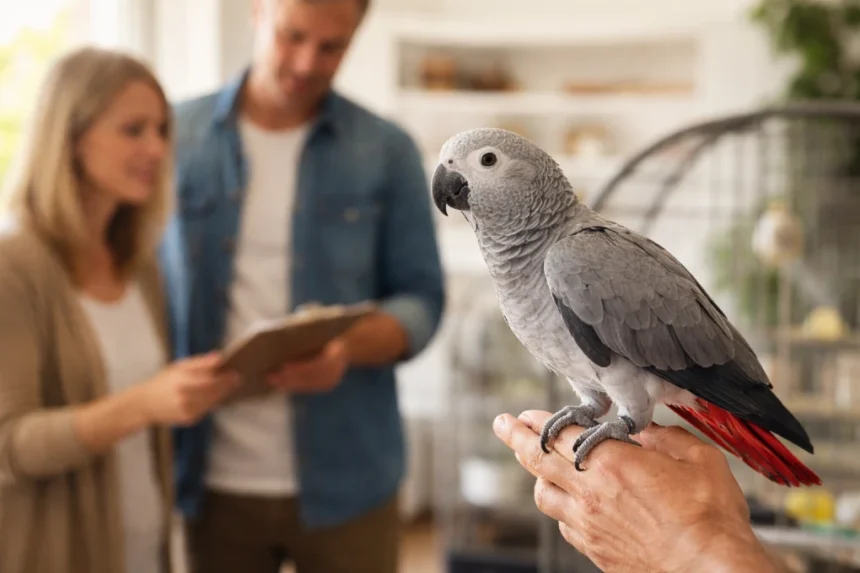
If you have been searching For Sale African Grey, you already know this is not the kind of pet purchase you should rush. An African Grey is not just a beautiful parrot with an impressive vocabulary. It is a highly intelligent, deeply social bird that can live for decades, which means the seller you choose matters almost as much as the bird itself. VCA notes that African Greys are highly intelligent and commonly bred in captivity as pets, while Lafeber highlights their exceptional mimicry and social awareness.
- Why African Grey buyers need to be extra careful
- What a reputable African Grey seller looks like
- Questions to ask before you buy
- Red flags you should never ignore
- Breeder, bird store, rescue, or private owner?
- How to verify a seller in the US
- Price is important, but it should not be your first filter
- What to do before bringing the bird home
- Common mistakes buyers make
- A simple buyer checklist you can actually use
- Final thoughts
That is why buyers who type For Sale African Grey into Google should think beyond price, shipping, or flashy photos. A reputable seller should be able to show you where the bird came from, how it was raised, what it eats, whether it has seen an avian veterinarian, and how it behaves around people. In the US market, the safest purchase is usually a well-socialized, legally sourced, captive-bred bird sold by someone who welcomes questions instead of dodging them. The Association of Avian Veterinarians also stresses the importance of regular bird veterinary care for long-term health.
Buying an African Grey is a long commitment. Many owners are not just buying a pet for a few years. They are taking on a companion that may remain part of the household for decades if cared for properly. Because African Greys are prone to stress, boredom, nutritional problems, and behavior issues when raised poorly, choosing a reputable seller is one of the best ways to avoid heartbreak later. VCA and Lafeber both emphasize species-specific care needs, and VCA specifically notes that African Greys are more prone to calcium deficiency on poor diets.
Why African Grey buyers need to be extra careful
An African Grey Parrot for Sale may look similar from one ad to another, but the background behind the bird can be completely different. One bird may come from a careful breeder who hand-feeds responsibly, weans properly, keeps clean records, and socializes the chick daily. Another may come from a reseller who knows almost nothing about the bird beyond its hatch date and asking price.
That difference matters because African Greys are not low-maintenance pets. The ASPCA states that medium and large parrots such as African Greys are highly intelligent, social animals with complex care requirements that include exercise, mental stimulation, appropriate diet, and a safe environment. Lafeber likewise describes them as highly social and exceptionally intelligent birds.
A poorly raised Grey may arrive fearful, under-socialized, improperly weaned, or already struggling with nutrition. Those issues can turn into biting, screaming, feather damaging behavior, chronic stress, or expensive medical treatment. VCA warns that all-seed diets can contribute to calcium deficiency in African Greys, and its bird health resources note that low calcium can lead to tremors or seizures in this species.
There is also a legal and ethical side to this purchase. African grey parrots are protected under CITES Appendix I, which means international trade is tightly regulated because of conservation concerns. CITES states that Appendix I includes species threatened with extinction, and a CITES notification confirms African grey parrots were moved to Appendix I with that change taking effect on January 2, 2017.
In simple terms, a serious buyer should care not only about the bird’s personality and price, but also about lawful sourcing and documentation. A reputable US seller should be able to explain whether the bird is captive bred, provide records, and answer basic questions without hesitation.
What a reputable African Grey seller looks like
When people search For Sale African Grey, they often focus first on the listing. A smarter move is to judge the seller.
A reputable seller usually has five clear traits:
- They are transparent about the bird’s origin
- They allow detailed questions and give specific answers
- They provide health and feeding records
- They do not pressure you into a fast payment
- They care where the bird is going, not just how fast it sells
That last point is important. Good breeders and quality bird specialty stores usually ask buyers questions too. They want to know if you have bird experience, whether you understand noise and dust, if you have an avian vet lined up, and what kind of daily routine the bird will have. That is usually a good sign, not a nuisance.
Questions to ask before you buy
Before contacting any seller offering For Sale African Grey, prepare a real checklist. This immediately separates knowledgeable sellers from careless ones.
Ask about the bird’s background
Start with the basics:
- Is this bird captive bred in the US?
- Is it a Congo African Grey or Timneh African Grey?
- What is the hatch date?
- Was the bird hand-fed, parent-raised, or co-parented?
- Is the bird fully weaned?
These questions are practical, not technical. A reputable seller should answer them easily.
Ask about health and veterinary care
You should also ask:
- Has the bird seen an avian veterinarian?
- Do you have recent health records?
- Has the bird been tested for common infectious diseases if applicable?
- Has the bird had any issues with appetite, droppings, breathing, or feather condition?
The Association of Avian Veterinarians recommends regular checkups for companion birds, so a seller who already works with an avian vet is generally a safer bet than someone selling birds casually with no medical history at all.
Ask what the bird eats right now
Diet tells you a lot about the quality of care. Ask the seller exactly what the bird is eating every day. VCA states that birds need a balanced diet and specifically warns that African Greys are more prone to calcium deficiency when fed a mostly seed-based diet. Lafeber’s avian nutrition materials also note that low blood calcium can be a concern in African Greys and that calcium-rich foods matter.
A good answer might include:
- A quality pellet base
- Fresh vegetables
- Limited fruit
- Occasional healthy grains or nuts
- Clean water changed daily
A weak answer usually sounds like this: “He eats bird seed and likes snacks.” That should make you pause.
Ask about behavior and socialization
This part often gets overlooked. African Greys are known for remarkable vocal learning and social sensitivity. A 2022 Scientific Reports study found species differences in mimicry ability and reported that grey parrots had the largest mimicry repertoires among surveyed companion parrots.
That intelligence is part of their appeal, but it is also why handling matters. Ask:
- Is the bird comfortable stepping up?
- Has it been exposed to normal household sounds?
- Does it show fear around strangers?
- How much daily interaction has it had?
- Has it begun talking, whistling, or mimicking?
A seller who truly knows the bird can describe temperament in detail. Not every good African Grey talks early, and not every quiet bird is a problem. What matters is whether the seller actually understands the bird’s behavior.
Red flags you should never ignore
Some For Sale African Grey listings should be skipped immediately. Buyers often lose money, receive sick birds, or end up caught in scam situations because they ignore obvious warning signs.
Here are the biggest red flags:
- The price is dramatically below normal market value
- The seller refuses a video call or in-person visit
- The seller cannot provide current photos or recent videos
- The seller wants payment only through risky methods
- The bird is described in vague language with no details
- The seller does not know the bird’s diet, age, or sex
- The ad uses emotional pressure like “must send money today”
- The seller offers shipping but avoids discussing records or health
One of the clearest signs of a bad seller is inconsistency. If the ad says the bird is tame, healthy, hand-raised, fully weaned, and young, but the seller cannot answer simple follow-up questions, walk away.
Breeder, bird store, rescue, or private owner?
The best place to find an African Grey Parrot for Sale depends on what kind of bird you want and how experienced you are.
Breeders
A reputable breeder is often the first choice for buyers who want a younger bird with documented history. The advantage is predictability. You may get hatch records, feeding information, socialization details, and better insight into the bird’s early development.
The downside is that not all breeders are equal. A glossy website does not prove quality. You still need records, transparency, and ideally a chance to see the environment.
Bird specialty stores
A quality bird store can be a good option if it has experienced staff, strong husbandry standards, and a relationship with avian veterinarians. The best stores know each bird individually, not just as inventory.
The downside is variation. Some stores are excellent. Others are basically retail resellers with limited bird-specific expertise.
Rescues and rehoming situations
Not every responsible buyer needs a baby parrot. Some of the best African Greys come through ethical rehoming or rescue situations. You may get a bird whose personality is already known and whose needs are clearer than those of a young chick.
The key is to verify why the bird is being rehomed and to get honest behavioral details. A sincere private owner will usually tell you both the good and the hard parts.
How to verify a seller in the US
A seller may sound polished over text. Verification is where you separate marketing from reality.
Ask for a live video call
A live call helps you confirm that the bird exists, that the seller is interacting with the bird naturally, and that the environment looks reasonably clean and safe. Ask to see the bird move, climb, eat, or step up if trained.
Request documentation
You do not need a mountain of paperwork, but you should ask for:
- Hatch certificate or breeder record if available
- Sales contract or bill of sale
- Veterinary paperwork if the bird has been examined
- Feeding routine and current diet list
- Basic identification details such as species type and age
Check if the seller uses an avian vet
This is one of the best trust indicators. A seller who already works with an avian veterinarian is usually more serious about proper care than one who has never established medical support.
Search for independent reviews
Look beyond testimonials on the seller’s own website. Look for bird forum discussions, third-party reviews, social media history, and consistent feedback over time. One glowing review means little. A pattern matters more.
Price is important, but it should not be your first filter
Many buyers searching For Sale African Grey begin with budget, which is understandable. But the cheapest bird is often the most expensive in the long run.
An underpriced Grey can come with hidden costs such as:
- Emergency veterinary care
- Nutritional rehabilitation
- Quarantine expenses
- Behavior consultation
- Larger cage and enrichment upgrades
- Long-term trust rebuilding if the bird was poorly socialized
A well-raised bird from a reputable source may cost more upfront, but you are also paying for good weaning, better nutrition, cleaner conditions, social handling, and proper recordkeeping. With a species that may live for decades, that early investment can save a lot of stress later.
What to do before bringing the bird home
Even if you find the perfect seller, do not buy until your setup is ready.
Before purchase, make sure you have:
- A proper cage with appropriate bar spacing
- Safe perches of different diameters
- Foraging toys and enrichment items
- A quiet but social area in the home
- A bird-safe environment free from fumes and toxins
- A relationship with an avian veterinarian
The ASPCA stresses that parrots need social and mental stimulation, exercise, appropriate diet, and a toxin-free environment. Those are not extras. They are baseline care.
You should also plan for the first vet appointment soon after purchase. Even if the bird seems healthy, a new-pet exam gives you a baseline and helps catch issues early.
Common mistakes buyers make
Many first-time buyers get excited by appearance and talking ability and overlook the realities of ownership.
Here are common mistakes:
- Buying from the first attractive ad
A polished listing is not proof of quality. - Focusing only on whether the bird talks
Speech is a bonus, not the main health metric. - Ignoring diet and weaning history
These details affect long-term health in a major way. - Not budgeting for lifelong care
African Greys are intelligent, long-lived parrots, not short-term novelty pets. - Skipping the seller interview
You are not just buying a bird. You are evaluating the person who raised or cared for it.
A simple buyer checklist you can actually use
If you want a practical way to judge a For Sale African Grey listing, use this table before sending payment.
| Checkpoint | What you want to see |
|---|---|
| Bird origin | Captive bred, clearly explained |
| Age and type | Exact hatch date or estimated age, Congo or Timneh identified |
| Diet | Pellet-based diet with fresh foods, not seed-only |
| Socialization | Detailed handling history |
| Health | Avian vet records or clear health history |
| Transparency | Seller answers questions directly |
| Proof | Recent photos, videos, or live video call |
| Payment | Secure, documented transaction |
| Pressure level | No rush tactics, no emotional manipulation |
| After-sale support | Basic care instructions and willingness to answer questions |
If a seller fails several of these points, keep looking.
Final thoughts
Finding the right For Sale African Grey listing in the US is less about luck and more about discipline. The best buyers do not chase the fastest deal. They verify the seller, ask detailed questions, review documentation, and prepare their home before the bird arrives.
That approach protects you, and it protects the bird. African Greys are extraordinary companions, but they are also demanding, sensitive, and deeply intelligent. A reputable seller will respect that reality, and so should any serious buyer. In the end, the goal is not just to locate an African Grey Parrot for Sale. It is to bring home a healthy bird from a trustworthy source and set up a long, stable relationship from day one.
If you are still comparing listings, slow down and pay attention to the bigger picture. The bird’s early care, diet, socialization, and legal background matter more than a flashy ad ever will. Read carefully, ask better questions, and treat the process with the same seriousness you would give any long-term companion animal. For more context on this remarkable parrot species, it helps to understand just how unique African Greys are before making your final choice.