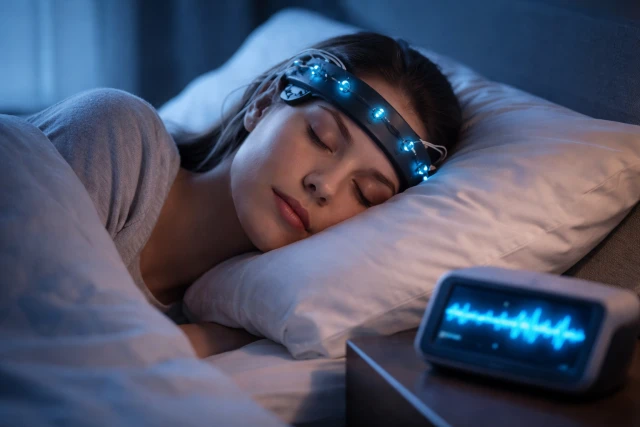
If you have ever stared at the ceiling at 2:00 a.m. thinking, “I feel tired, so why can’t I sleep?”, you are not alone. Sleep is weirdly personal. One night you crash instantly, the next you toss around like your pillow is made of bricks. That’s exactly why EEG Tech has become such a hot topic in sleep tracking. Instead of guessing how you slept based on movement alone, EEG based sleep trackers aim to read what your brain is actually doing.
- What “EEG Tech” Means in Sleep Tracking
- How Brainwaves Relate to Sleep Quality
- Is EEG Tech Accurate for Sleep Staging?
- Can EEG Tech Improve Sleep, or Does It Just Track It?
- The AASM Reality Check You Should Know
- Who Benefits Most From EEG Tech for Sleep?
- EEG Tech vs Other Sleep Trackers (Quick Comparison)
- Getting Reliable EEG Tech Data (Without Driving Yourself Crazy)
- Practical Sleep Improvements EEG Tech Can Help You Validate
- Common Questions People Ask About EEG Tech and Sleep
- A Simple 14-Day EEG Tech Sleep Plan
- When to Stop Tracking and Get Help Instead
- Conclusion: So, Can EEG Tech Improve Rest?
But here’s the real question: can EEG Tech genuinely improve your rest, or is it just another shiny gadget that gives you charts and anxiety?
In this guide, we’ll walk through what brainwave tracking can and cannot do, how accurate it is compared to a lab sleep study, and how to use it in a practical way that actually supports better sleep.
What “EEG Tech” Means in Sleep Tracking
EEG stands for electroencephalography, which is the measurement of electrical activity in the brain. In sleep medicine, EEG is one of the key signals used to stage sleep into wake, light sleep, deep sleep, and REM sleep. A full lab sleep study, called polysomnography, records brain waves plus other signals like breathing, oxygen level, heart rate, eye movement, and muscle activity. It’s a big deal in clinical diagnosis for a reason.
Consumer EEG Tech usually comes in a simpler form, most commonly as a headband or forehead sensors that use fewer electrodes than a lab setup. The promise is simple: track sleep stages at home, night after night, and turn that information into something you can act on.
The big difference vs typical sleep trackers
Most wrist trackers and rings estimate sleep stages indirectly, mainly using motion and heart rate patterns. EEG based devices try to measure the signal that sleep staging is built on in the first place: brain activity.
That does not automatically mean perfect accuracy, but it can be a meaningful step closer to how sleep is scored clinically.
How Brainwaves Relate to Sleep Quality
People often think “good sleep” equals “more hours.” Hours matter, but sleep quality is also about structure.
A typical night cycles through different stages:
- Light sleep (easier to wake from)
- Deep sleep (more physical restoration)
- REM sleep (linked to memory, learning, emotion processing)
EEG is central to identifying these stages, which is why sleep labs rely on it.
Here’s the practical point: if you can see patterns in your sleep architecture over time, you can test what actually improves it. Not in a vague “I think I slept better” way, but in a “my sleep onset and deep sleep changed after I adjusted X” way. That is where EEG Tech can be helpful, especially for people who like data but want it to be more meaningful than step counts.
Is EEG Tech Accurate for Sleep Staging?
Let’s be honest: accuracy is the make or break issue.
The gold standard for sleep staging is still polysomnography with expert scoring. Consumer devices, even EEG based ones, are simplified and use automated algorithms. They can be good, but they are not identical to a clinical lab setup.
What research suggests (in plain English)
Studies comparing EEG headbands to lab polysomnography generally show:
- Better staging potential than movement-only trackers
- Solid performance for overall sleep metrics in many users
- Common weaknesses in specific stage detection, especially certain transitions and lighter stages
For example, research on the Dreem headband has compared reduced montage dry EEG recordings against polysomnography scored by sleep experts.
More recent work has also evaluated newer versions in specific populations like people with insomnia, again comparing results to lab measures.
There are also reports of portable EEG based monitoring with Muse S showing good validity for sleep macroarchitecture variables relative to standard polysomnography in a diverse sample, though it’s worth noting some of this evidence appears in conference materials and abstracts.
The most important accuracy takeaway
For most people, EEG Tech is best at answering questions like:
- “How long did it take me to fall asleep?”
- “Is my sleep schedule stable or chaotic?”
- “Do I get consistent deep sleep and REM, or is it all over the place?”
- “Did my changes actually move the needle over 2 to 4 weeks?”
It is not ideal for diagnosing a sleep disorder on its own.
Can EEG Tech Improve Sleep, or Does It Just Track It?
Tracking alone does not improve anything. A thermometer does not cure a fever.
EEG Tech can help you sleep better when it changes your behavior in a smart way. The win is not the graph. The win is what you do because of the graph.
Three ways EEG Tech can lead to better sleep
- Pattern detection you can actually trust
If your “deep sleep” suddenly drops for a week, you can look at what changed: late caffeine, new workout timing, travel, stress, screen habits, bedtime drifting. - More precise habit experiments
You can run simple tests:- No caffeine after 2 p.m. for 10 days
- Morning sunlight exposure for 15 minutes for 2 weeks
- Consistent wake time for 14 days
Then compare your sleep onset, awakenings, and stage trends.
- Reducing the guesswork
Many people with sleep issues do a lot of guessing. Data can reduce uncertainty, which sometimes reduces sleep related stress.
That said, there is a known risk: sleep tracking can create “performance pressure” around sleep. Some people become more anxious when the numbers look “bad,” even when they feel okay. This is one reason sleep clinicians emphasize context and careful use of consumer sleep tech.
The AASM Reality Check You Should Know
The American Academy of Sleep Medicine (AASM) has been very clear about how consumer sleep technology should be viewed in a clinical context. In their position statement, they note limitations, lack of validation for many devices, and that consumer sleep tech should not be used to diagnose or treat sleep disorders at this time, especially without appropriate clinical evaluation.
So where does that leave you?
It leaves you with a balanced approach:
- Use EEG Tech for insight and habit improvement
- Use a sleep clinician for diagnosis and treatment decisions, especially if symptoms are serious
Who Benefits Most From EEG Tech for Sleep?
In real life, the people who tend to get the most value from EEG Tech fall into a few groups.
You may benefit if you:
- Have trouble falling asleep and want to track sleep onset patterns
- Wake up often and want to see if awakenings cluster at certain times
- Feel unrefreshed and want to explore sleep consistency over time
- Are experimenting with routines and want feedback beyond “how I feel”
- Travel frequently and want to see how time shifts impact your sleep structure
You may want to avoid it (or use it lightly) if you:
- Feel anxious when you see health metrics
- Tend to obsess over “perfect scores”
- Notice your sleep gets worse when you track it
If the device makes you worry more, it is not helping, no matter how advanced the EEG Tech is.
EEG Tech vs Other Sleep Trackers (Quick Comparison)
Here’s a practical comparison to help you understand where EEG based devices fit.
| Device Type | What It Measures | Best For | Main Limitation |
|---|---|---|---|
| EEG headband (consumer) | Brain signals (simplified EEG) | Sleep staging trends and habit experiments | Comfort, occasional signal quality issues, not a diagnostic tool |
| Wrist tracker | Movement, heart rate | Sleep schedule, rough duration trends | Sleep stages are estimates |
| Ring tracker | Heart rate, HRV, temperature trends | Recovery patterns and nightly trends | Sleep stages are still indirect |
| Lab polysomnography | EEG plus breathing, oxygen, eye and muscle activity | Diagnosing sleep disorders | Cost, time, clinic setting, not frequent |
Polysomnography remains the highest quality option for clinical data, especially because it captures breathing and oxygen changes that consumer wearables often cannot assess properly.
Getting Reliable EEG Tech Data (Without Driving Yourself Crazy)
If you are going to use EEG Tech, use it like a tool, not a judge.
1) Track trends, not single nights
One night can be noisy. Focus on:
- 7-day averages
- 14-day patterns
- “Before vs after” comparisons when you change a habit
2) Keep a tiny sleep log beside the data
This makes your tracking way more useful. Write one line per day:
- Caffeine cutoff time
- Exercise timing
- Alcohol yes/no
- Stress level 1 to 5
- Bedtime and wake time
When your EEG Tech shows a shift, you can actually explain it.
3) Prioritize sensor placement and comfort
A surprising amount of bad sleep data comes from poor contact, dryness, or slipping. If your readings look chaotic, fix the fit before you assume your sleep is “broken.”
4) Use a 2-week “baseline” before changing anything
Most people start tracking and instantly change five habits. Then they have no idea what caused what.
Run your EEG Tech normally for 14 nights. That baseline becomes your personal reference.
Practical Sleep Improvements EEG Tech Can Help You Validate
Let’s talk about changes that often move the needle, and how brainwave tracking can help you confirm it.
Consistent wake time (the boring superpower)
If you do one thing, do this. A stable wake time anchors your circadian rhythm. With EEG Tech, you might notice:
- Faster sleep onset after several days
- Fewer late-night awakenings
- More consistent REM timing
Morning light exposure
Getting outdoor light early helps set your internal clock. Over 1 to 2 weeks, you may see:
- Earlier sleepiness at night
- Improved sleep efficiency trends
- Less “restless” time
Caffeine timing audit
Many people tolerate caffeine until they do not. Track:
- Caffeine after lunch vs no caffeine after lunch
- Changes in sleep onset latency
- Fragmentation
EEG Tech is especially useful here because falling asleep later is often visible even when you “feel like you slept.”
Bedroom temperature tweaks
Cooler tends to be better for most people. If you adjust temperature or bedding, look for:
- Reduced awakenings
- More stable deep sleep blocks
Wind-down routines that match your brain
Not every wind-down works for every person. Try:
- Reading paper book
- Light stretching
- Warm shower
- Breathwork
Then let the EEG Tech trend data show what helps you settle faster.
Common Questions People Ask About EEG Tech and Sleep
Is EEG Tech safe for nightly use?
For consumer wearables, the EEG sensors are passive and measure electrical activity rather than sending electricity into your brain. Normal use is generally considered low risk, but you should follow device instructions and consult a clinician if you have a medical condition or implanted devices.
Can EEG Tech detect sleep apnea?
Not reliably on its own. Sleep apnea diagnosis typically requires breathing and oxygen data, and often an attended or validated test pathway. Polysomnography includes respiratory monitoring, which is part of why it is used for diagnosing sleep disorders.
Why does my EEG Tech show “bad sleep” when I feel fine?
Two reasons are common:
- You had a good subjective night even if stages were atypical
- The signal quality or staging algorithm misclassified parts of the night
This is where trends beat single-night interpretation.
Should I show my EEG Tech results to a doctor?
You can, especially if it helps explain symptoms. The AASM notes consumer sleep data may enhance patient clinician interaction when presented within an appropriate clinical evaluation, but it should not replace medical assessment.
A Simple 14-Day EEG Tech Sleep Plan
If you want a plan that feels realistic, here’s one.
Days 1 to 3: Setup and comfort
- Wear the device nightly
- Fix fit issues
- Do not change habits yet
- Note bedtime, wake time, caffeine
Days 4 to 14: One change at a time
Pick just one:
- Fixed wake time (recommended)
- No caffeine after 2 p.m.
- Morning light exposure
- Screen cutoff 60 minutes before bed
Use your EEG Tech dashboard to compare:
- Sleep onset latency
- Number of awakenings
- Overall sleep time
- Stage consistency (not perfection)
At the end of 14 days, you will have something most people never get: personal evidence of what works for your sleep.
When to Stop Tracking and Get Help Instead
Data is helpful, but it has limits. Consider a professional sleep evaluation if you have:
- Loud snoring, choking or gasping at night
- Excessive daytime sleepiness despite “enough hours”
- Chronic insomnia lasting months
- Restless legs symptoms
- Sudden changes in sleep and mood
A lab or clinically guided pathway exists for a reason, and polysomnography is designed to capture far more than consumer sleep devices can.
Conclusion: So, Can EEG Tech Improve Rest?
Yes, EEG Tech can improve sleep for the right person, used in the right way.
It’s not magic, and it’s not a diagnosis machine. But it can be a powerful feedback tool. When you treat the data like a long-term trend, pair it with a simple sleep log, and test one habit at a time, brainwave tracking can help you move from vague guesses to practical changes that stick.
In other words, EEG Tech works best when it helps you build confidence in your routine, not when it turns sleep into a nightly exam. If you keep it calm, keep it consistent, and focus on what you can control, you might be surprised how much your rest improves.
And if you want a quick refresher on the science behind it, check out EEG basics in the final stretch of your reading and then come back to your own trends with fresh eyes.