



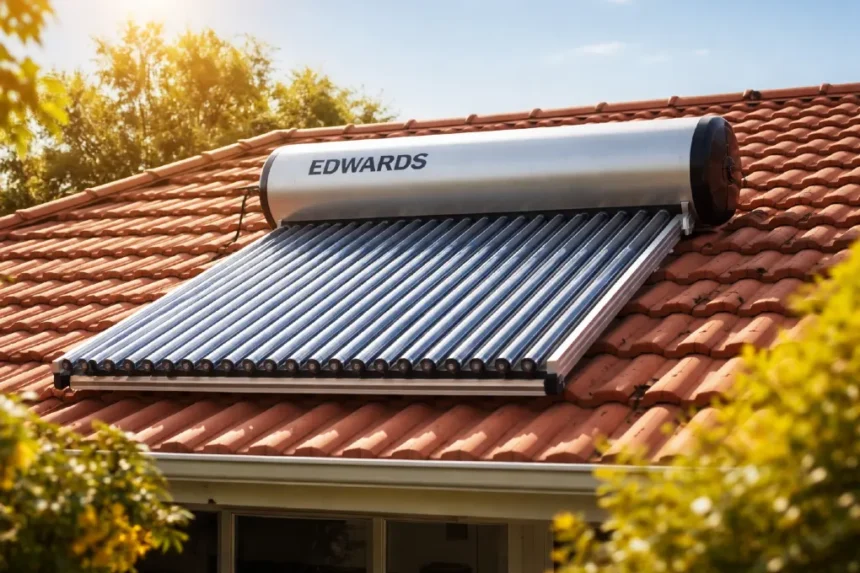
If you are comparing efficient hot water options for your home, Edwards Solar Hot Water is a name that often comes up for good reason. Hot water is a major part of household energy use in Australia, and government guidance says it typically accounts for about 15% to 30% of household energy use, with some sources putting the average closer to 23% to 25%. That means choosing the right system can make a real difference to both running costs and long-term value.
- What Is Edwards Solar Hot Water?
- Why Hot Water Costs Matter So Much
- Edwards Solar Hot Water Upfront Costs
- Rebates and Incentives Can Improve the Numbers
- How Much Can Edwards Solar Hot Water Save?
- Everyday Benefits Beyond the Bill
- What Affects Performance Day to Day?
- Edwards Solar Hot Water Versus Standard Electric Storage
- Common Questions Homeowners Ask
- Is Edwards Solar Hot Water expensive to install?
- Can Edwards Solar Hot Water lower energy bills?
- Is Edwards Solar Hot Water worth it for families?
- Are rebates available?
- Long-Term Value of Edwards Solar Hot Water
- Conclusion
What draws people to Edwards Solar Hot Water is the balance it promises between solar efficiency, lower day-to-day energy dependence, and practical hot water performance for family life. Edwards’ official site presents its solar hot water systems for both domestic and commercial use, while broader Australian guidance notes that solar hot water systems use collectors or evacuated tubes plus a storage tank, often with a gas or electric booster where needed.
The cost question matters, of course. Solar hot water systems usually cost more upfront than standard electric storage units, but reputable Australian pricing guides place installed solar hot water systems broadly in the $3,000 to $8,000 range depending on system type, size, boosting method, and installation complexity. Government incentives such as Small-scale Technology Certificates, plus state or territory rebates, can reduce that initial cost.
That is why Edwards Solar Hot Water is usually best judged over time, not just at the checkout. For many households, the story is not only about purchase price. It is about long-term savings, energy efficiency, and having a reliable supply of hot water without leaning as heavily on grid electricity or gas every single day.
What Is Edwards Solar Hot Water?
Edwards Solar Hot Water refers to solar-powered hot water systems sold under the Edwards brand in Australia. Edwards’ official website describes the company as a manufacturer and marketer of domestic and commercial hot water heating systems, including solar, and its solar section positions the brand around energy efficiency and sustainability.
Historically, the Edwards name has been strongly associated with Australian solar hot water systems, stainless steel tanks, and systems suited to harsh conditions. Some current reseller and service pages note that the Edwards brand is now linked with Rheem Australia and that some older models are no longer available in the same form, but the name still carries strong recognition in the solar hot water market.
For a homeowner, the practical meaning is simple. Edwards Solar Hot Water is generally part of the conversation when people are looking for:
- A solar hot water upgrade
- A replacement for an older electric storage system
- Better energy efficiency at home
- Lower running costs over time
- A hot water system with strong solar contribution
Why Hot Water Costs Matter So Much
One reason Edwards Solar Hot Water gets so much attention is that hot water is not a small utility detail. It is one of the bigger energy loads in most homes.
The Australian Government says water heating is the second largest segment of household energy use, ranging from 15% to 30%. YourHome, a respected Australian housing resource, says about 23% of energy used in an average Australian home goes to heating water, and in some homes it is much higher. Both sources stress that choosing an efficient system can save energy and money.
That means when people talk about Edwards Solar Hot Water, they are usually not just talking about equipment. They are talking about a part of the home that affects bills every month.
Edwards Solar Hot Water Upfront Costs
The upfront cost of Edwards Solar Hot Water will vary depending on the setup, but a realistic article has to be honest here. Solar hot water is usually more expensive to buy and install than a basic electric storage system. Government guidance explicitly says purchase and installation of solar hot water systems is expensive, especially compared with cheaper conventional units.
Across the broader Australian market, current pricing guides estimate:
| System Type | Typical Installed Cost Range |
|---|---|
| Roof-mounted solar hot water | Around $3,800 to $5,400+ |
| Split solar system | Around $3,900 to $6,000+ |
| Larger or more complex systems | Up to $7,000 to $8,000+ |
These are general market ranges rather than official Edwards price lists, but they give homeowners a practical frame for budgeting for Edwards Solar Hot Water as a solar category purchase. Final pricing depends on tank size, booster type, roof configuration, plumbing changes, and labour in your area.
In real terms, your final installed cost for Edwards Solar Hot Water may be influenced by:
- Number of people in the household
- Available roof space and solar access
- Whether the system is roof-mounted or split
- Electric or gas boosting
- Plumbing upgrades or relocation work
- Local installer pricing
- Eligible rebates or STCs
Rebates and Incentives Can Improve the Numbers
One of the most important financial points about Edwards Solar Hot Water is that the sticker price is not always the real final price.
The Australian Government states that solar hot water systems may be eligible for Small-scale Technology Certificates, and energy.gov.au also points households to state and territory rebate programs that can help reduce purchase costs. That matters because the difference between “too expensive” and “worth it” often comes down to what incentives are available where you live.
For example, the federal rebates portal includes searchable support options by state, and some programs specifically mention hot water and energy efficiency upgrades. The ACT’s Sustainable Household Scheme, for instance, includes hot water heat pumps and evacuated tube solar hot water systems among eligible products.
So when evaluating Edwards Solar Hot Water, it makes sense to think in terms of:
- Advertised system price
- Installation cost
- STC discount value
- State or territory rebates or finance offers
- Expected running cost reduction over time
How Much Can Edwards Solar Hot Water Save?
This is where Edwards Solar Hot Water becomes appealing for many households. While savings vary by climate, usage, and system design, the broad logic is straightforward. If the sun is doing much of the water heating work, the system relies less on purchased energy.
Government sources stop short of giving one universal savings number because performance depends on the home, but they are very clear that an efficient hot water system can save significant energy and money. Industry price guides aimed at Australian households say solar hot water systems can reduce hot water heating bills substantially, with some sources citing savings of up to 80% in favourable conditions over the long term. That upper figure should be treated as scenario-based rather than guaranteed, but it does show why the category gets so much attention.
A realistic way to think about Edwards Solar Hot Water savings is this:
- Homes with high hot water use often see stronger value
- Sunny climates improve solar contribution
- Efficient water use habits increase savings further
- Older electric storage replacements often show the clearest benefit
- Incentives shorten the payback period
Everyday Benefits Beyond the Bill
The conversation around Edwards Solar Hot Water should not stop with dollars. Savings matter, but everyday convenience matters too.
More stable long-term energy costs
Energy prices move. When more of your hot water comes from solar input, part of your daily hot water demand becomes less exposed to energy price swings. That does not mean zero bills, especially if boosting is needed, but it can improve household cost control.
Lower household emissions
The Australian Government says water heating is the largest source of greenhouse gas emissions from an average Australian home, at up to 25%, and emissions are reduced or eliminated when a renewable source is used. That makes Edwards Solar Hot Water attractive to households trying to lower their environmental footprint.
Better fit for sunny Australian conditions
YourHome notes that high-performance solar hot water systems work especially well in sunny climates with good solar radiation. That helps explain why Edwards Solar Hot Water has remained relevant in the Australian market.
Suitable for family use
A well-sized solar storage system can suit regular family routines such as morning showers, laundry cycles, and kitchen use. The key is matching the system to household size and usage habits. YourHome specifically advises choosing a hot water system to suit household size, climate, and water use.
What Affects Performance Day to Day?
Not every home will get the same result from Edwards Solar Hot Water. Performance depends on several practical factors.
Climate and sunshine
More solar exposure usually means stronger solar contribution and less reliance on boosting. In cooler or less sunny periods, boosting becomes more important.
Roof positioning
YourHome says rooftop collectors must be carefully positioned to maximise solar access. Shading and poor orientation can reduce efficiency.
Household size
A couple with moderate hot water use may need a different system size than a large family. Oversizing can waste money, while undersizing can reduce comfort.
Tank and pipework losses
YourHome notes that about 30% of the energy used to heat water in a storage system can be lost through the tank and associated pipework, though careful design and installation can reduce this. Good installation quality matters almost as much as product choice.
Edwards Solar Hot Water Versus Standard Electric Storage
For many buyers, the real comparison is between Edwards Solar Hot Water and a standard electric storage system.
| Feature | Edwards Solar Hot Water | Standard Electric Storage |
|---|---|---|
| Upfront cost | Higher | Lower |
| Running costs | Usually lower over time | Usually higher |
| Solar contribution | Yes | No |
| Emissions profile | Lower | Higher |
| Best for long-term savings | Often yes | Usually no |
This is why the decision often comes down to time horizon. If you only focus on the purchase invoice, a standard electric tank looks cheaper. If you look at years of use, Edwards Solar Hot Water can become more compelling.
Common Questions Homeowners Ask
Is Edwards Solar Hot Water expensive to install?
Usually yes, compared with a basic electric storage unit. Solar hot water systems generally have higher upfront purchase and installation costs, though incentives may reduce that burden.
Can Edwards Solar Hot Water lower energy bills?
Yes, that is one of the main reasons households consider it. The actual amount varies, but efficient solar hot water systems can reduce the amount of purchased electricity or gas needed for water heating.
Is Edwards Solar Hot Water worth it for families?
It can be, especially where hot water use is steady and solar access is good. Family households often have enough daily demand to benefit more clearly from solar contribution.
Are rebates available?
Potentially yes. STCs and state or territory support programs may be available, depending on location and eligibility.
Long-Term Value of Edwards Solar Hot Water
The strongest case for Edwards Solar Hot Water is long-term value. You are paying more upfront to reduce dependence on conventional energy for a major household load. In the right home, that can lead to a better balance of comfort, running cost control, and lower emissions over many years.
It also fits a broader housing trend. More Australian households are looking for efficient home upgrades that do not just sound good on paper but help in everyday life. Hot water is a practical place to start because it is used every day, not once in a while. That makes Edwards Solar Hot Water more than a niche product. It is part of a broader move toward smarter home energy choices.
In the bigger picture, Edwards Solar Hot Water makes the most sense when you judge it the way homeowners actually live: month by month, shower by shower, load by load. A lower running-cost system for one of the biggest energy jobs in the house can make a visible difference over time. In that sense, it sits naturally within the wider shift toward solar energy for everyday household use.
Conclusion
Edwards Solar Hot Water stands out because it speaks to three things homeowners care about most: cost, savings, and daily practicality. The upfront investment is usually higher than a standard electric system, but government guidance and market pricing both show why many households still look closely at solar hot water. It targets one of the biggest energy uses in the home and can reduce the amount of paid energy needed to keep hot water available.
The real value of Edwards Solar Hot Water is not just in the initial product description. It is in how it performs over time. Lower running costs, reduced emissions, better use of Australia’s sunny climate, and potential incentive support all add to the picture. For homes with good solar access and steady hot water demand, Edwards Solar Hot Water remains a practical and financially relevant option in the home upgrade conversation.