



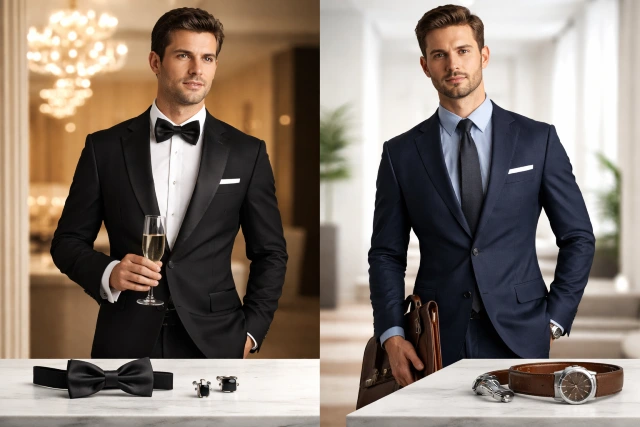
When it comes to men’s fashion, suits play a central role in defining elegance, professionalism, and personal style. Yet many men often feel confused about the difference between formal evening wear and professional office attire. The debate around Dinner Suit vs Business Suit frequently comes up when deciding what to wear for an event, a meeting, or a special occasion.
- Understanding the Basics of Dinner Suit vs Business Suit
- What Is a Dinner Suit
- What Is a Business Suit
- Key Differences Between Dinner Suit vs Business Suit
- The History Behind Formal and Business Suits
- When to Wear a Dinner Suit
- When to Wear a Business Suit
- Fabric and Design Differences
- Accessories for Dinner Suit vs Business Suit
- Suit Color and Style Etiquette
- Real World Scenario: Choosing the Right Suit
- Common Mistakes Men Make
- Modern Trends in Men’s Suits
- How to Choose the Right Suit for Your Wardrobe
- Grooming and Presentation
- The Social Significance of Suits
- Conclusion
While both styles may appear similar at first glance, they serve very different purposes. One is designed for sophisticated evening events, while the other represents professionalism in the workplace. Understanding the distinction between a dinner suit and a business suit helps men dress appropriately and confidently in different social settings.
This guide explores the key differences between Dinner Suit vs Business Suit, including style elements, etiquette rules, occasions, and practical tips for choosing the right suit.
Understanding the Basics of Dinner Suit vs Business Suit
Before diving into details, it helps to understand what each suit represents.
A dinner suit is typically worn during formal evening events such as black tie dinners, galas, weddings, and high end celebrations. It is often referred to as a tuxedo in some regions and is associated with formal evening dress codes.
A business suit, on the other hand, is designed for professional environments. It is commonly worn in corporate offices, business meetings, conferences, and everyday professional settings.
The key difference in Dinner Suit vs Business Suit lies in the occasion, styling details, and level of formality.
What Is a Dinner Suit
A dinner suit is a formal evening outfit designed for special occasions. It usually consists of a black or midnight blue jacket with satin or silk lapels, matching trousers, and a formal shirt.
The outfit is typically paired with a bow tie and polished dress shoes.
Key features of a dinner suit include
• Satin lapels that create a glossy finish
• Trousers with a satin stripe along the side
• A formal white shirt with a pleated or textured front
• A bow tie rather than a standard necktie
• Minimal accessories for an elegant look
Dinner suits are most often worn during evening events that follow a formal dress code.
What Is a Business Suit
A business suit is designed for professional settings and everyday corporate environments. Unlike the formal elegance of a dinner suit, a business suit focuses on practicality, comfort, and professional presentation.
Business suits usually come in colors such as navy, charcoal, or grey.
Typical elements include
• Structured jacket with notch lapels
• Matching trousers without satin accents
• Standard dress shirt
• Neck tie instead of bow tie
• Leather dress shoes
Business suits are intended for daily professional use rather than formal celebrations.
Key Differences Between Dinner Suit vs Business Suit
Understanding the differences between these two suits helps avoid fashion mistakes at important events.
Here is a comparison of their main features.
| Feature | Dinner Suit | Business Suit |
|---|---|---|
| Purpose | Formal evening events | Professional work settings |
| Lapels | Satin or silk | Fabric matching the suit |
| Tie Style | Bow tie | Neck tie |
| Shirt Style | Formal tuxedo shirt | Standard dress shirt |
| Colors | Black or midnight blue | Navy, grey, charcoal |
| Occasion | Black tie events | Business meetings |
These distinctions define the etiquette behind Dinner Suit vs Business Suit and guide men in choosing the correct outfit.
The History Behind Formal and Business Suits
The evolution of suits reveals why these two styles exist today.
Dinner suits originated in the late nineteenth century as a more relaxed alternative to formal tailcoats. British aristocrats began wearing shorter evening jackets during private dinners and social gatherings.
Over time, this outfit became known as the dinner suit and later spread globally as a symbol of formal evening wear.
Business suits developed during the early twentieth century as corporate culture expanded. Professionals needed practical clothing that reflected authority and professionalism.
Modern business suits evolved into the structured attire commonly seen in offices today.
Fashion historians and institutions such as the Fashion Institute of Technology highlight how social and professional environments influenced the development of these two suit styles.
When to Wear a Dinner Suit
Knowing when to wear a dinner suit is essential for proper etiquette.
Formal evening events are the most appropriate occasions.
Examples include
• Black tie dinners
• Formal weddings
• Gala events
• Charity balls
• Award ceremonies
In these settings, wearing a standard business suit may appear underdressed.
A dinner suit communicates respect for the event’s formality and tradition.
When to Wear a Business Suit
Business suits are appropriate for professional situations where a polished appearance is expected.
Common occasions include
• Corporate meetings
• Job interviews
• Office workdays
• Business presentations
• Networking events
In professional environments, wearing a dinner suit would appear overly formal and impractical.
This is why understanding Dinner Suit vs Business Suit helps maintain appropriate professional etiquette.
Fabric and Design Differences
One of the most visible differences between the two suit styles lies in their materials and design details.
Dinner suits typically use luxurious fabrics and decorative elements. Satin lapels, silk accents, and refined tailoring create a sophisticated appearance.
Business suits use practical fabrics designed for everyday wear. Wool blends and structured tailoring provide comfort and durability throughout the workday.
These design differences ensure each suit matches its intended purpose.
Accessories for Dinner Suit vs Business Suit
Accessories also differ significantly between these two suit styles.
Dinner Suit Accessories
• Bow tie
• Pocket square
• Cufflinks
• Formal dress shoes
• Waistcoat or cummerbund
Business Suit Accessories
• Neck tie
• Leather belt
• Simple watch
• Business shoes such as oxfords or derbies
• Minimal jewelry
The accessory choices further reinforce the difference between formal evening wear and professional attire.
Suit Color and Style Etiquette
Color selection plays an important role in suit etiquette.
Dinner suits are traditionally black or midnight blue. These darker tones align with evening events and formal environments.
Business suits offer more flexibility in color.
Popular options include
• Navy blue
• Charcoal grey
• Medium grey
• Subtle pinstripe patterns
Bright colors or flashy patterns are generally avoided in professional settings.
Understanding color etiquette helps maintain sophistication in both suit styles.
Real World Scenario: Choosing the Right Suit
Imagine receiving two invitations in the same week.
One is for a corporate conference during the day. The other is for a formal evening charity gala.
For the conference, a navy business suit with a tie creates a professional and confident appearance.
For the gala, a classic black dinner suit with a bow tie reflects the event’s formal atmosphere.
This scenario illustrates why understanding Dinner Suit vs Business Suit helps men make the right wardrobe choices.
Common Mistakes Men Make
Many men accidentally mix elements from both suit styles.
Here are some common mistakes.
Wearing a necktie with a dinner suit instead of a bow tie.
Using shiny satin lapels in professional office settings.
Pairing tuxedo shirts with business suits.
Choosing overly casual shoes for formal evening wear.
These mistakes often occur because people misunderstand the etiquette surrounding formal and professional attire.
Modern Trends in Men’s Suits
Men’s fashion continues to evolve, and modern designers have introduced variations of traditional suit styles.
Some modern dinner suits include velvet jackets or subtle texture variations.
Business suits now appear in slimmer fits with modern tailoring.
However, the core principles of Dinner Suit vs Business Suit remain largely unchanged.
Formal events still require elegant evening wear, while business environments prioritize professional practicality.
How to Choose the Right Suit for Your Wardrobe
Building a versatile wardrobe begins with understanding your lifestyle needs.
If you attend frequent formal events, investing in a high quality dinner suit can be worthwhile.
For most professionals, however, a collection of well tailored business suits is more practical.
Key factors to consider include
Your profession and office dress code
The number of formal events you attend
Your personal style preferences
The quality and durability of fabrics
Tailoring is also essential. A well fitted suit always looks more sophisticated than an expensive but poorly fitted one.
Grooming and Presentation
A suit alone does not define elegance. Grooming and posture also play an important role.
Clean shoes, neatly styled hair, and proper posture enhance the overall appearance of any suit.
Professional stylists often emphasize that confidence is the most important accessory a man can wear.
Whether wearing evening attire or office clothing, presentation matters.
The Social Significance of Suits
Suits represent more than clothing. They symbolize professionalism, tradition, and respect for social occasions.
In business environments, suits communicate authority and credibility.
In formal evening events, they reflect tradition and sophistication.
This dual role explains why understanding Dinner Suit vs Business Suit remains important even in modern fashion culture.
Conclusion
The difference between formal evening attire and professional office wear may seem subtle at first, but it plays a crucial role in proper style etiquette. Understanding Dinner Suit vs Business Suit allows men to dress appropriately for different social and professional settings.
Dinner suits represent elegance, tradition, and formality. They are designed for special evening occasions where sophisticated attire is expected.
Business suits, in contrast, focus on professionalism and practicality. They are essential for corporate environments where appearance influences credibility and confidence.
By recognizing the distinctions in design, accessories, and occasions, any gentleman can build a wardrobe that meets both professional and social needs.
Modern men’s fashion continues to evolve, but the timeless principles behind suits remain rooted in etiquette and tradition. The concept of the classic dinner jacket remains one of the most recognizable symbols of formal evening style in fashion history.