



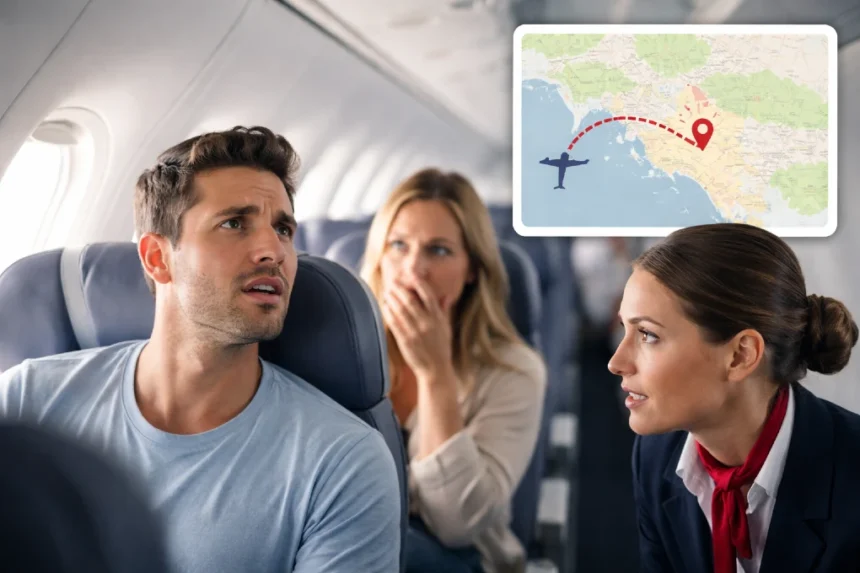
When readers search Delta Flight DL275 Diverted LAX, they usually want one thing answered fast: what actually went wrong, and why did the aircraft end up in Los Angeles instead of continuing its scheduled journey? Based on consistent reporting across multiple accounts, the diversion appears to have been triggered by a suspected engine anti ice system issue during a long haul international flight, prompting the crew to choose caution over risk and land safely at LAX. Reports also indicate there were no injuries, and the aircraft landed without further incident.
- What happened on Delta Flight DL275?
- Why an anti ice issue matters so much
- Why LAX was the logical diversion airport
- Was this an emergency landing?
- What passengers likely experienced onboard
- The bigger lesson behind Delta Flight DL275 Diverted LAX
- Common questions readers ask about Delta Flight DL275 Diverted LAX
- What this means for frequent travelers
- Why this story gained so much attention
- Final thoughts
That answer may sound simple, but there is more to it than a single warning light or a route change on a flight tracker. In modern aviation, even a system issue that does not become a full emergency can still justify a diversion, especially on a long overwater route. Regulations require aircraft systems to provide cockpit caution information when anti ice or de ice systems are not functioning normally, and pilots retain broad authority to divert to a suitable airport when safety margins narrow.
So, what caused Delta Flight DL275 Diverted LAX? The most credible public explanation available is a reported mechanical indication related to the aircraft’s anti ice system, most commonly described in public coverage as an engine anti ice issue. While Delta’s public flight tools do not publish technical maintenance detail for each event, the pattern across sources is consistent enough to point to a precautionary safety decision rather than a crash level emergency.
What happened on Delta Flight DL275?
Public reports describing Delta Flight DL275 Diverted LAX generally identify the flight as a Delta Air Lines service operating between Detroit and Tokyo Haneda on an Airbus A350 900. Mid flight, the crew reportedly received an indication involving the engine anti ice system, then chose to divert to Los Angeles International Airport, where the aircraft landed safely. Reports also say passengers and crew were not injured.
In plain English, that means the crew saw enough of a systems concern to decide that continuing across the Pacific was not the best option. On long international routes, these choices are not made casually. A technical warning that might be manageable near the destination can become more serious when the aircraft is still hours away from maintenance support or alternate airports.
That is why diversions often look dramatic to passengers but routine to aviation professionals. A diversion is usually the system working exactly as intended. The flight crew identifies a problem, evaluates weather, route, fuel, airport capability, aircraft condition, and maintenance support, then lands at the most suitable airport rather than gambling on a continued trip. FAA rules and pilot guidance both reinforce that safety first logic.
Why an anti ice issue matters so much
To understand Delta Flight DL275 Diverted LAX, it helps to know what an anti ice system does. Aircraft anti ice systems protect key surfaces and engine related areas from dangerous ice buildup. Ice is not a minor inconvenience in aviation. It can interfere with sensors, airflow, engine performance, and overall aircraft handling.
Federal regulations for transport category airplanes state that caution information must alert the flight crew when an anti ice or de ice system is not functioning normally. The FAA’s own materials on icing and ice protection make clear that icing related systems are safety critical, especially for turbine powered aircraft operating in conditions where ice can affect performance or reliability.
That matters because a reported engine anti ice problem is not something pilots simply ignore and “watch for later.” Even if the airplane remains fully controllable, the safest choice may be to land at a major airport with maintenance capability, spare parts access, and airline support rather than continue a long transpacific leg with a degraded system.
Why LAX was the logical diversion airport
A lot of travelers asking about Delta Flight DL275 Diverted LAX also want to know why Los Angeles was chosen. The answer comes down to suitability, not just geography.
The nearest airport is not always the best airport. A suitable diversion airport usually needs:
- Runways long enough for a widebody aircraft
- Appropriate emergency and airport safety services
- Ground handling for an international long haul jet
- Maintenance support or rapid access to technicians
- Passenger rebooking and accommodation options
- Strong airline operational presence
LAX checks all of those boxes. It is one of the largest and best equipped airports in the United States, and Delta has a significant operation there. Public aviation analysis on diversions consistently notes that airport capability, maintenance access, and onward passenger handling can matter as much as distance. FAA airport safety frameworks also highlight the importance of certificated safety and operational readiness at major airports.
For a long haul Airbus A350, LAX was an operationally sensible place to stop, inspect the aircraft, and support hundreds of affected passengers.
Was this an emergency landing?
Not every diversion is an emergency landing in the dramatic sense that many people imagine. In the case of Delta Flight DL275 Diverted LAX, public reporting suggests the aircraft landed safely after the crew acted on a technical concern. That points more toward a precautionary diversion than a catastrophic failure.
Here is the distinction that matters:
| Term | What it usually means |
|---|---|
| Diversion | Flight changes destination due to weather, medical, technical, or operational reasons |
| Precautionary diversion | Crew decides to land early to preserve safety margin |
| Emergency landing | A more urgent landing tied to immediate or escalating danger |
Based on the publicly available information, this event fits most closely with a precautionary technical diversion. That is still serious, but it is also exactly the kind of decision safety protocols are designed to support.
What passengers likely experienced onboard
When a flight diverts, passengers usually notice the situation before they understand it. First comes the route change, then a captain’s announcement, then uncertainty about connections, baggage, and what happens next.
In a case like Delta Flight DL275 Diverted LAX, passengers likely went through several stages:
- Initial confusion about the route change
- Concern after hearing there was a technical issue
- Relief after landing safely
- Frustration about delays, missed connections, and rebooking
- Long waits for updates, hotel arrangements, or onward travel
This is one reason diversions tend to trend online so quickly. A modern flight diversion is not just an aviation event. It becomes a customer service story, a travel disruption story, and often a viral news story all at once.
Delta’s own customer support pages for delayed or canceled flights explain that affected travelers may be offered alternative flights, refunds in some situations, baggage support, and reimbursement pathways depending on the circumstances. That does not erase the inconvenience, but it shows how airlines structure post disruption support.
The bigger lesson behind Delta Flight DL275 Diverted LAX
The most important takeaway is that Delta Flight DL275 Diverted LAX was not necessarily a sign that aviation is becoming less safe. In many ways, it is evidence of the opposite.
Commercial aviation is built around layered safety. That means:
- Aircraft systems are monitored continuously
- Crews are trained to respond conservatively
- Airports are selected based on capability
- Maintenance inspections follow any suspicious indication
- Airlines prioritize a safe landing over schedule completion
When travelers hear “mechanical issue,” they often imagine worst case scenarios. In reality, the decision to divert is often what prevents a manageable problem from becoming a more complicated one. That conservative mindset is a feature, not a flaw.
Common questions readers ask about Delta Flight DL275 Diverted LAX
What caused Delta Flight DL275 Diverted LAX?
Public reporting most consistently points to a suspected engine anti ice system issue or mechanical indication that led the crew to divert as a precaution.
Was anyone injured?
The reports reviewed indicate there were no injuries among passengers or crew, and the aircraft landed safely at LAX.
Why did the pilots not continue to Tokyo?
Because continuing a long international flight with a reported anti ice related system issue could reduce safety margins. Regulations and cockpit warning requirements support prompt action when such systems are not functioning normally.
Why was LAX chosen instead of another airport?
LAX is a major international airport with strong runway capacity, emergency readiness, maintenance access, and passenger recovery options, making it a suitable diversion point for a widebody international aircraft.
What this means for frequent travelers
If there is one useful takeaway from Delta Flight DL275 Diverted LAX, it is this: flight diversions are inconvenient, but they are often signs that the system is doing its job.
Frequent travelers can reduce the stress of these situations by following a few practical habits:
- Keep your airline app notifications turned on
- Carry basic overnight essentials in your cabin bag
- Save receipts if a disruption creates extra expenses
- Understand the airline’s delay and cancellation policies
- Book long haul itineraries with connection buffers when possible
These steps will not prevent a diversion, but they can make the aftermath much easier to manage.
Why this story gained so much attention
There is a reason Delta Flight DL275 Diverted LAX became such a heavily searched phrase. Flight diversions combine three things that always attract attention: airline safety, real time uncertainty, and viral passenger interest.
A long haul international flight changing course midair feels dramatic, even when the outcome is controlled and safe. Add social media posts, flight tracker screenshots, and the natural anxiety travelers feel around technical issues, and a routine precautionary diversion can quickly become a major online story.
That is also why accuracy matters. The available public evidence supports a technical systems issue as the trigger, but readers should be careful about overblown claims. Not every widely shared post reflects official airline or regulator language. The most responsible reading is that the aircraft experienced a reported anti ice related indication, the crew diverted out of caution, and the plane landed safely.
Final thoughts
So, what caused Delta Flight DL275 Diverted LAX? The strongest public explanation is a reported engine anti ice or related mechanical indication that made it wiser to divert to Los Angeles than continue a long transpacific journey. The important detail is not just the malfunction itself, but the response. The crew acted within the logic of modern aviation safety: identify the issue, choose the most suitable airport, land safely, and let maintenance teams take over.
For passengers, the diversion was likely frustrating and disruptive. For aviation professionals, it was the kind of conservative decision that keeps air travel safe. That is the real story behind Delta Flight DL275 Diverted LAX. If anything, this incident is a reminder that when a technical warning appears on a long haul route, caution is not an overreaction. It is exactly what travelers should want from a flight crew.
In the end, the safest flight is not always the one that sticks to schedule. Sometimes it is the one that changes course early, lands at the right airport, and turns a potential problem into a controlled outcome at Los Angeles International Airport.