

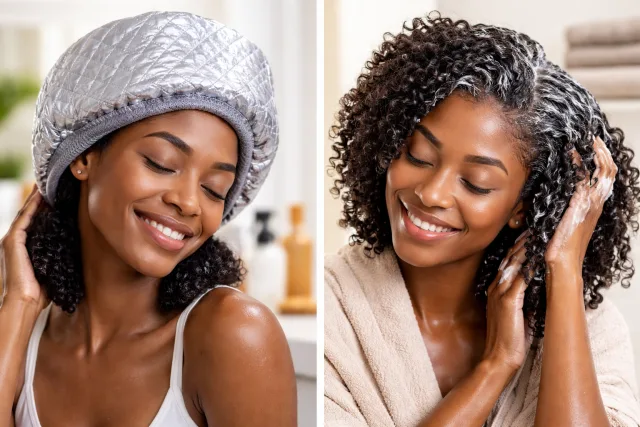
If your coils are in the 4B family, you already know the truth: moisture is not a nice extra, it is the whole game. A good Deep Conditioner 4B Hair routine can be the difference between hair that feels stretchy and soft versus hair that snaps the moment you detangle. The tricky part is not just choosing a conditioner, it is choosing the method. Do you use a heat cap, sit under a hooded dryer, or keep it simple with no heat at all?
- Why 4B hair responds differently to deep conditioning
- Heat cap vs no heat: the simple answer
- Deep Conditioner 4B Hair: what heat actually does
- Choosing the right method for your hair type and lifestyle
- Step by step routine: Heat cap method
- Step by step routine: No heat method
- The biggest mistakes people make with Deep Conditioner 4B Hair
- Ingredient cheat sheet for 4B deep conditioning
- Real world scenarios: when heat wins and when no heat wins
- FAQ: Deep Conditioner 4B Hair and heat decisions
- A simple weekly schedule you can actually stick to
- Conclusion
In this guide, we will break down the real benefits and tradeoffs of both approaches, explain what is happening on the hair strand, and help you decide when heat makes sense for Deep Conditioner 4B Hair and when it is unnecessary. You will also get a step by step routine, ingredient tips, and practical ways to avoid common mistakes that lead to dryness and breakage.
Why 4B hair responds differently to deep conditioning
4B hair is typically made up of tight bends and kinks. Those bends can make it harder for scalp oils to travel down the strand, so ends often dry out first. Add friction from cotton pillowcases, detangling, and weather changes, and it is easy for moisture levels to crash.
Deep conditioning helps by coating the hair, improving softness and manageability, reducing friction during detangling, and supporting the strand’s ability to hold onto water and conditioning agents. Dermatology based hair care guidance also emphasizes gentle handling, limiting damage, and using products that improve hair’s condition over time.
The role of porosity in 4B results
Porosity is simply how easily your hair takes in and holds moisture. It is strongly influenced by the cuticle, the outer layer of the hair fiber. When cuticles are tightly aligned, moisture and products can have a harder time getting in. When cuticles are lifted or damaged, hair may absorb quickly but lose moisture fast.
This is why two people can use the same product and get totally different results. For Deep Conditioner 4B Hair, the method you use is often just as important as what is in the jar.
Heat cap vs no heat: the simple answer
Heat can help deep conditioning work faster and sometimes feel more dramatic, especially when hair is low porosity or product tends to sit on top. But heat is not required for everyone, every wash day, or every formula. Repeated or excessive heat can contribute to damage over time, especially when people use high temperatures too often. Research on textured hair and common styling routines shows that repeated heat styling and mechanical stress can change porosity related properties and weaken hair performance.
So the smarter question is not “Is heat good or bad?” The smarter question is “When does heat give me a benefit that is worth it for my hair right now?”
Deep Conditioner 4B Hair: what heat actually does
Let’s keep it practical.
When you add gentle warmth, you can increase movement of ingredients and water at the surface of the strand and encourage product spread through the hair. Warmth can also make a deep conditioning session feel more effective simply because it reduces that “product just sitting there” feeling for some people, especially with low porosity hair.
But high or repeated heat exposure, especially from styling tools, is known to contribute to changes in hair structure and overall fragility. That is why the goal with a heat cap is controlled, low level heat for a short window, not blasting your hair.
A quick comparison table
| Feature | Heat Cap Method | No Heat Method |
|---|---|---|
| Best for | Low porosity hair, product buildup issues, very dry feel on wash day | Medium to high porosity hair, heat sensitive strands, frequent deep conditioners |
| Typical time | 15 to 30 minutes | 30 to 60 minutes |
| Risk level | Low if gentle heat and timed, higher if overheated or too frequent | Very low |
| Ideal products | Moisture heavy masks, slip rich conditioners | Balanced masks, protein sensitive or already fragile hair |
| Best results when | Hair is freshly cleansed, evenly saturated, and capped | Hair is wet, capped, and kept from drying out |
Choosing the right method for your hair type and lifestyle
Here is the decision tree I give friends who want results without turning wash day into a science project.
Choose a heat cap for Deep Conditioner 4B Hair if:
- Your hair is low porosity and products tend to sit on the surface.
- Your hair feels dry even right after conditioning.
- You have hard water buildup and need help with penetration after clarifying.
- You are doing a deep conditioning session less often and want it to count.
- You are transitioning and detangling is a weekly battle.
Choose no heat if:
- Your hair is high porosity and already absorbs products easily.
- Your strands are heat sensitive or you are recovering from damage.
- You deep condition frequently and want a safer, consistent routine.
- Your scalp is irritated and warmth makes it worse.
- You use protein sometimes and want to avoid overdoing it.
A lot of people do best with a blend: no heat most weeks, heat cap occasionally when hair feels stiff, rough, or resistant.
Step by step routine: Heat cap method
This method is for the days you want a stronger push.
1) Start with a clean base
If there is buildup, your deep conditioner has to fight through it. Use a gentle shampoo or a clarifying shampoo when needed. Healthline’s overview of deep conditioning basics supports the idea that deep conditioning works best as part of an overall routine that includes cleansing and correct product use.
Tip for 4B: if clarifying makes you feel squeaky, follow it immediately with conditioner on soaking wet hair.
2) Apply Deep Conditioner 4B Hair on very wet hair
This is a big one. Water is part of the conditioning process. If you apply to damp hair that is almost drying, the product can feel thick but not spread well.
- Work in sections, usually 4 to 8.
- Smooth product from ends upward.
- Detangle gently with fingers first, then a wide tooth comb.
3) Cap it to trap moisture
Use a plastic shower cap first. This traps humidity and stops evaporation. Then put the heat cap over it.
4) Use gentle heat, not “cooking” heat
Aim for comfortable warmth. If it feels too hot on your scalp, it is too hot.
- Time: 15 to 30 minutes is plenty for most people.
- If your hair is fine or fragile, stick to 15 to 20.
- If your hair is thick and low porosity, 20 to 30 can work.
5) Rinse thoroughly, then seal strategically
Rinse with lukewarm water. Some people like a cool rinse at the end to reduce frizz, but you do not need icy water.
Then choose one:
- Leave in plus cream, then oil on ends
- Leave in only if your hair is easily weighed down
If you tend to lose moisture fast, sealing matters more than adding heavier products. High porosity hair can lose moisture quickly because of raised cuticles, so layering and sealing can help maintain softness.
Step by step routine: No heat method
No heat is underrated, especially for consistency.
1) Cleanse and condition as usual
Again, clean hair helps. If your hair is not buildup prone, you do not need to clarify often. Over cleansing can backfire by increasing dryness for some people.
2) Apply Deep Conditioner 4B Hair and focus on slip
You want the conditioner to help with detangling, not fight you.
- Apply in sections.
- Add a splash of water as you go.
- If you feel tugging, add more product and water before forcing a comb through.
3) Plastic cap and patience
A shower cap is the secret weapon for no heat. It keeps warmth from your own head and prevents the conditioner from drying out.
- Time: 30 to 60 minutes.
- If your hair dries quickly, wrap a towel over the cap.
4) Rinse and finish with a simple system
No heat sessions often feel better when you keep the rest of your routine simple. Too many layers can create buildup that makes the next deep conditioner feel less effective.
The biggest mistakes people make with Deep Conditioner 4B Hair
Mistake 1: Using heat to compensate for buildup
Heat is not a magic fix if your hair is coated in product residue. If you never clarify, heat can make the session feel nice, but results will plateau.
Better fix:
- Clarify occasionally, then deep condition.
- Consider chelating if you have hard water issues.
Mistake 2: Leaving deep conditioner on for hours
Longer is not always better. Once the product has done its job, keeping it on can lead to mushy feeling strands for some people, especially if the formula is heavy in softeners and humectants.
Better fix:
- Use the time ranges above.
- If you love long sessions, choose no heat and keep hair covered so it stays damp.
Mistake 3: Mixing intense protein with heat too often
Protein can be helpful, but too much can make hair feel stiff and brittle. With heat, you may push the effect further than your hair needs.
Better fix:
- If your hair snaps easily and feels weak, use a balanced mask.
- If your hair feels overly soft and won’t hold a curl, add protein occasionally, but do it thoughtfully.
Mistake 4: Applying on nearly dry hair
Deep conditioner needs water to spread and support softness. Dry application tends to create patchy coverage and wasted product.
Better fix:
- Apply on soaking wet hair, then cap.
Ingredient cheat sheet for 4B deep conditioning
When choosing formulas for Deep Conditioner 4B Hair, look for a balance. You want softness, slip, and enough conditioning agents to reduce friction.
Ingredients that usually help 4B hair feel soft
- Fatty alcohols like cetyl alcohol or stearyl alcohol for softness
- Cationic conditioners that improve slip and reduce static
- Plant oils and butters in moderation, especially for very dry ends
Ingredients to watch based on your hair behavior
- Heavy silicones: great for slip and shine for some, buildup for others
- Strong proteins: helpful for damaged hair, too stiff if overused
- Very high glycerin in humid or very dry climates: can be amazing or frustrating depending on weather
A practical rule: if your hair is breaking, prioritize gentle conditioning and reduced friction. If your hair is limp and overly soft, you may need more structure and less constant moisture heavy masking.
Real world scenarios: when heat wins and when no heat wins
Scenario A: Low porosity 4B hair that stays dry
You deep condition weekly, but hair still feels coated and dry. You rinse and it feels like the product never “went in.”
Try this:
- Clarify
- Apply Deep Conditioner 4B Hair on soaking wet hair
- Use a heat cap for 20 minutes
- Rinse, then use a lighter leave in and seal ends
This is where controlled heat often gives a noticeable improvement.
Scenario B: High porosity 4B hair that feels soft but dries out by day two
Heat may make your hair feel great on wash day, but it does not fix moisture retention.
Try this:
- No heat deep conditioning 45 minutes under a plastic cap
- Follow with a leave in, then a cream, then a small amount of oil on ends
- Use satin at night and reduce friction
This is where method consistency beats extra heat.
Scenario C: You heat style sometimes and your curls feel looser
If you already use hot tools, adding more heat sessions can be too much. Industry and research discussions around thermal exposure point to structural changes and damage risk at higher temperatures and repeated exposure.
Try this:
- No heat deep conditioner for a month
- Focus on gentle detangling and protective styling
- Keep heat cap sessions for rare, targeted use only
FAQ: Deep Conditioner 4B Hair and heat decisions
How often should I deep condition 4B hair?
Most people with 4B hair do well with weekly deep conditioning, but frequency depends on dryness, styling habits, and porosity. If you wash more often, consider alternating lighter conditioners with a deeper mask. General guidance on deep conditioning and healthy hair care supports building a routine that matches hair needs and avoids damage from harsh practices.
Is a heat cap safe for Deep Conditioner 4B Hair?
A heat cap can be safe if the heat is gentle and the session is timed. The risk comes from overheating or doing heat sessions too frequently, especially if you also use hot tools.
Can I deep condition overnight with no heat?
It is not usually necessary. If you want a longer session, 45 to 60 minutes under a plastic cap is often enough. Overnight can lead to over softened hair or scalp irritation for some people.
What is better: steam or a heat cap?
Steam adds moisture plus warmth, which some people love. A heat cap is simpler, cheaper, and easier to control at home. If your hair hates being wet for long periods, choose a heat cap. If your hair responds well to hydration and you do not mind the setup, steam can feel amazing.
Should I use Deep Conditioner 4B Hair before or after shampoo?
Deep conditioner is usually used after shampoo, when the hair is clean and ready for conditioning. If you are doing a pre shampoo treatment, that is a different step and can be helpful for detangling and reducing dryness.
A simple weekly schedule you can actually stick to
Here is a low stress plan that works for many people.
Week to week
- Week 1: No heat deep conditioning 45 minutes
- Week 2: No heat deep conditioning 30 to 45 minutes
- Week 3: Heat cap deep conditioning 20 minutes if hair feels resistant
- Week 4: Clarify, then heat cap deep conditioning 20 minutes
Adjust based on how your hair behaves:
- If your hair is fragile, reduce heat cap sessions.
- If your hair stays dry no matter what, add a heat cap session after clarifying.
Conclusion
Choosing between a heat cap and no heat is not about picking a side, it is about picking the method your hair responds to right now. A heat cap can be a great boost for low porosity coils or those weeks when Deep Conditioner 4B Hair feels like it is just sitting on top. No heat, on the other hand, is the steady and safe option that can deliver excellent softness and manageability when you cap your hair and give the product time.
If you want the best of both worlds, keep no heat as your default and use a heat cap occasionally as a targeted tool. Pay attention to how your hair feels after rinsing, how long moisture lasts, and how much breakage you see during detangling. Those signals will tell you whether your Deep Conditioner 4B Hair method is working, even more than hype or trends. And if you are still troubleshooting, start by understanding your hair porosity and building from there.