
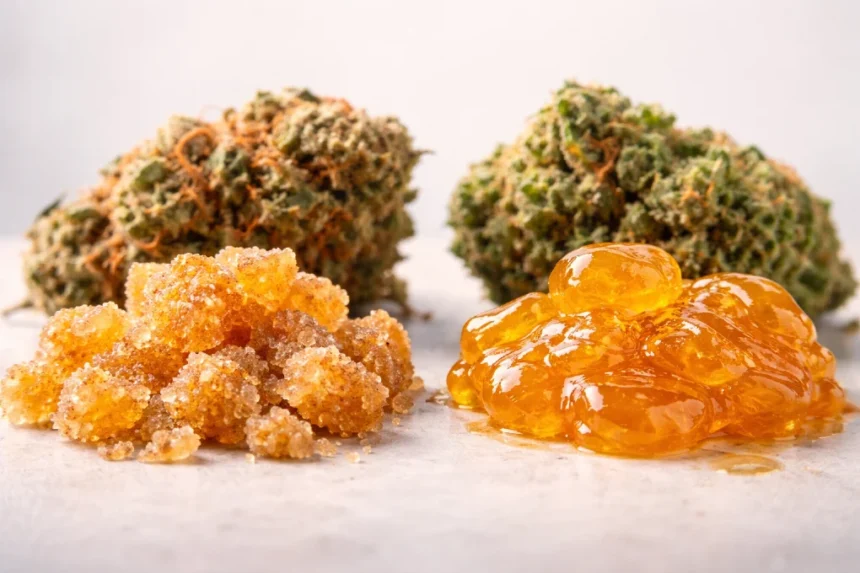
When people search for Cured Resin vs Live Resin, they are usually trying to answer one simple question: what actually makes these two cannabis concentrates different in flavor, aroma, and overall effects? The short answer is that the difference starts with the plant material itself. Live resin is typically made from fresh frozen cannabis, while cured resin is made from cannabis flower that has already been dried and cured. That one production choice can change terpene retention, aroma intensity, texture, and how consumers describe the experience. Public cannabis education sources such as Leafly define live resin as a concentrate made from fresh frozen plants, while research reviews on postharvest cannabis processing note that drying and curing can alter volatile compounds like terpenes.
- What Is Resin in Cannabis Products?
- Cured Resin vs Live Resin Starts With Harvest Handling
- Cured Resin vs Live Resin in Flavor and Aroma
- Why Terpenes Matter So Much
- Cured Resin vs Live Resin and Perceived Effects
- Does Live Resin Always Have More Terpenes?
- Texture, Appearance, and Consumer Expectations
- Cured Resin vs Live Resin and Price Differences
- Which One Tastes Better?
- Health and Safety Context Matters
- Cured Resin vs Live Resin for First Time Readers of the Category
- Common Misunderstandings About Cured Resin vs Live Resin
- Final Thoughts on Cured Resin vs Live Resin
That is why the Cured Resin vs Live Resin debate keeps coming up. People are not just comparing labels on a package. They are comparing freshness, scent, taste, consistency, and perceived quality. In many cases, the difference is less about one product being universally better and more about what the consumer values most. If aroma complexity matters most, live resin usually gets the attention. If a deeper, more mature profile is preferred, cured resin often enters the conversation.
This article takes a closer look at Cured Resin vs Live Resin in a practical, reader friendly way. You will see how each one is made, why flavor can differ so much, what effects people often report, and which factors matter most if you are trying to understand the category without the hype.
What Is Resin in Cannabis Products?
Before getting deeper into Cured Resin vs Live Resin, it helps to understand what resin means in the first place. Cannabis plants produce a sticky, compound rich substance in glandular trichomes. These trichomes contain cannabinoids and terpenes, the compounds most often associated with aroma, flavor, and psychoactive or physiological effects. NIDA describes cannabis concentrates as products made from the plant’s trichomes, and plant science reviews likewise identify glandular trichomes as the primary site of cannabinoid and terpene production.
That matters because both cured resin and live resin come from the same basic source. The main difference is not that one comes from a different part of the plant. The real distinction in Cured Resin vs Live Resin is the condition of the plant at the moment processing begins.
Cured Resin vs Live Resin Starts With Harvest Handling
The biggest distinction in Cured Resin vs Live Resin comes down to post harvest handling.
What is live resin?
Live resin is generally made from cannabis plants that are frozen immediately after harvest rather than dried and cured first. The purpose of freezing is to preserve more of the plant’s volatile aromatic compounds, especially terpenes, which can be sensitive to heat, oxygen, and time. Leafly’s glossary specifically notes that “live” means the starting material has not been dried or cured.
What is cured resin?
Cured resin, by contrast, starts with flower that has gone through the traditional drying and curing process. That means the plant material has had time to lose moisture and undergo chemical changes before extraction. Reviews of cannabis postharvest operations note that drying and curing affect final quality, consistency, and volatile composition, which is why cured inputs can smell and taste noticeably different from fresh frozen ones.
This single production difference is the foundation of the entire Cured Resin vs Live Resin discussion.
Cured Resin vs Live Resin in Flavor and Aroma
If flavor is the main focus, this is where Cured Resin vs Live Resin becomes especially interesting.
Live resin is widely associated with a brighter, fresher, more aromatic profile. Consumers and educators often describe it as capturing more of the original plant’s fragrance because the fresh frozen input helps preserve volatile terpenes that can diminish during drying and curing. Leafly explicitly states that live resin retains the original flavor and fragrance of the plant better than many other cannabis concentrates. Research on cannabis drying also supports the broader point that postharvest handling can significantly affect volatile terpene content.
Cured resin tends to have a profile people describe as deeper, warmer, or more developed. That does not automatically mean weaker flavor. It usually means the flavor is shaped by curing related changes rather than the sharp freshness commonly linked to live products.
A simple way to think about Cured Resin vs Live Resin is this:
| Feature | Live Resin | Cured Resin |
|---|---|---|
| Starting material | Fresh frozen cannabis | Dried and cured cannabis |
| Aroma profile | Fresher and brighter | Richer and more mature |
| Terpene perception | Often stronger and more expressive | Often more subdued or altered |
| Consumer appeal | Popular for aromatic complexity | Popular for traditional concentrate character |
Why Terpenes Matter So Much
Any serious article on Cured Resin vs Live Resin has to talk about terpenes. Terpenes are aromatic compounds found in many plants, including cannabis. They are largely responsible for scent differences such as citrus, pine, earthiness, sweetness, or fuel like notes. Healthline and cannabis research sources both describe terpenes as key contributors to aroma and flavor, while peer reviewed plant studies confirm that cannabis trichomes are rich in terpene related biosynthesis.
This is why live resin gets so much attention. Because live resin begins with fresh frozen material, many consumers believe it captures more of the plant’s original terpene expression. That does not mean every live resin product will always smell better than every cured resin product. Quality still depends on genetics, cultivation, storage, and extraction standards. But in the broader Cured Resin vs Live Resin comparison, terpene preservation is the reason live resin often wins the flavor conversation.
Cured Resin vs Live Resin and Perceived Effects
Now to the part readers usually care about most: effects.
The truth is that Cured Resin vs Live Resin is not only about THC numbers. Consumers often assume the stronger product is the one with the highest cannabinoid percentage, but perceived effects can also be influenced by terpene profile, formulation quality, and the broader chemical makeup of the extract. Public health and research sources are careful here. The CDC notes that cannabis products can have varying health effects and that highly concentrated THC products are linked with greater risks, including more severe cannabis use disorder symptoms. NIDA also notes that cannabis products with THC can affect mood, thoughts, and perception.
That means the effects discussion in Cured Resin vs Live Resin should be approached carefully. Many users report that live resin feels more flavorful and nuanced, while cured resin may feel more conventional or familiar in profile. But those are user reported impressions, not universal scientific guarantees.
A more accurate way to frame it is this:
- THC percentage alone does not tell the full story
- Aroma rich products are often perceived as more expressive overall
- Individual response varies widely
- Product quality and labeling matter just as much as category
Does Live Resin Always Have More Terpenes?
This is one of the most common questions in the Cured Resin vs Live Resin conversation.
Not always, but that is the expectation behind the category. Live resin is designed around preserving volatile compounds from fresh frozen flower. Studies on postharvest processing confirm that drying conditions can reduce or reshape terpene content, and controlled drying systems have been studied specifically for their ability to preserve volatile terpene fractions better than traditional methods.
So while it would be too absolute to say every live resin product contains more terpenes than every cured resin product, the production logic behind live resin clearly prioritizes terpene retention.
Texture, Appearance, and Consumer Expectations
Another part of Cured Resin vs Live Resin that people notice right away is texture.
Depending on extraction and storage, live resin is often sold in forms that look glossy, saucy, or sugar like. Cured resin can also vary widely, but consumers often expect a different visual and aromatic character because of the dried cured source material. These differences are not just cosmetic. They shape first impressions and often influence how buyers judge freshness and quality.
Still, appearance should not be used as the only quality test. A well made cured resin product can still be highly appealing, and a live resin product with poor handling can fall short of expectations.
Cured Resin vs Live Resin and Price Differences
Price is another reason the Cured Resin vs Live Resin comparison matters.
Live resin often costs more because the production chain is more demanding. Fresh frozen material requires quick handling, freezer storage, and processing choices designed to preserve delicate compounds. That added complexity can increase costs. Cured resin may be more accessible in some markets because it uses traditionally dried and cured flower.
For readers trying to understand why one is often priced above the other, the answer is not marketing alone. It is also about logistics, preservation, and the economics of handling perishable raw material.
Which One Tastes Better?
This is where the Cured Resin vs Live Resin debate becomes personal.
If someone values bright aroma, fresh plant character, and layered terpene expression, they often lean toward live resin. If someone prefers a more settled, classic concentrate character, cured resin may feel more familiar. There is no universal winner because taste is subjective.
Still, the market reputation is fairly consistent:
- Live resin is usually favored for vivid aroma and flavor
- Cured resin is often viewed as more traditional and sometimes more budget friendly
- The best option depends on what the person is actually looking for
Health and Safety Context Matters
No responsible article about Cured Resin vs Live Resin should ignore the broader health context. The CDC warns that cannabis use can affect attention, coordination, reaction time, and mental health, and it notes concerns tied to highly concentrated THC products. The FDA also states that it continues to evaluate the science, safety, and quality issues around cannabis derived products and warns that there are still many unanswered questions around product quality and risk in the broader marketplace.
That is especially relevant in concentrates. Even when the discussion centers on flavor and effects, strength and labeling accuracy matter. Consumers should also remember that legality differs by jurisdiction, and product standards are not identical across all markets. FDA and CDC resources are useful reminders that “natural” or “popular” does not automatically mean risk free.
Cured Resin vs Live Resin for First Time Readers of the Category
For someone new to concentrates, Cured Resin vs Live Resin can sound more complicated than it really is. The easiest way to remember it is:
Live resin begins with fresh frozen plant material, which is meant to protect more of the original aromatic profile.
Cured resin begins with dried and cured flower, which gives it a different flavor pathway before extraction even starts.
That is the heart of the distinction.
Common Misunderstandings About Cured Resin vs Live Resin
There are several myths that keep the Cured Resin vs Live Resin debate confusing.
Myth 1: Live resin is always stronger
Not necessarily. Strength depends on the final product and its cannabinoid profile, not just whether it is live or cured. Effects are shaped by more than a single label.
Myth 2: Cured resin has no terpene value
Also false. Cured resin can still contain meaningful terpene content. The issue is not whether terpenes exist, but how postharvest processing changes their composition and intensity.
Myth 3: Flavor differences are only marketing
That is not accurate either. The fresh frozen versus dried cured starting material is a real processing distinction, and it can affect aroma and flavor in meaningful ways.
Final Thoughts on Cured Resin vs Live Resin
The real answer to Cured Resin vs Live Resin is not that one is automatically superior in every situation. The difference comes down to how the source plant is handled before extraction and how that choice influences aroma, flavor, texture, and perceived experience. Live resin has built a strong reputation for preserving fresh, expressive terpene character. Cured resin remains relevant because drying and curing create a different, often richer profile that many consumers still appreciate.
If your focus is understanding flavor first, live resin usually gets the advantage in the broader Cured Resin vs Live Resin discussion. If your focus is a more traditional extract profile, cured resin still deserves serious attention. The smartest way to look at the category is not through hype, but through processing, chemistry, and product quality.
In the end, Cured Resin vs Live Resin is really a conversation about preservation versus transformation. One tries to hold onto the freshest possible aromatic fingerprint of the plant. The other reflects what happens after drying and curing shape that profile over time. In the broader world of cannabis concentrates, that distinction is exactly why the comparison continues to matter for curious readers, cautious consumers, and anyone trying to understand what is behind the label.