



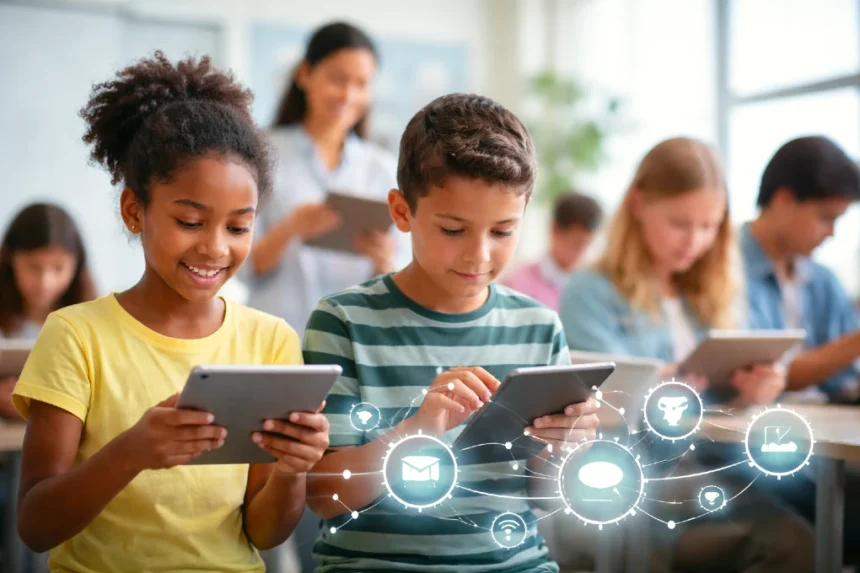
Digital learning is no longer a side option for schools. It is now part of how modern education works every day. From classroom announcements and lesson access to parent communication and student collaboration, schools need one connected system that feels simple, secure, and practical. That is where Colegia enters the conversation. As schools look for better ways to unify communication, learning tools, and digital access, Colegia stands out as a platform designed to make educational connectivity more organized and more useful for everyone involved.
- What Is Colegia?
- Why Digital Connectivity Matters in Modern Education
- How Colegia Supports a Connected Learning Environment
- Key Benefits of Colegia for Students
- How Teachers Benefit From Colegia
- Why Parents and Families Value Connected Education Platforms
- Colegia and the Shift Toward Digital Equity
- Common Challenges in School Technology That Colegia Helps Solve
- Real-World Impact of Unified Learning Platforms
- What Schools Should Look for in a Platform Like Colegia
- Actionable Ways Schools Can Maximize the Value of Colegia
- Colegia in the Bigger Picture of EdTech
- Frequently Asked Questions About Colegia
- Final Thoughts on Colegia and the Future of Education
For students, teachers, administrators, and families, the challenge is rarely a lack of digital tools. The real problem is fragmentation. One platform handles class assignments, another handles email, another hosts resources, and another is used for school updates. Over time, that patchwork can create confusion, missed messages, and unnecessary stress. Colegia addresses that problem by creating a more connected digital ecosystem for education, helping schools streamline access and improve the day-to-day learning experience.
What Is Colegia?
Colegia is a digital education platform built to bring school tools, communication channels, and learning resources into one connected environment. Instead of forcing students and educators to move between multiple apps, portals, and login pages, it helps centralize access through a more unified digital experience.
At its core, Colegia is about digital connectivity in education. It supports schools that want to create a smoother experience for:
- Students accessing lessons and resources
- Teachers sharing content and updates
- Parents staying informed
- School leaders managing communication
- Districts improving digital learning workflows
That kind of integration matters more than ever. In a world where education depends heavily on online access, schools need platforms that reduce complexity rather than add to it.
Why Digital Connectivity Matters in Modern Education
Education has changed dramatically over the last few years. Schools are expected to operate in both physical and digital spaces at the same time. A student may attend class in person, complete homework online, message a teacher through a portal, and receive school notices through a digital dashboard. If those systems do not work together, the learning process becomes harder than it needs to be.
Strong digital connectivity offers several clear benefits:
- Faster access to learning materials
- Better communication between school and home
- Improved student engagement
- Less confusion around platforms and passwords
- More consistent digital learning experiences
When schools use connected systems effectively, they create less friction for everyone. Students spend less time figuring out where to go and more time focusing on learning. Teachers spend less time troubleshooting access issues and more time teaching.
How Colegia Supports a Connected Learning Environment
What makes Colegia relevant is its focus on simplifying the educational experience. Rather than acting as just another digital tool, it aims to become the digital bridge between the many tools schools already use.
Centralized Access
One of the biggest advantages of a platform like Colegia is centralized access. Students and teachers often struggle with digital overload. There are too many tabs, too many apps, and too many separate systems to remember. By offering a more unified access point, Colegia helps reduce that overload.
This matters because digital convenience is not just a nice feature. In education, convenience often affects participation. If students can find what they need quickly, they are more likely to stay engaged and complete tasks on time.
Better Communication Across the School Community
Communication is at the heart of every successful school. Parents want updates. Teachers want students to see assignments. Administrators want to send important messages without worrying they will be missed.
Colegia supports this need by strengthening digital communication flows. A more connected platform can help reduce gaps between home and school, which is especially important in large districts or schools with diverse student populations.
A More Consistent Experience for Students
Consistency is often overlooked in discussions about educational technology. Yet it has a huge impact. Students do better when they know where to find assignments, how to check updates, and how to access support resources.
Colegia contributes to that consistency by giving schools a more structured digital environment. Instead of jumping between disconnected services, learners can work within a system designed to feel more coherent.
Key Benefits of Colegia for Students
For students, the biggest value of Colegia lies in ease of access and reduced confusion. When digital platforms feel cluttered, students can quickly become disengaged. A simpler digital environment can make learning feel more manageable.
Here are a few ways students benefit:
Easier Navigation
A connected platform reduces the mental load of tracking different websites, passwords, and portals. Students are better able to focus on assignments and class participation when navigation is straightforward.
Stronger Access to Learning Resources
When materials are easier to find, students are more likely to use them. Lecture notes, schedules, digital textbooks, announcements, and support services become more accessible in a connected ecosystem.
Improved Sense of Belonging
Digital education should not feel isolating. When communication tools, school information, and learning resources are tied together, students often feel more connected to the school community.
How Teachers Benefit From Colegia
Teachers are asked to do far more than deliver lessons. They manage communication, track progress, share resources, and support students with different digital needs. A fragmented tech environment only adds pressure.
Colegia can help teachers by offering a more streamlined digital workflow.
Reduced Administrative Friction
When communication and resource access are more centralized, teachers spend less time answering repetitive questions like:
- Where can I find the assignment?
- Which platform should I use?
- How do I log in?
- Where was that announcement posted?
Less friction means more time for instruction and student support.
More Efficient Content Sharing
Teachers need quick ways to upload resources, direct students to materials, and communicate updates. A connected platform makes this process more efficient and easier to manage over time.
Better Student Follow-Through
Students are more likely to complete tasks when digital instructions are easier to access. That alone can improve day-to-day classroom management and assignment completion rates.
Why Parents and Families Value Connected Education Platforms
Parents are a critical part of the learning process, but they often struggle when school communication is spread across too many channels. A platform like Colegia can improve visibility and help families stay informed without feeling overwhelmed.
For families, the benefits may include:
- Easier access to school updates
- Clearer communication about student expectations
- Better awareness of assignments and schedules
- Greater confidence in the school’s digital systems
When parents know where to go for information, they are more likely to stay engaged with their child’s education.
Colegia and the Shift Toward Digital Equity
One of the most important conversations in modern education is digital equity. It is not enough for schools to adopt technology. They also need to make sure students can use it effectively.
A connected platform supports digital equity by reducing barriers such as:
- Confusing access points
- Too many disconnected login systems
- Inconsistent communication
- Limited visibility into school resources
Digital equity is about more than devices. It is also about usability. A platform may be technically available, but if it is difficult to navigate, many students still lose out. Colegia addresses this challenge by making digital access feel more intuitive.
Common Challenges in School Technology That Colegia Helps Solve
Schools often face the same set of digital learning issues, even when they have invested heavily in educational technology.
Challenge 1: Too Many Platforms
Many schools adopt tools one by one over time. The result is a scattered digital environment. Colegia helps create a more unified experience.
Challenge 2: Communication Gaps
Important updates can get buried when schools rely on too many disconnected communication tools. A more centralized system improves visibility.
Challenge 3: Low Student Engagement With Portals
If a platform is hard to use, students avoid it. Colegia’s value lies in reducing that friction and making digital participation easier.
Challenge 4: Parent Confusion
Families often struggle to keep up with the digital side of school life. A connected system can make communication more accessible and less intimidating.
Real-World Impact of Unified Learning Platforms
To understand why platforms like Colegia matter, it helps to look at how schools function in practice.
Imagine a middle school student who needs to check homework, download a worksheet, review a school announcement, and message a teacher. If each task requires a different app or login, frustration builds quickly. Now imagine that same student using a single connected platform. The experience becomes smoother, faster, and more reliable.
The same applies to teachers. A teacher managing five classes cannot afford to waste time navigating disconnected systems. When access and communication are centralized, the entire workflow improves.
This is why many school systems are rethinking how they use digital platforms. They are no longer just asking which tool has the most features. They are asking which tool creates the best user experience for the whole school community.
What Schools Should Look for in a Platform Like Colegia
Not every education platform solves the same problem. Schools evaluating digital solutions should focus on usability, access, communication, and long-term practicality.
A strong platform should offer:
| Feature | Why It Matters |
|---|---|
| Unified access | Reduces confusion and saves time |
| Communication tools | Keeps students, parents, and staff connected |
| User-friendly design | Improves adoption and engagement |
| Resource integration | Makes learning materials easier to find |
| Scalable structure | Supports growth at school or district level |
Colegia fits into this conversation because it is aligned with what many schools now need most: connection, simplicity, and consistency.
Actionable Ways Schools Can Maximize the Value of Colegia
A great platform only works when schools implement it thoughtfully. To get the most out of Colegia, schools should focus on practical execution.
Provide Clear Onboarding
Students, teachers, and families should understand how to use the platform from day one. Simple tutorials and quick-start instructions can improve adoption dramatically.
Keep Communication Consistent
Schools should avoid posting important updates in too many places. If Colegia is being used as a central channel, it should become the trusted place for key announcements and resources.
Train Staff Regularly
Teachers and administrators need support too. Short training sessions can help staff use the platform more effectively and confidently.
Listen to User Feedback
The best digital systems evolve through feedback. Students and teachers often reveal usability issues quickly, and schools that respond to that feedback usually see better results.
Colegia in the Bigger Picture of EdTech
Educational technology is moving away from isolated tools and toward connected ecosystems. Schools now understand that having more apps does not automatically lead to better outcomes. What matters is how well those tools work together.
Colegia reflects this shift. It represents a broader movement in education toward simplification, accessibility, and digital coherence. In many ways, that is the future of edtech. Schools do not just need innovation. They need innovation that feels practical in everyday use.
That is especially true as blended learning, online assignments, digital parent communication, and mobile access continue to shape how education operates. Platforms that bring these functions together will remain highly valuable.
Frequently Asked Questions About Colegia
Is Colegia only useful for online schools?
No. Colegia can be valuable for both in-person and blended learning environments. Even traditional schools need strong digital communication and centralized access to resources.
Who benefits most from Colegia?
Students, teachers, parents, and administrators all benefit when digital learning tools are better connected and easier to navigate.
Why is a connected education platform important?
A connected platform reduces confusion, improves communication, and helps users access learning materials more efficiently.
Can a platform like Colegia improve engagement?
Yes, it can. When students and families know where to find information and resources, participation often becomes more consistent.
Final Thoughts on Colegia and the Future of Education
Colegia reflects a very real need in modern education: the need for systems that connect rather than complicate. Schools do not need endless layers of technology. They need digital environments that are easy to use, easy to trust, and genuinely helpful in daily learning.
As educational expectations continue to evolve, platforms like Colegia will play an increasingly important role in shaping how students learn, how teachers teach, and how families stay informed. The value is not just in technology itself. The value is in creating a smoother, more connected educational experience that works for real people in real school communities.
In that sense, Colegia is not simply another education platform. It is part of a bigger shift toward smarter digital infrastructure in schools. And for institutions trying to reduce friction, strengthen communication, and improve digital access, that shift matters.
For broader context on how connected learning environments fit into modern educational technology, it helps to view platforms like Colegia as part of a long-term transformation in how schools organize teaching, communication, and digital access.