



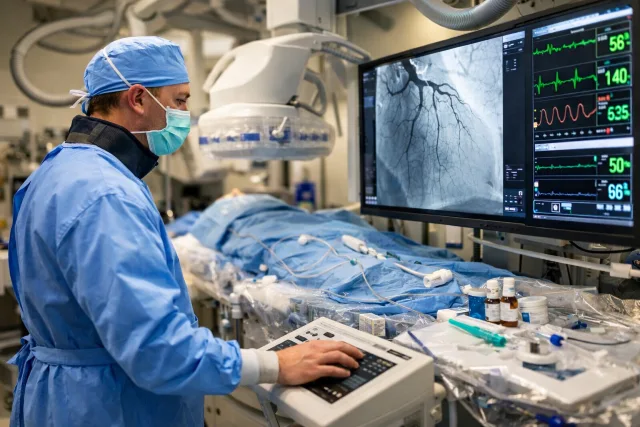
If you like fast-paced work, meaningful patient impact, and a career where your hands and your head matter every single day, this role deserves your attention. A Cath Lab Tech works at the center of modern heart care, helping physicians diagnose and treat blocked arteries, valve problems, and other cardiovascular conditions using minimally invasive procedures.
- What is a Cath Lab Tech?
- Why Cath Labs matter (and why this career stays in demand)
- What does a Cath Lab Tech do day to day?
- Cath Lab Tech salary: what you can expect
- How to become a Cath Lab Tech
- Certifications that can matter (and why employers care)
- Skills you need to thrive (not just survive)
- Where Cath Lab Techs work (and what changes from place to place)
- A day in the life: what it actually feels like
- Career growth options (beyond staying a staff tech forever)
- Common questions (answered like a real person)
- Conclusion
That sounds dramatic because it is. One minute you might be calmly prepping a scheduled angiogram. The next, you’re responding to an emergency STEMI page where minutes can save heart muscle. The good news is that the path into this profession is real and achievable, especially if you enjoy healthcare but don’t necessarily want to become a doctor.
In this guide, you’ll learn what the job actually looks like, what you can earn, what skills employers look for, and how to get started in a way that makes sense for your time and budget.
What is a Cath Lab Tech?
A Cath Lab Tech (short for catheterization laboratory technician/technologist) is a healthcare professional who assists cardiologists and other physicians during procedures performed in a cardiac catheterization lab. These procedures are typically guided by live X-ray (fluoroscopy) and advanced monitoring equipment.
In everyday language: you help run the room. You prepare the patient, set up sterile supplies, operate imaging or monitoring systems, anticipate what the physician needs next, document what happened, and keep safety at the top of the list.
Depending on the hospital and your background, your title may vary:
- Cath lab technologist
- Cardiovascular invasive specialist
- Cardiac interventional radiology technologist
- Invasive cardiology technologist
Many employers also value (or require) professional credentials such as RCIS through Cardiovascular Credentialing International.
Why Cath Labs matter (and why this career stays in demand)
Heart disease remains a major health burden, and that drives steady demand for cardiac testing and intervention. In the U.S., heart disease was again the leading cause of death in 2024, according to CDC provisional data.
Cath labs support procedures like coronary angiography and percutaneous coronary intervention (angioplasty/stenting), which are common in cardiac care. Industry analyses estimate hundreds of thousands of these procedures occur annually.
From a career standpoint, the U.S. Bureau of Labor Statistics (BLS) places cath lab related roles under cardiovascular technologists and technicians and reports:
- Median pay: $67,260/year (May 2024)
- Job growth projection: 3% from 2024 to 2034
- About 3,800 openings per year on average
Those numbers don’t mean every employer pays the same, but they do show the field is stable and nationally recognized.
What does a Cath Lab Tech do day to day?
The job is a mix of patient care, sterile technique, imaging/monitoring, documentation, and teamwork. Your exact responsibilities depend on the lab’s staffing model, but most roles include some combination of these.
Core duties in the procedure room
- Prepare the lab: power up systems, check crash cart readiness, verify supplies, set up pressure lines and transducers, and confirm radiation shields are positioned.
- Prep the patient: verify identity, confirm consent, review allergies (especially contrast), start IVs if within scope, shave/clean access site per protocol.
- Maintain sterile field: open supplies, set up trays, assist with draping, and protect sterility throughout.
- Support the physician: pass wires, catheters, stents, balloons, closure devices (depending on scope and facility policy).
- Monitor hemodynamics: track pressures and waveforms, recognize abnormal trends, and communicate changes quickly.
- Operate imaging (in many labs): manage fluoroscopy angles, image capture, dose awareness, and documentation (scope varies by credential and policy).
- Document in real time: medications, contrast volume, times, devices used, activated clotting time (ACT) checks, and key events.
- Post-procedure tasks: handoff to recovery, manage sheath pull protocols if applicable, restock, and decontaminate per standards.
The “on-call” reality
A lot of cath labs run scheduled cases during the day and then rely on an on-call team after hours for emergencies. That can mean nights, weekends, and holidays. It’s also where many techs earn extra pay through call differentials and overtime.
Here’s a realistic scenario:
You’re asleep at 2:10 a.m. Your phone rings. A patient arrives with a suspected heart attack. Within 30 minutes, you’re in scrubs, opening a sterile table, connecting pressure lines, confirming time-out participation, and staying calm while the room moves fast.
That “time-out” isn’t just a formality. The Joint Commission’s Universal Protocol emphasizes active participation by key team members involved from the beginning of the procedure.
Cath Lab Tech salary: what you can expect
Pay varies by location, experience, credentials, hospital type, and how much call you take. A helpful national benchmark comes from BLS data for cardiovascular technologists and technicians.
National pay snapshot (U.S.)
BLS reports the median annual wage is $67,260 (May 2024).
O*NET, which pulls from BLS wage data, shows a useful range:
| Pay level | Annual wage (U.S.) |
|---|---|
| 10th percentile | $37,890 |
| Median | $67,260 |
| 90th percentile | $108,900 |
What pushes pay higher
- Taking more call (and being reliable when the pager hits)
- Working in high-volume interventional labs
- Earning credentials such as RCIS (and in some pathways, ARRT postprimary credentials)
- Building skills in complex cases (CTO, structural heart, EP support where applicable)
- Moving into lead tech, educator, inventory coordinator, or supervisor roles
How to become a Cath Lab Tech
There isn’t a single universal pathway, because cath labs hire from a few professional pipelines. The smartest route depends on what background you already have.
Pathway 1: Cardiovascular invasive programs (common and direct)
Many people enter through an associate degree focused on cardiovascular technology or invasive cardiovascular programs, followed by certification and on-the-job training.
If you’re aiming at an invasive focus, the RCIS credential is widely recognized and has specific eligibility requirements and documentation pathways.
Pathway 2: Radiologic technologist route (imaging-focused)
Some cath labs hire technologists with radiography backgrounds, especially where imaging operation is a central part of the role.
ARRT describes cardiac interventional radiography work as assisting with minimally invasive, image-guided procedures using fluoroscopic equipment.
Pathway 3: Nursing or allied health crossover (lab-dependent)
Some labs staff a mix of nurses and techs, and in certain settings nurses also take on scrub/circulate roles. Requirements vary widely by employer.
A practical step-by-step plan (beginner friendly)
- Confirm your local hiring patterns: look at 20 job postings in your region and note required credentials.
- Choose your education route:
- Invasive cardiovascular program, or
- Radiography program leading toward cath lab work
- Build your baseline certifications (commonly BLS, often ACLS for acute settings).
- Get clinical exposure and a strong reference from instructors or preceptors.
- Pursue a recognized credential once eligible (many employers strongly prefer it).
- Apply strategically: target hospitals with structured orientation and preceptor models.
Certifications that can matter (and why employers care)
Credentials are often the difference between “interested applicant” and “ready-to-hire.”
RCIS (CCI)
RCIS is a major credential in invasive cardiology environments. CCI lays out qualification requirements and documentation expectations for applicants.
ARRT Cardiac Interventional Radiography (CI)
For radiography-based careers, ARRT’s cardiac interventional radiography credential aligns with imaging-intensive cath lab work.
Not every lab requires the same credential, but most hiring managers like credentials for a simple reason: they reduce uncertainty. They signal you understand core concepts like sterile technique, hemodynamics basics, patient safety, and procedure flow.
Skills you need to thrive (not just survive)
A Cath Lab Tech isn’t only a “tech” job. It’s technical, clinical, and interpersonal all at once. The best techs combine precision with calm.
Technical and clinical skills
- Sterile technique and infection prevention
- Hemodynamics basics: pressure waveforms, what “normal” looks like, and what’s concerning
- Fluoroscopy awareness and image capture workflow (role-dependent)
- Contrast safety: allergy awareness and renal risk considerations (under clinical policy)
- Device familiarity: sheaths, guidewires, catheters, balloons, stents, closure devices
- Documentation accuracy under time pressure
Safety skills that protect your body and career
Radiation is an occupational hazard in fluoroscopic labs. Peer-reviewed literature emphasizes risks and mitigation strategies, including shielding and best-practice behaviors.
Practical habits that experienced techs swear by:
- Stand behind shields whenever possible
- Keep your distance when you can
- Use proper lead, thyroid collar, and eye protection per facility policy
- Be mindful of ergonomics because heavy lead and awkward posture add up over years
People skills (the underrated superpower)
- Clear communication in noisy rooms
- Anticipating needs without stepping on toes
- Staying professional with anxious patients and stressed teammates
- Taking feedback well (cath labs are intense learning environments)
Where Cath Lab Techs work (and what changes from place to place)
Most cath lab teams work in hospitals, but procedural care continues to evolve across settings. Professional societies note trends in where procedures are performed, including growth in ambulatory environments for select cases.
Common workplaces:
- Hospital cath labs (community, tertiary, academic centers)
- Heart and vascular institutes
- Specialty centers (varies by region and regulation)
What changes by site:
- Complexity of cases
- Amount of call
- Team makeup (nurses vs techs vs RTs)
- Access type volume (radial vs femoral patterns can shift your workflow)
- Training resources and career ladder options
A day in the life: what it actually feels like
A normal day usually starts with a case huddle and equipment checks. You’ll confirm supplies, review the schedule, and make sure the room is ready. During cases, your attention is split between sterile needs, patient status, and procedure flow. Documentation is constant, not something you “catch up on later.”
Some days are smooth. Others are unpredictable. Emergencies can turn the room into a coordinated sprint, and you learn quickly that the best labs run on preparation and communication, not heroics.
If you’re the kind of person who likes structured chaos, this work can be deeply satisfying.
Career growth options (beyond staying a staff tech forever)
This career has more room to grow than many people realize.
Common next steps:
- Senior or lead technologist
- Preceptor or clinical educator
- Inventory and supply chain coordinator (big deal in device-heavy labs)
- Quality and safety roles (radiation safety champion, audit support)
- Cross-training into EP lab or structural heart team roles (facility dependent)
- Management (lab supervisor, manager, service line coordinator)
The people who advance fastest tend to do two things consistently:
- they become dependable under pressure, and
- they understand not just how to do tasks, but why the workflow exists.
Common questions (answered like a real person)
Is a Cath Lab Tech job stressful?
It can be, especially with emergencies and call. The stress is real, but it’s not constant panic. With good training and a solid team, it becomes controlled intensity.
Do you need a bachelor’s degree?
Not always. Many enter through associate-level programs or radiography pathways, then build credentials and experience. Your local market matters more than a generic rule.
What’s the biggest challenge for new techs?
Speed without sloppiness. You’re learning to work fast while staying sterile, accurate, and calm. That takes repetition and good mentorship.
Is call worth it?
Financially, call often boosts income. Lifestyle-wise, it depends on your tolerance for unpredictable nights. Many techs balance it by choosing facilities with reasonable call rotation.
Conclusion
If you want a healthcare career where your work is hands-on, highly skilled, and directly tied to life-changing procedures, being a Cath Lab Tech can be an excellent fit. It’s not a desk job, and it’s not always predictable. But for the right person, the mix of technology, patient care, teamwork, and problem-solving is hard to beat.
Start by choosing a training pathway that matches your background, aim for respected credentials, and take your clinical learning seriously. In a lab that runs well, you’ll be part of a team that turns fear into relief for patients every day, one procedure at a time.
For a quick refresher on what the procedure itself involves, see this overview of cardiac catheterization in the final stages of your research and study plan.