



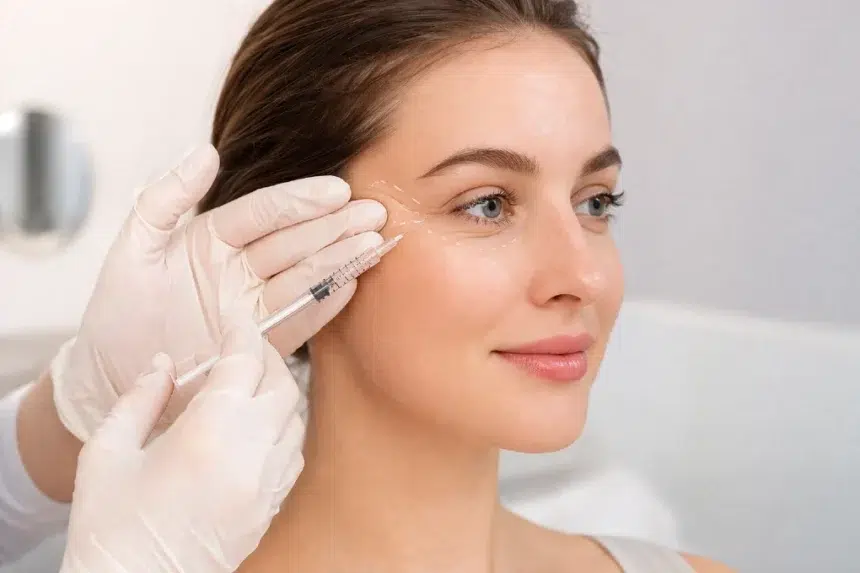
If you are curious about Botox Around Eyes for crow’s feet, the honest answer is yes, it usually does work, but it works best on the right kind of wrinkles and in the right hands. Botox is FDA approved for the temporary improvement of crow’s feet lines in adults, and the evidence behind it is stronger than many people realize. It is not a magic eraser, though. If your lines are deep, sun-damaged, or etched into the skin even when your face is resting, the change can be noticeable without being total.
- What are crow’s feet, exactly?
- How Botox Around Eyes works
- So, does it really work?
- What results usually look like
- Why so many people choose it
- Who tends to be a good candidate
- The risks and side effects people should actually know about
- What makes the result look natural or not
- What about aftercare?
- A few common questions, answered honestly
- Final answer
That distinction matters because a lot of disappointment around cosmetic treatments comes from one simple mismatch. People expect a muscle relaxer to fix every texture issue around the eyes, when crow’s feet can come from more than one thing. Repeated smiling and squinting play a big role, but so do age-related collagen loss, thinner skin, and sun exposure. Botox targets the movement part of the problem first.
What are crow’s feet, exactly?
Crow’s feet are the fine lines that branch out from the outer corners of the eyes. Doctors often call them lateral canthal lines. They show up because the orbicularis oculi muscle contracts every time you smile, squint, laugh, or react to bright light. Over time, those repeated movements crease the skin, and the lines become more visible.
At first, these lines are dynamic. That means you mostly see them when your face moves. Later, they can become static, which means they stick around even when your expression is neutral. That is why some people in their early 30s respond beautifully to treatment, while others with long-standing sun damage and volume loss may need a more layered plan to get the look they want. AAFP notes that dynamic wrinkles generally respond more dramatically than static wrinkles.
How Botox Around Eyes works
Botox Around Eyes treatment uses onabotulinumtoxinA, a purified botulinum toxin that temporarily blocks acetylcholine release at the neuromuscular junction. In simple terms, it reduces the muscle activity that keeps folding the skin at the outer corner of the eye. When the muscle relaxes, the overlying skin does not crease as hard, so the lines soften.
For crow’s feet, FDA prescribing information describes treatment of the lateral canthal area and notes a labeled regimen of 24 units divided across six sites, three on each side, in clinical studies. In real practice, dosing and placement can still be adjusted by a qualified injector based on your anatomy, muscle strength, and wrinkle pattern.
The key word here is temporary. Botox does not rebuild collagen, fill hollows, or resurface damaged skin. What it does is interrupt the muscle movement that is carving those lines more deeply every day. For many people, that is exactly what makes it worth doing.
So, does it really work?
Yes, Botox Around Eyes works well for many adults with moderate to severe crow’s feet, especially when those lines are strongest during smiling or squinting. The strongest proof comes from randomized, controlled clinical studies and FDA-reviewed data, not just before-and-after photos on social media.
In the FDA’s lateral canthal line studies, responder rates at day 30 were significantly better with Botox than with placebo. In one study, 26.1% of treated patients achieved a composite two-grade improvement at maximum smile versus 1.3% with placebo. In a second study, 20.3% of patients treated for crow’s feet alone and 21.3% treated for crow’s feet plus glabellar lines met that same strict endpoint, compared with 0% on placebo. Those numbers may look modest at first glance, but the bar used in those studies was tough. Patients had to show a major improvement by both investigator and subject assessment.
There is also broader evidence behind it. A 2016 review summarized two phase 3 crow’s feet studies involving 1,362 patients and concluded that onabotulinumtoxinA was effective and generally well tolerated. A 2024 meta-analysis in JAAD International pooled upper facial line registration studies involving 5,298 participants and found no new safety signals for onabotulinumtoxinA, even while confirming known side effects that clinicians already watch for.
In real-life terms, that means this treatment tends to do three things very well:
- soften lines that appear when you smile
- reduce the “crinkling” effect at the outer eye
- help prevent dynamic lines from getting etched deeper over time
Where people get confused is when they expect it to act like a resurfacing treatment or a filler. If your crow’s feet are mostly caused by movement, Botox can be excellent. If the area is crepey, dehydrated, sun-damaged, or volume-depleted, Botox may still help, but it will not address every issue by itself.
What results usually look like
This is where expectations matter more than hype.
You will not walk out of your appointment and immediately see smooth skin. According to AAFP, botulinum toxin effects take about two weeks to fully develop, while FDA labeling notes the initial effects begin one to two days after injection and build during the first week. Most results then last about three to four months.
A realistic timeline looks like this:
- Day 1 to 3: very little visible change for most people
- Day 4 to 7: smiling lines start to soften
- Day 10 to 14: fuller result becomes easier to judge
- Month 3 to 4: movement gradually returns and lines slowly reappear
That gradual fade is actually one reason many people like the treatment. It rarely disappears overnight. You simply start noticing that the eye area is moving more again.
Why so many people choose it
There is a reason Botox keeps showing up at the top of cosmetic procedure statistics. The American Society of Plastic Surgeons reported 9,883,711 neuromodulator injection patients in 2024, making this category the number one minimally invasive aesthetic procedure. ASPS also notes that these treatments remain popular because they offer little downtime, few side effects, and fast visible improvement.
For the eye area specifically, the appeal is pretty obvious. Crow’s feet are often one of the first facial lines people notice in photos or on video calls. Softening them can make the eye area look less tired, less tense, and a little fresher without changing the whole face.
That said, the best result is usually the one nobody can quite identify. People may think you look more rested or less stressed. They should not think your face forgot how to smile.
Who tends to be a good candidate
Botox Around Eyes tends to be a good fit for adults who:
- have visible crow’s feet when smiling or squinting
- want a nonsurgical treatment with minimal downtime
- understand that the result is temporary
- prefer softening lines rather than freezing every expression
- are willing to maintain results every few months if they like the outcome
It can also be a smart early intervention for people whose crow’s feet are still mostly dynamic, because reducing repeated muscle folding may help slow how quickly those lines deepen over time.
The FDA label and clinical guidance also make clear that not everyone is a candidate. Treatment should be avoided if you have a skin infection at the injection site or an allergy to Botox ingredients or to another botulinum toxin product. AAFP also lists neuromuscular disorders, keloidal scarring concerns, and body dysmorphic disorder among important reasons for caution or avoidance.
One detail that often gets overlooked is age. The FDA label notes that in crow’s feet studies, responder rates appeared higher in subjects younger than 65 than in those 65 and older. That does not mean older patients cannot benefit. It just means the improvement may be somewhat less dramatic on average, especially if the lines are more static and the skin has lost more elasticity.
The risks and side effects people should actually know about
Most people tolerate Botox Around Eyes well, but “well tolerated” is not the same thing as risk free.
For crow’s feet alone, the FDA lists eyelid edema, basically eyelid swelling, as the most common adverse reaction occurring in at least 1% of treated subjects and more often than placebo. The FDA also warns that injections in or near the orbicularis oculi muscle have been associated with reports of dry eye. If irritation, light sensitivity, or vision changes persist, medical review is recommended.
AAFP adds that minor bruising can happen, and that temporary eyelid droop or brow droop are rare, technique-dependent complications. In plain language, injector skill matters. A lot. The 2024 meta-analysis also found some adverse events statistically higher with onabotulinumtoxinA than placebo, including eyelid ptosis, brow ptosis, eyelid edema, facial pain, and skin tightness, though it did not identify any new safety concerns.
There is also the boxed warning you should not ignore. FDA prescribing information states that botulinum toxin effects may spread beyond the injection site and can cause symptoms such as muscle weakness, double vision, drooping eyelids, trouble speaking, trouble swallowing, or breathing difficulties. Those serious problems are uncommon in cosmetic use, but they are important enough that they belong in any honest discussion.
What makes the result look natural or not
This is the part people care about most, even when they pretend not to.
The difference between “fresh” and “overdone” usually comes down to dosing, placement, and restraint. The eye area is expressive. It is supposed to move. A skilled injector will not chase every single line if doing so would flatten your smile or make the outer eye look stiff. The goal is usually to reduce excessive crinkling while preserving character. That is one reason experienced clinicians often tailor injection patterns to the way your lines fan out.
If you want the most natural outcome, a few practical habits help:
- choose a qualified medical injector with strong facial anatomy knowledge
- ask to start conservatively if it is your first treatment
- use clear before photos rather than judging from memory
- evaluate the result at two weeks, not two days
- remember that skin texture and volume issues may need separate treatment
That last point matters. If someone has etched lines, sun damage, or very thin under-eye skin, Botox can still help, but it may not be the whole answer. That does not mean the treatment failed. It means the problem is bigger than muscle movement alone.
What about aftercare?
Aftercare for Botox Around Eyes is usually pretty simple, but a few commonsense rules can help minimize bruising and keep the product where it was meant to go. Cleveland Clinic advises staying upright for three to four hours after treatment and avoiding rubbing or massaging the area for about 12 hours. It also notes that intense exercise right away may increase bruising for some people, even if it is not clearly tied to complications.
Most people can go right back to normal life. You may see tiny bumps, mild redness, or slight swelling at the injection points, but those are usually short-lived. If you are judging the result in the first 48 hours, you are judging too early.
A few common questions, answered honestly
Can Botox Around Eyes remove deep crow’s feet completely?
Usually not completely. It can soften them a lot if movement is the main cause, but deep lines that stay visible at rest often improve more than they disappear. That is one of the biggest reasons expectations need to be realistic.
How long does Botox Around Eyes last?
For most people, the visible effect lasts about three to four months, though metabolism, dose, muscle strength, and treatment history can affect how long it holds.
Is Botox Around Eyes safe?
It is generally considered safe when used appropriately by a qualified provider, and the published evidence supports that. But it still has real risks, especially if injected poorly or used in someone who is not a good candidate. That is why safety should matter just as much as price.
Final answer
So, does Botox Around Eyes for crow’s feet really work?
For most suitable candidates, yes. It works best on dynamic smile lines, usually starts showing within days, reaches fuller effect by around two weeks, and lasts a few months. It is backed by FDA-reviewed studies and years of clinical use. But it is not a cure for every wrinkle around the eyes, and it will not replace healthy skin habits, good injector technique, or realistic expectations.
If you want the cleanest takeaway, it is this: Botox Around Eyes is a strong option for softening crow’s feet, not because it is trendy, but because it targets the muscle movement that causes those lines in the first place. At the molecular level, botulinum toxin blocks acetylcholine release, which is exactly why the treatment can smooth expression lines without surgery.