


Competitive gaming is not just about fast reflexes or high refresh rate monitors anymore. Sound has become a serious advantage, especially in FPS and battle royale games where hearing footsteps a split second earlier can decide the match. That is where dedicated gaming amplifiers come in. In this Amp Reviews guide, we are diving deep into gaming amps that improve positional audio, surround sound accuracy, and overall competitive performance.
- What Is a Gaming Amp and Why It Matters
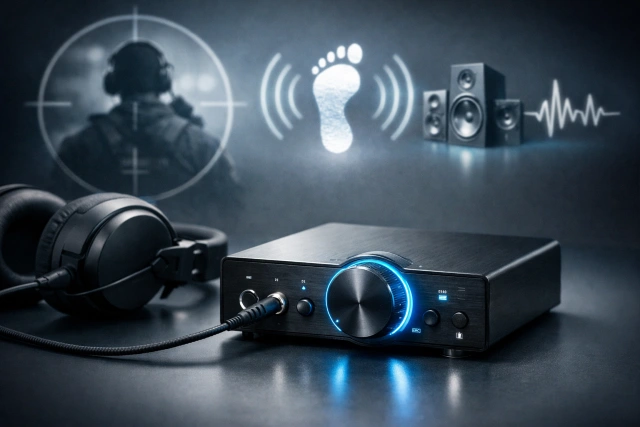
- How Gaming Amps Improve Footstep Audio
- Surround Sound and Positional Accuracy Explained
- Key Features to Look for in a Gaming Amp
- Gaming Amps for PC Competitive Play
- Gaming Amps for Console Players
- Footsteps vs Explosions: Audio Balance Matters
- Real World Competitive Gaming Scenarios
- Wired vs Wireless Headsets and Amps
- Common Myths About Gaming Amps
- Do Gaming Amps Improve All Game Genres
- Setup Tips for Maximum Competitive Advantage
- Are Gaming Amps Worth the Investment
- The Technology Behind Gaming Amplifiers
- Final Thoughts on Competitive Gaming Audio
- Conclusion
If you have ever felt that your expensive headset still sounds flat, weak, or imprecise, the issue is often not the headphones. It is the power and processing behind them. A good gaming amp can unlock details you did not even realize were missing, from subtle reload clicks to distant enemy movement.
This article breaks down how gaming amps work, what actually matters for competitive play, and which types of amps perform best for footsteps, surround sound, and esports level gaming.
What Is a Gaming Amp and Why It Matters
A gaming amp, short for amplifier, boosts and cleans the audio signal before it reaches your headphones. Most PC motherboards, consoles, and controllers have built-in audio, but they are designed for convenience, not precision.
In competitive gaming, audio clarity is everything. When sound is underpowered or poorly processed, important cues blend together. Footsteps may sound muddy. Directional audio becomes vague. Explosions overpower critical details.
From an Amp Reviews perspective, a dedicated gaming amp solves three key problems:
- It provides enough power for high-impedance gaming and studio headphones
- It improves audio clarity and separation
- It enhances positional awareness for surround sound formats
Modern gaming amps often combine a DAC and amp in one unit. The DAC converts digital audio into analog, while the amp strengthens that signal without distortion.
How Gaming Amps Improve Footstep Audio
Footsteps are usually mid to high frequency sounds. Cheap audio systems often compress or flatten these frequencies, especially when explosions or background music are present.
A quality gaming amp improves footsteps by:
- Increasing dynamic range so quiet sounds remain audible
- Separating overlapping audio effects
- Reducing background noise and distortion
In fast-paced shooters like CS2, Valorant, or Call of Duty, this separation is critical. You are not just hearing footsteps. You are identifying distance, surface type, and direction.
Many Amp Reviews highlight that players switching to a dedicated amp often describe hearing enemies earlier and more clearly, even with the same headset.
Surround Sound and Positional Accuracy Explained
Surround sound in gaming does not usually mean physical speakers. Most setups rely on virtual surround sound processed through headphones.
A gaming amp handles this processing more accurately than onboard audio. It ensures each channel remains distinct so left, right, front, and rear cues are easy to pinpoint.
Key surround sound technologies supported by gaming amps include:
- Dolby Atmos for Headphones
- DTS Headphone:X
- Windows Sonic
A well-designed amp maintains channel separation without artificially widening the soundstage. Overdone surround sound can actually hurt competitive play by making audio feel distant or echoey.
The best Amp Reviews focus on amps that keep positioning tight and realistic rather than cinematic.
Key Features to Look for in a Gaming Amp
Not all amps are created equal. For competitive gaming, flashy RGB and branding matter far less than core audio performance.
Power Output and Headphone Compatibility
High-quality gaming headsets and studio headphones often require more power than built-in audio can deliver. Look for amps that can handle:
- 32 to 300 ohm headphones comfortably
- Clean output without hiss at low volumes
- Stable performance during long gaming sessions
Underpowered amps result in flat sound and weak bass, which affects immersion and awareness.
Low Noise Floor
Noise floor refers to background hiss when no audio is playing. In competitive gaming, silence matters. You want to hear footsteps, not static.
Most trusted Amp Reviews emphasize low noise floor as a top priority, especially for sensitive headphones.
Surround Sound Support
If you play shooters competitively, surround sound support is essential. Make sure the amp supports at least one major surround format and works well with your platform, whether PC or console.
EQ and Customization Options
Equalizer settings allow you to boost specific frequencies like mids for footsteps. Some gaming amps offer hardware EQ presets, while others rely on software.
Good EQ flexibility lets you tailor sound profiles for different games without overprocessing.
Gaming Amps for PC Competitive Play
PC gamers have the most flexibility when it comes to amps. USB gaming amps with integrated DACs are the most common choice.
These amps bypass motherboard audio entirely, delivering cleaner sound and better processing. They also support high-resolution audio formats and advanced surround sound.
From an Amp Reviews standpoint, PC gamers benefit most from amps with:
- Dedicated PC drivers
- Customizable software EQ
- Low latency USB connections
Latency is critical. A poorly optimized amp can introduce delay between on-screen action and sound, which is unacceptable in competitive play.
Gaming Amps for Console Players
Console gamers often assume amps are only for PC. That is not true anymore. Modern consoles support USB and optical audio output, making amps more accessible.
Console-focused gaming amps prioritize:
- Plug-and-play compatibility
- Support for Dolby Atmos or DTS
- Game and chat balance controls
For team-based games, balancing voice chat and game audio is a major advantage. Console gamers using amps report clearer communication without sacrificing environmental awareness.
Footsteps vs Explosions: Audio Balance Matters
One mistake many players make is chasing louder sound instead of clearer sound. Turning up volume does not improve awareness if the audio is unbalanced.
A good gaming amp maintains balance so:
- Explosions do not drown out footsteps
- Gunfire remains sharp without distortion
- Ambient sounds feel realistic, not overwhelming
This balance is why competitive players often prefer neutral or slightly mid-forward sound signatures rather than bass-heavy profiles.
Amp Reviews consistently show that amps with clean mids outperform bass-focused models for esports use.
Real World Competitive Gaming Scenarios
Imagine playing a ranked FPS match on a tight map. Two enemies are approaching from different angles. With basic audio, footsteps blur together. You react late.
With a quality gaming amp, each footstep has direction and depth. You hear one enemy on metal stairs behind you and another moving on concrete to your right. You reposition before either sees you.
This is not marketing hype. It is the result of better signal processing and audio clarity.
Many semi-professional and professional players rely on dedicated amps for exactly this reason.
Wired vs Wireless Headsets and Amps
Gaming amps are primarily designed for wired headsets. Wireless headsets already have built-in DACs and amps, which limits external amp benefits.
However, for wired headphones, amps make a noticeable difference. Even mid-range headphones sound significantly better when powered properly.
If competitive play matters to you, wired plus amp remains the preferred setup according to most Amp Reviews and esports audio discussions.
Common Myths About Gaming Amps
Gaming Amps Are Only for Audiophiles
This is false. You do not need golden ears to benefit from an amp. Clearer footsteps and better positioning are practical advantages anyone can notice.
Built-In Audio Is Good Enough
Motherboard and controller audio has improved, but it is still designed for general use. Competitive gaming demands more precision.
Louder Sound Equals Better Performance
Volume does not equal clarity. In fact, excessive volume can mask details and cause fatigue during long sessions.
Do Gaming Amps Improve All Game Genres
While shooters benefit the most, other genres also gain from improved audio.
- Battle royale games rely heavily on sound cues
- Tactical shooters depend on precise positioning
- Horror games become more immersive and intense
- Racing games benefit from clearer engine and environment sounds
Amp Reviews across genres show that any game where sound matters gains from a dedicated amp.
Setup Tips for Maximum Competitive Advantage
To get the most from your gaming amp:
- Disable unnecessary audio enhancements in the OS
- Use stereo or properly tuned surround sound, not both at once
- Adjust EQ gradually, focusing on mids
- Test sound positioning in practice modes
Small tweaks can significantly improve audio awareness.
Are Gaming Amps Worth the Investment
From a performance perspective, gaming amps offer one of the highest value upgrades after a good headset. They last for years, work across platforms, and improve every game you play.
For competitive players, the advantage is not louder sound but better information. Hearing earlier, clearer, and more accurately gives you more time to react.
That edge is why Amp Reviews continue to rank gaming amps as essential gear for serious players.
The Technology Behind Gaming Amplifiers
Gaming amps rely on the same core principles as professional audio amplifiers. They manage electrical signals, impedance matching, and signal-to-noise ratio.
Understanding the basics of amplification helps explain why quality matters and why cheaper solutions fall short, especially when paired with high-end headphones.
This technical foundation is closely tied to how amplification works in general audio systems, a concept often explained in audio engineering references such as basic amplification theory on platforms like Wikipedia when discussing audio amplification principles.
Final Thoughts on Competitive Gaming Audio
Gaming amps are no longer niche accessories. They are practical tools that enhance performance, immersion, and comfort. Whether you play casually or competitively, better audio changes how you experience games.
This Amp Reviews guide shows that the right gaming amp improves footsteps, refines surround sound, and supports consistent competitive play. It is not about gimmicks or marketing. It is about clarity, accuracy, and reliability.
If sound matters in your games, and it should, then a dedicated gaming amp is not optional. It is an upgrade that pays off every match.
Conclusion
Gaming is increasingly audio-driven, especially in competitive environments. A dedicated gaming amp transforms raw sound into actionable information. From clearer footsteps to precise surround sound positioning, the benefits are immediate and measurable. Amp Reviews consistently confirm that players who invest in proper amplification gain an edge that cannot be replicated through volume alone. For serious competitive play, a gaming amp is not a luxury. It is part of the setup.