


Raising backyard chickens has become increasingly popular in recent years, especially among homeowners who want fresh eggs and a sustainable lifestyle. One of the most important elements of a productive chicken coop is Chook Nesting Boxes. These boxes provide hens with a quiet, safe, and comfortable place to lay eggs, which directly affects egg quality and production.
- Why Chook Nesting Boxes Matter for Egg Production
- Features of a Good Chook Nesting Box
- 1. Roll-Away Chook Nesting Boxes
- 2. Wooden Chook Nesting Boxes
- 3. Plastic Chook Nesting Boxes
- 4. Metal Chook Nesting Boxes
- 5. Stackable Nesting Boxes
- 6. External Nesting Boxes
- 7. Bucket Nesting Boxes
- 8. Milk Crate Nesting Boxes
- 9. Luxury Nesting Boxes with Curtains
- 10. Community Nesting Boxes
- Comparison Table of Chook Nesting Box Types
- Tips for Setting Up Chook Nesting Boxes
- Common Problems with Nesting Boxes
- Frequently Asked Questions About Chook Nesting Boxes
- Improving Egg Production Naturally
- Conclusion
When chickens feel secure, they lay more consistently. Poor nesting conditions, on the other hand, can lead to broken eggs, hens laying eggs on the floor, or even stress-related issues within the flock.
In this guide, you will discover the 10 best Chook Nesting Boxes, what makes them effective, and how to choose the right one for your coop. Whether you’re a beginner with a small backyard flock or a poultry enthusiast managing dozens of birds, selecting the right nesting box can make a noticeable difference.
Why Chook Nesting Boxes Matter for Egg Production
Before diving into specific options, it helps to understand why nesting boxes play such a critical role in poultry care.
Hens instinctively look for dark, quiet, and private spaces to lay eggs. If the coop lacks proper nesting areas, chickens may lay eggs randomly across the coop or even outside.
Properly designed nesting boxes help:
• Encourage hens to lay eggs in a consistent place
• Keep eggs clean and protected from damage
• Reduce egg eating behavior
• Minimize stress among chickens
• Improve overall egg collection efficiency
According to poultry research from agricultural extensions like Penn State Extension and the University of Georgia, one nesting box for every 3 to 4 hens is usually sufficient for backyard flocks.
Features of a Good Chook Nesting Box
Before choosing the best option, it’s helpful to know what features matter most.
Ideal Size
Most hens are comfortable in a nesting box that measures roughly:
• 12 inches wide
• 12 inches deep
• 12 inches high
Larger breeds may require slightly bigger spaces.
Comfortable Bedding
Soft bedding materials help protect eggs and keep hens comfortable. Common materials include:
• Straw
• Pine shavings
• Hemp bedding
• Hay
Proper Placement
Chook Nesting boxes should be placed:
• In darker corners of the coop
• Slightly lower than roosting bars
• Away from noisy or high-traffic areas
Easy Egg Collection
Some nesting boxes include roll-away designs or external egg trays that make collecting eggs simple and hygienic.
Now let’s explore the best nesting box options available.
1. Roll-Away Chook Nesting Boxes
Roll-away nesting boxes are one of the most efficient designs for egg protection.
These boxes allow freshly laid eggs to gently roll into a covered compartment where hens cannot reach them. This prevents eggs from breaking or being eaten.
Benefits include:
• Cleaner eggs
• Reduced egg damage
• Easier egg collection
Many commercial poultry farms use roll-away designs because they help maintain consistent egg quality.
2. Wooden Chook Nesting Boxes
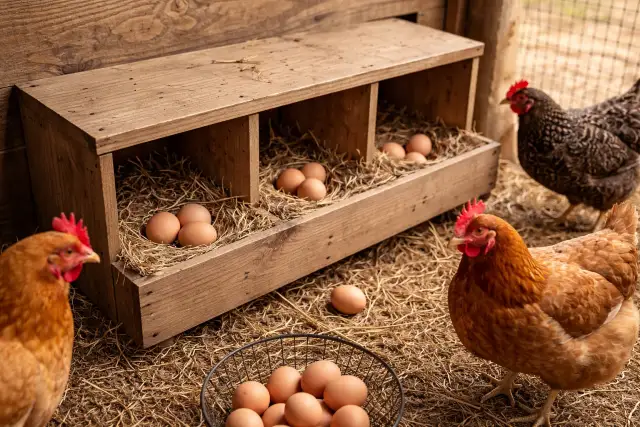
Wooden nesting boxes are a classic choice for backyard chicken keepers.
They are easy to build, affordable, and provide natural insulation during colder months. Wooden boxes also help maintain a comfortable environment for hens.
Advantages:
• Affordable materials
• Easy DIY construction
• Natural temperature regulation
The main downside is that wood can absorb moisture if not properly sealed.
3. Plastic Chook Nesting Boxes
Plastic nesting boxes are becoming increasingly popular due to their durability and ease of cleaning.
Unlike wood, plastic surfaces do not absorb moisture or bacteria, making them more hygienic.
Benefits include:
• Lightweight and portable
• Easy to wash and sanitize
• Resistant to mites and pests
Many modern chicken coops now include plastic nesting boxes as standard equipment.
4. Metal Chook Nesting Boxes
Metal nesting boxes are commonly used in larger poultry setups.
They are extremely durable and can last for years without damage.
Advantages include:
• Long lifespan
• Resistant to chewing and pecking
• Easy to disinfect
However, metal can become cold during winter, so adding thick bedding is essential.
5. Stackable Nesting Boxes
Stackable nesting boxes are ideal for people raising larger flocks.
These modular units allow multiple nesting areas to be installed vertically, saving valuable coop space.
Benefits:
• Space efficient design
• Perfect for large flocks
• Organized egg collection
They are commonly used in professional poultry setups.
6. External Nesting Boxes
External nesting boxes attach to the outside of a chicken coop. This design allows egg collection without entering the coop.
Advantages include:
• Quick egg collection
• Reduced disturbance for hens
• More space inside the coop
Many backyard chicken owners prefer external nesting boxes for convenience.
7. Bucket Nesting Boxes
Bucket nesting boxes are a creative DIY solution.
By attaching plastic buckets to coop walls, you can create simple nesting areas that chickens quickly adapt to.
Benefits include:
• Very low cost
• Easy installation
• Surprisingly comfortable for hens
Many backyard farmers use recycled materials to build these nesting boxes.
8. Milk Crate Nesting Boxes
Milk crates can easily be converted into nesting boxes.
Simply line the crate with straw or shavings and secure it in the coop.
Advantages:
• Affordable DIY option
• Lightweight
• Easy to replace or move
For beginners building their first coop, milk crates offer a quick and effective nesting solution.
9. Luxury Nesting Boxes with Curtains
Some nesting boxes include small curtains at the entrance.
These curtains provide additional privacy for hens and encourage them to lay eggs consistently.
Benefits include:
• Increased sense of security
• Reduced stress among hens
• Better egg laying habits
Privacy curtains can be made from burlap or fabric scraps.
10. Community Nesting Boxes
Community nesting boxes are larger boxes designed to accommodate multiple hens at once.
Instead of individual compartments, hens share a spacious laying area.
Advantages include:
• Efficient use of space
• Encourages natural laying behavior
• Suitable for calm, social flocks
This design is often used in free-range chicken operations.
Comparison Table of Chook Nesting Box Types
| Nesting Box Type | Best For | Key Benefit |
|---|---|---|
| Roll-Away | Clean eggs | Prevents egg breakage |
| Wooden | DIY setups | Affordable |
| Plastic | Easy cleaning | Hygienic |
| Metal | Large flocks | Highly durable |
| Stackable | Commercial setups | Saves space |
| External | Backyard coops | Easy egg collection |
| Bucket | DIY builders | Budget friendly |
| Milk Crate | Beginners | Simple setup |
| Curtain Boxes | Privacy | Encourages laying |
| Community | Social flocks | Efficient space use |
Tips for Setting Up Chook Nesting Boxes
Even the best nesting box will not work well if it is installed incorrectly.
Here are practical tips to help hens use their nesting boxes consistently.
Keep Boxes Dim and Quiet
Chickens prefer darker areas for laying eggs. Bright light may discourage them from using the box.
Maintain Clean Bedding
Dirty bedding can lead to bacteria growth and broken eggs.
Replace bedding weekly and remove damaged eggs immediately.
Prevent Roosting in Boxes
Hens may try to sleep in nesting boxes, which can create messy conditions.
Installing slightly higher roost bars usually prevents this behavior.
Provide Enough Boxes
A common mistake is installing too few boxes.
The recommended ratio is one box for every three hens.
Collect Eggs Frequently
Frequent egg collection reduces the risk of hens pecking or eating eggs.
Common Problems with Nesting Boxes
Even experienced chicken keepers occasionally face issues.
Here are some typical problems and how to fix them.
Chickens Laying Eggs on the Floor
Possible causes include:
• Not enough nesting boxes
• Poor box placement
• Dirty bedding
Solution: add more boxes and keep them clean.
Egg Eating Behavior
If hens discover broken eggs, they may start eating them.
Solutions include:
• Roll-away nesting boxes
• Collect eggs more often
• Provide calcium supplements
Crowded Nesting Boxes
Sometimes hens prefer one box and ignore others.
Try moving boxes slightly or adding curtains to encourage even use.
Frequently Asked Questions About Chook Nesting Boxes
How many nesting boxes do I need?
The standard recommendation is one nesting box per three to four hens.
What is the best bedding for nesting boxes?
Pine shavings and straw are the most common choices because they are soft, absorbent, and affordable.
Should nesting boxes be higher than roosts?
No. Roosts should be placed higher than nesting boxes to prevent chickens from sleeping inside the boxes.
How often should nesting boxes be cleaned?
Clean bedding weekly and disinfect the boxes monthly to maintain hygiene.
Improving Egg Production Naturally
While proper nesting boxes are essential, other factors also influence egg production.
Healthy hens require:
• Balanced poultry feed
• Fresh water
• Clean living conditions
• Adequate daylight (14 to 16 hours)
Studies from agricultural poultry research programs show that hens raised in comfortable environments can produce 250 to 300 eggs per year, depending on breed.
Maintaining a stress-free coop environment with proper nesting areas plays a major role in achieving those numbers.
In many backyard poultry communities, chicken keepers share coop designs and nesting box ideas inspired by traditional poultry housing methods described in sources like chicken coop systems.
Conclusion
Providing the right Chook Nesting Boxes is one of the simplest ways to improve egg production and maintain a healthy flock. Chickens naturally seek safe and comfortable spaces to lay their eggs, and a well-designed nesting box encourages consistent laying habits.
From simple DIY options like milk crates and buckets to advanced roll-away systems, there are many designs to suit different coop sizes and budgets. The key is to ensure the boxes are clean, quiet, and properly placed within the coop.
When hens feel safe and comfortable, they reward you with fresh eggs almost every day. With the right nesting setup, backyard poultry keeping becomes easier, more productive, and far more enjoyable.