



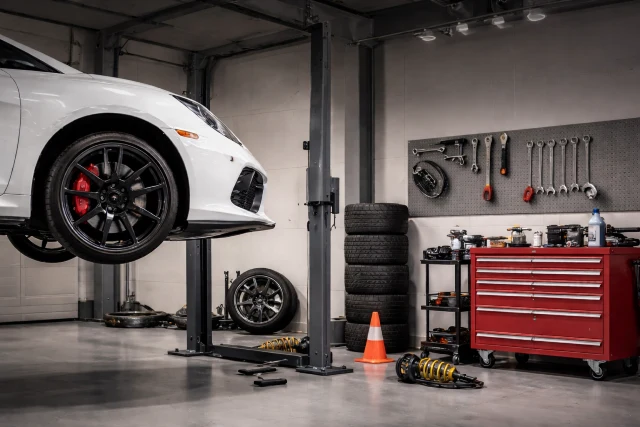
If you’ve ever taken a fast highway ramp and felt the car lean a little more than you expected, you already understand the feeling behind Active Cornering Enhancement. It’s that invisible helping hand that keeps a vehicle composed when you turn the wheel, especially when the road surface is imperfect or your speed is a little higher than you planned.
- What Active Cornering Enhancement actually means in real driving
- How Active Cornering Enhancement works (simple explanation, no engineering degree needed)
- The garage connection: why home setup affects cornering technology
- H2: Active Cornering Enhancement starts with tires (your cheapest handling upgrade)
- Brakes are the secret ingredient in cornering enhancement
- Wheel alignment and suspension: the “silent killers” of stable cornering
- Upgrade your garage like a handling-focused workspace (without going overboard)
- Table: Garage upgrades that improve the foundation for Active Cornering Enhancement
- Common questions people ask about Active Cornering Enhancement (FAQs)
- A real-world scenario: the “perfect storm” garage fixes prevent
- Conclusion: Make your garage the place where safer handling becomes automatic
Here’s the part most drivers miss: Active Cornering Enhancement doesn’t live in isolation. It depends on real-world basics like tire pressure, brake condition, wheel alignment, suspension wear, and even the type of work space you have at home. A cluttered garage and a “good enough” maintenance routine can quietly reduce how well your car’s stability and cornering systems perform. On the other hand, a smarter garage setup makes it easier to keep your vehicle in the sweet spot where the tech can do its job.
This guide stays practical. No fluff. You’ll learn what Active Cornering Enhancement is, how it works in plain language, and exactly what you can improve in your garage so your car handles more safely and predictably.
What Active Cornering Enhancement actually means in real driving
Active Cornering Enhancement is a broad, user-friendly way many people describe modern cornering support features that help a vehicle rotate smoothly through a turn and stay stable when grip is limited. Depending on the brand, model, and trim, the underlying system may use:
- Electronic stability control logic (yaw control)
- Brake-based torque vectoring (light braking on an inside wheel to reduce understeer)
- Differential-based torque vectoring (sending more drive torque to a specific wheel)
- Engine torque reduction in the background when traction is limited
In other words, Active Cornering Enhancement is less like a single “part” and more like a coordinated behavior the car produces using sensors and controls.
A big chunk of the magic comes from stability control working with selective braking. The concept is well established: stability systems compare where you want to go (steering angle) with where the car is actually going (yaw rate, wheel speeds), then brake individual wheels and adjust engine output to help keep the vehicle on track.
Why it matters for safety (not just sporty handling)
Cornering incidents often turn into run-off-road crashes or rollovers, especially when drivers overcorrect or lose grip suddenly. Safety research consistently shows stability control is one of the most effective modern vehicle safety technologies. For example, NHTSA and IIHS have reported large reductions in fatal single-vehicle crashes associated with stability control.
Even if your vehicle’s branding says “enhancement” or “cornering assist,” the real point is simple: the system is trying to keep the car stable in situations where humans tend to run out of margin.
How Active Cornering Enhancement works (simple explanation, no engineering degree needed)
Most systems that feel like Active Cornering Enhancement follow the same playbook:
- Sensors read your intent
- Steering angle sensor detects where you’re aiming the car.
- Throttle position and brake pressure reveal your inputs.
- Sensors read what the car is doing
- Wheel speed sensors (same family as ABS) detect slip.
- Yaw rate and lateral acceleration sensors measure rotation and cornering forces.
- Control module decides what correction is needed
- If the car is pushing wide (understeer), it may lightly brake an inside wheel or adjust torque distribution to help the nose rotate.
- If the rear is stepping out (oversteer), it may brake an outside front wheel and reduce engine torque to calm the slide.
- Brakes and powertrain do the “tiny corrections”
- Many vehicles use brake-based torque vectoring because it can be achieved with existing ABS and stability hardware.
That’s the key: Active Cornering Enhancement depends heavily on your braking system and tire grip. Which is exactly why your garage setup and maintenance habits matter.
The garage connection: why home setup affects cornering technology
You don’t need a lift or a full workshop to support Active Cornering Enhancement. What you need is consistency. The problem most people run into isn’t knowledge, it’s friction:
- The tire gauge is missing.
- The garage is too dark to inspect tread wear properly.
- Tools are scattered so checking brakes becomes a “later” task.
- You don’t have a safe way to jack up the car, so you ignore early suspension symptoms.
And here’s the uncomfortable reality: a stability or cornering system can only work within the boundaries of physics. If your tires are underinflated, your brakes are weak, or an alignment is off, you’re shrinking the traction and control margin the system relies on.
One NHTSA investigation noted that about 28% of light vehicles had at least one underinflated tire, and even a few PSI can affect handling and stopping distance. That’s not a rare edge case. That’s everyday traffic.
H2: Active Cornering Enhancement starts with tires (your cheapest handling upgrade)
If you want Active Cornering Enhancement to feel confident, start with tire basics. Tires are the only part touching the road, so they’re the first limiter in any cornering assist system.
1) Build a tire-pressure routine you can actually stick to
Underinflation is common, and it’s not just about fuel economy. Underinflated tires deform more, heat up faster, and respond more slowly to steering inputs. NHTSA research has repeatedly highlighted how common underinflation is and how it affects handling and stopping.
Garage upgrades that make tire checks effortless:
- Wall-mounted tire inflator (or a compact compressor) near the door
- A quality digital gauge kept in a labeled drawer
- A printed card on the wall with your vehicle’s recommended PSI (from the driver door jamb)
- A small LED headlamp for night checks
Quick habit that works: check tire pressure the first weekend of every month, before driving. It takes five minutes when your tools are in reach.
2) Use tread as a “cornering performance indicator”
Stability and cornering systems can’t create grip. They can only manage it. Uneven tread wear reduces predictable traction, and predictable traction is what Active Cornering Enhancement needs.
In your garage, keep:
- A tread depth gauge
- Chalk or painter’s tape to mark unusual wear locations (front left outer shoulder, etc.)
If you notice shoulder wear on the front tires, it often points to alignment, inflation, or aggressive cornering habits. Fixing it restores the platform your system needs.
Brakes are the secret ingredient in cornering enhancement
A lot of what feels like Active Cornering Enhancement is brake-based correction. Brake-based torque vectoring and stability control can apply small amounts of braking at specific wheels to generate a stabilizing yaw moment.
So if your brakes are neglected, you’re basically asking a precision control system to work with dull tools.
Garage upgrades that support better brake condition
You don’t need to perform full brake jobs at home to help. You just need to catch issues early and keep the basics clean and safe.
What to keep in your garage:
- Floor jack + jack stands rated for your vehicle
- Wheel chocks
- Torque wrench (for correct lug torque)
- Brake cleaner, nitrile gloves, shop towels
- A small inspection mirror and flashlight
At-home brake check (safe and simple):
- Look through the wheel spokes for pad thickness (many cars let you see enough for a quick check).
- Listen for scraping or squeal that changes with speed.
- Check brake fluid level and color (dark fluid can mean age and heat exposure).
If your vehicle’s cornering support feels less “confident” than it used to, weak brakes can absolutely be part of the story, especially if the system relies on selective braking.
Wheel alignment and suspension: the “silent killers” of stable cornering
When alignment is off, the car may drift, pull, or require constant micro-corrections. Active Cornering Enhancement is designed to help in dynamic situations, not to fight a mechanically unhappy chassis every day.
Signs your garage inspection should catch early
- Steering wheel not centered on a straight road
- Uneven tire wear patterns
- Clunking over bumps (possible worn bushings or links)
- Excessive bouncing after pushing down on a corner of the car
These aren’t just comfort issues. They affect how the car loads the tires in a turn, and that directly impacts the effectiveness of Active Cornering Enhancement.
A simple “cornering confidence” checklist (10 minutes)
Do this once a month:
- Tire pressure correct at all four corners
- Visible tread wear even across each tire
- No obvious fluid leaks near shocks/struts
- No unusual steering play at a standstill
- No warning lights related to ABS or stability control
Keep a clipboard in the garage and treat it like a pre-flight check. It sounds nerdy. It works.
Upgrade your garage like a handling-focused workspace (without going overboard)
Here are practical garage upgrades that make maintenance easier and safer, which indirectly supports Active Cornering Enhancement by keeping your vehicle’s fundamentals strong.
Lighting: the most underrated “handling mod”
Poor lighting causes missed inspections. Missed inspections lead to worn tires, bad pads, loose components, and delayed fixes.
Best approach:
- Bright overhead LED shop lights
- A magnetic work light for under-fender checks
- A headlamp for hands-free inspections
Floor organization: make the right task the easy task
If checking tire pressure requires moving boxes, you won’t do it. If your jack stands are buried, you’ll avoid under-car inspections.
Simple layout idea:
- Wall zone: hanging tools, tire inflator, extension cord reel
- Floor zone: jack and stands stored near the garage door
- Shelf zone: fluids, towels, gloves, gauges, and a labeled “inspection kit”
Safety gear: because you can’t improve handling if you get hurt
- Quality jack stands (not optional)
- Eye protection
- Mechanic gloves
- Wheel chocks
- Fire extinguisher rated for garage use
A safe garage is a garage where work actually happens, and that’s how your vehicle stays in the condition where Active Cornering Enhancement can perform.
Table: Garage upgrades that improve the foundation for Active Cornering Enhancement
| Garage Upgrade | What it helps you maintain | Why it matters for cornering |
|---|---|---|
| Digital tire gauge + inflator | Correct PSI | Better grip and faster steering response |
| Tread depth gauge | Even tire wear | Predictable traction in turns |
| Torque wrench | Correct lug torque | Prevents vibration and wheel issues |
| Bright LED lighting | Visual inspections | Catch wear before it becomes unsafe |
| Jack + stands + chocks | Under-car checks | Detect suspension/brake problems early |
| Brake inspection basics | Pads/rotors/fluid awareness | Selective braking systems rely on brakes |
Common questions people ask about Active Cornering Enhancement (FAQs)
Does Active Cornering Enhancement replace good tires?
No. Active Cornering Enhancement can manage stability and help correct the car’s behavior, but it can’t create grip. Tires and road conditions still set the limit.
Can I “add” Active Cornering Enhancement with an aftermarket part?
Usually not in any true OEM sense. Most real implementations are integrated with stability control, ABS, sensors, and factory calibration. What you can do is keep the vehicle in top condition so the existing system performs as designed.
Why does my car feel less stable in corners than it used to?
The most common causes are basic: tire pressure drift, uneven tread wear, alignment changes, aging shocks/struts, or brake wear. NHTSA research shows underinflated tires are common and can affect handling and stopping distance.
If the stability light flashes in a turn, is something wrong?
Not necessarily. A flashing stability indicator often means the system is actively correcting. If it stays on constantly, you may have a fault that needs diagnostic attention.
A real-world scenario: the “perfect storm” garage fixes prevent
Imagine a rainy evening. You’re turning left onto a faster road. The front tires are 6 to 8 PSI low (it happens more than people think), and the front pads are getting thin. The car pushes wide, the stability system steps in, and you feel a brief correction.
Now imagine the same moment with a better setup:
- Tire pressure is correct because you check monthly
- Tread is healthy and even
- Brakes are in good shape
- Alignment was fixed when you noticed odd wear
That’s when Active Cornering Enhancement feels smooth, subtle, and confidence-building. Not dramatic. Not scary. Just effective.
Conclusion: Make your garage the place where safer handling becomes automatic
The best thing about Active Cornering Enhancement is that it’s always working in the background, quietly helping your car stay composed in turns. The worst thing about it is that many drivers treat it like a magic shield and ignore the basics that make it effective.
If you upgrade your garage for quick inspections, better tool access, brighter lighting, and safer workflows, you’ll maintain the exact fundamentals that help Active Cornering Enhancement do its job: tire grip, brake performance, proper alignment, and predictable suspension behavior. That’s how you get safer, calmer handling without guessing, and without waiting for a warning light to force your hand.
In the end, Active Cornering Enhancement isn’t just a feature you have. It’s a capability you maintain.
In the last step of your setup, it helps to understand the bigger picture of vehicle dynamics so you can recognize how tires, brakes, and stability systems work together in real corners.