


If you have seen the term ABS Testauslösung while researching brake issues, reading a scan result, or trying to understand odd brake pedal behavior, you are not alone. In practical terms, ABS Testauslösung is usually connected to anti-lock braking system intervention, test activation, or unwanted ABS engagement during braking. The topic matters because ABS is one of the key safety systems in a modern vehicle. Bosch notes that ABS prevents wheel lock during hard or slippery-surface braking by rapidly reducing and rebuilding brake pressure, helping the driver keep steering control.
- What ABS Testauslösung Means in Real Driving
- How ABS Works in Simple Terms
- Is ABS Testauslösung Always a Problem?
- Common Causes of ABS Testauslösung
- What ABS Testauslösung Feels Like Behind the Wheel
- What Drivers Should Check First
- A Real-World Scenario
- Can You Keep Driving With ABS Testauslösung?
- How a Technician Usually Diagnoses the Problem
- How to Reduce the Risk of ABS Problems
- Frequently Asked Questions About ABS Testauslösung
- Final Thoughts
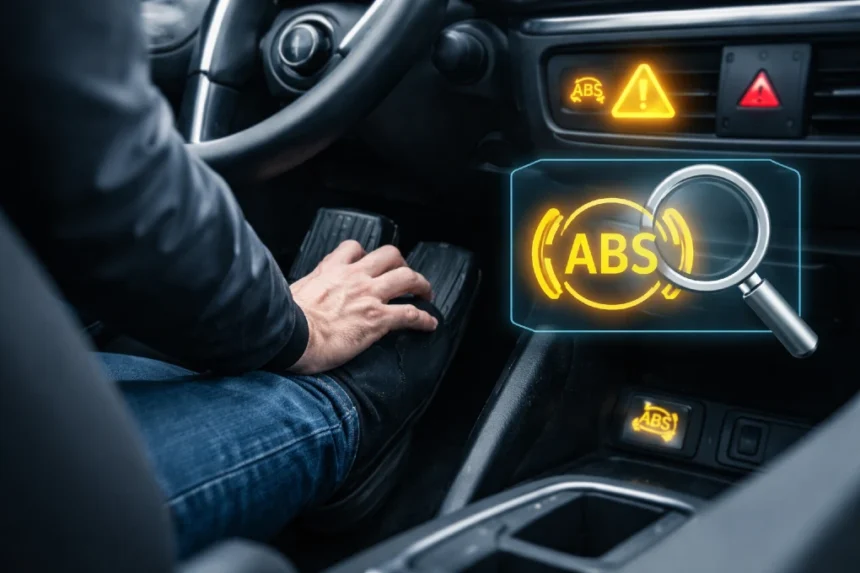
For many drivers, the first sign of ABS Testauslösung is not a warning message at all. It is a feeling. The brake pedal may pulse, buzz, or push back under your foot. That can be normal if ABS activates during emergency braking or low-traction conditions. It can also point to a fault if the system engages when it should not, especially at low speeds on dry roads. Industry repair sources note that false ABS activation often shows up as unwanted pulsation or sudden brake pressure changes, commonly linked to bad wheel speed data.
What ABS Testauslösung Means in Real Driving
The phrase ABS Testauslösung is German in form, and in automotive use it is best understood as ABS triggering, ABS test activation, or ABS intervention. In everyday English, drivers usually describe it as the ABS kicking in. The meaning depends on context, but it generally points to one of two situations: normal ABS operation during a real loss-of-traction event, or abnormal ABS activation caused by a sensor or control issue. Bosch explains that ABS can cycle brake pressure up to 40 times per second to stop wheel lock and keep the vehicle steerable.
That distinction is important. If your ABS activates during a panic stop on wet pavement, that is a safety feature doing exactly what it was designed to do. If it activates while you are slowing gently in a parking lot or coming to a smooth stop at a traffic light, that is a sign something may be wrong in the system. Repair professionals describe this kind of false low-speed ABS activation as a known issue, often caused by weak or inaccurate wheel speed sensor signals.
How ABS Works in Simple Terms
To understand ABS Testauslösung, it helps to know how ABS works. The anti-lock braking system monitors wheel rotation through wheel speed sensors. If the control module sees one or more wheels slowing too quickly and approaching lock-up, it commands the hydraulic modulator to reduce and restore brake pressure in rapid cycles. That pulsing keeps the tire from fully locking and helps the driver maintain steering control while braking. Bosch’s overview describes this exact cycle and its safety purpose.
The main parts involved usually include:
- Wheel speed sensors
- ABS control module
- Hydraulic modulator or valve unit
- Pump and brake fluid circuits
- Related wiring and connectors
If one of these parts sends bad data or responds poorly, the system can behave in ways that feel strange to the driver. That is why ABS Testauslösung can be either normal system behavior or a sign of an underlying brake electronics problem. Sources focused on ABS diagnostics consistently point to sensors, module data, and hydraulic response as the core areas to inspect.
Is ABS Testauslösung Always a Problem?
No, not always. This is where many drivers get confused. A pulsing brake pedal during a hard stop on snow, gravel, wet pavement, or another slippery surface can be completely normal. When ABS activates, you may feel rapid pulses, hear mechanical buzzing, or notice the pedal push back. That sensation comes from the system modulating brake pressure. Bosch and other automotive sources confirm that such pedal feedback is a normal part of ABS operation under the right conditions.
It becomes a concern when the activation does not fit the situation. For example:
- ABS activates during light braking on dry pavement
- The ABS light stays on or comes and goes
- Braking feels inconsistent at low speed
- The speedometer behaves oddly along with the ABS light
- Traction control or stability warnings appear too
These patterns suggest the system may be receiving faulty data rather than responding to real wheel slip. Wheel speed sensor problems are especially common in these cases.
Common Causes of ABS Testauslösung
1. Dirty or Failing Wheel Speed Sensors
This is one of the most common causes. Wheel speed sensors tell the ABS module how fast each wheel is rotating. If one sensor becomes dirty, corroded, damaged, or electrically unstable, it can send an incorrect signal. The ABS module may then interpret that bad signal as a locked wheel and trigger the system unnecessarily. Multiple diagnostic sources identify failing or contaminated wheel speed sensors as a major cause of false ABS activation and warning lights.
2. Damaged Sensor Wiring or Connectors
Sometimes the sensor itself is not the real issue. The wiring harness, connector pins, or insulation may be damaged by water, rust, vibration, road debris, or previous repair work. An intermittent signal drop can cause the ABS module to lose confidence in the wheel speed reading and react as if there is a braking emergency. Sources on intermittent ABS faults regularly connect this behavior to corroded connectors and unstable sensor circuits.
3. Tone Ring or Reluctor Damage
Many ABS systems rely on a toothed tone ring or magnetic encoder that helps the sensor measure wheel rotation. If the ring cracks, rusts, gets clogged, or shifts position, the speed reading may become inaccurate. That false reading can trigger low-speed ABS Testauslösung because the module thinks one wheel is suddenly slowing more than the others. This cause is commonly discussed in professional ABS diagnostics tied to false activation complaints.
4. Low Brake Fluid or Hydraulic Issues
ABS depends on correct hydraulic pressure. If brake fluid is low or there is a fault in the hydraulic side of the system, braking feel can change and ABS-related warnings may appear. Some diagnostic sources list low brake fluid and hydraulic pressure problems among the reasons the ABS light may come on or the system may behave abnormally.
5. ABS Module or Pump Problems
The ABS control module processes sensor data and commands hydraulic action. If the module has an internal fault, or if the pump and modulator assembly do not respond correctly, you may experience improper ABS intervention, stored trouble codes, or warning lights. While sensor faults are more common, module issues are still a real possibility in stubborn cases.
6. Warped Brake Rotors or Mechanical Brake Issues
Not every pedal pulsation comes from ABS. Sometimes warped brake rotors create a rhythmic vibration that feels similar, especially to drivers who are not sure what normal ABS feels like. iFixit’s repair discussion points out that dirty sensors and warped rotors are two different problems that can both produce brake pulsation, which is why diagnosis matters.
What ABS Testauslösung Feels Like Behind the Wheel
Drivers often describe ABS Testauslösung in a few familiar ways:
- A fast pulsing or vibration in the brake pedal
- A buzzing or grinding sound during braking
- A brief drop and return of pedal pressure
- A feeling that the brake pedal is pushing back
- Short bursts of release and re-application during a stop
When ABS is working as intended, those sensations usually happen during strong braking or low-grip conditions. False activation, on the other hand, often appears during slower stops where there is no real reason for wheel lock prevention to kick in. Professional brake diagnosis sources mention that customers commonly report pulsation, sudden pedal drop, or inconsistent braking during false ABS events.
What Drivers Should Check First
If you suspect ABS Testauslösung is happening at the wrong time, start with practical checks.
Look for Warning Lights
An ABS light, traction control light, or stability control warning can provide an important clue. A bad wheel speed sensor often triggers multiple warning lights because those systems share data. Sources on sensor failures consistently note that implausible wheel speed signals can disable ABS and illuminate related warnings.
Notice When It Happens
Ask yourself a few basic questions:
- Does it happen only on wet or slippery roads?
- Does it happen during light braking on dry roads?
- Is it worse at very low speed?
- Does it happen with a warning light or without one?
These patterns help separate normal ABS operation from a fault. Low-speed false activation points more strongly toward sensor-related problems than toward genuine loss of traction.
Check Brake Fluid Level
A low brake fluid reservoir is easy to inspect and should never be ignored. Even if it is not the root cause of the issue, low fluid can affect braking system performance and indicate pad wear or a leak. Some ABS warning diagnoses include brake fluid as part of the first-pass inspection.
Inspect Wheel Areas for Obvious Damage
If you are comfortable doing a visual check, look around the wheel hubs for damaged sensor wires, loose connectors, or heavy rust buildup. You may not diagnose the whole issue from a visual inspection alone, but obvious physical damage can quickly point you in the right direction. Sensor wiring and connector faults are well-documented causes of unstable ABS behavior.
A Real-World Scenario
Imagine you are driving through town at 15 mph and gently pressing the brake as you approach a stop sign. The road is dry, but suddenly the brake pedal chatters under your foot and the car feels like it briefly releases braking effort before stopping. That is not typical ABS behavior for a dry, gentle stop. A technician would likely suspect a weak wheel speed signal, especially if one sensor drops out at low speed and tricks the module into thinking a wheel has locked. This exact low-speed pattern is widely associated with false ABS activation complaints.
Now compare that with a second scenario. You are driving in heavy rain, a vehicle cuts in front of you, and you hit the brake firmly. The pedal pulses rapidly, you hear noise, and the car remains steerable. That is classic normal ABS operation. Bosch’s description of ABS intervention during emergency or slippery-surface braking fits this situation very closely.
Can You Keep Driving With ABS Testauslösung?
Sometimes yes, but that does not mean you should ignore it. If the issue is a failing sensor and the ABS light is on, the car may still have basic hydraulic braking, but ABS and possibly traction or stability functions may be reduced or disabled. Sources discussing wheel speed sensor failure warn that safety systems lose part of their protective function when the signal becomes unreliable.
That matters most in emergency situations, on wet roads, or during panic stops. In normal commuting, the car may seem mostly fine until you suddenly need full braking support. Because of that, brake-related warnings and repeated false ABS activation deserve prompt inspection rather than delay.
How a Technician Usually Diagnoses the Problem
A proper diagnosis usually includes:
- Scanning for ABS trouble codes
- Reading live wheel speed data
- Inspecting sensors and wiring
- Checking brake fluid and hydraulic condition
- Looking at tone rings or magnetic encoders
- Road testing under controlled conditions
This matters because guessing can get expensive. Replacing random parts without confirming the fault often wastes time and money. Diagnostic articles on ABS issues emphasize code scanning and live data review because a weak or missing sensor signal often becomes obvious once wheel speeds are compared in real time.
How to Reduce the Risk of ABS Problems
You cannot prevent every electronic issue, but you can reduce the odds of trouble by staying on top of routine brake care.
Good habits include:
- Replacing worn brake components on time
- Keeping brake fluid maintained to spec
- Addressing warning lights early
- Inspecting wheel area wiring after suspension or brake work
- Avoiding pressure-washing connectors directly
- Fixing rust or debris buildup around wheel sensor locations when applicable
These steps support the parts ABS depends on most. Because the system relies on clean sensor input and healthy hydraulics, neglect in either area can lead to confusing brake behavior.
Frequently Asked Questions About ABS Testauslösung
Is brake pedal pulsation always ABS?
No. Pedal pulsation can come from normal ABS activation, but it can also come from warped rotors or other brake problems. Diagnosis should separate ABS intervention from mechanical brake vibration.
What is the most common cause of false ABS activation?
Wheel speed sensor issues are among the most common causes, especially dirty sensors, weak signals, damaged wiring, or tone ring problems.
Is ABS activation normal on dry roads?
It can happen during an extreme emergency stop, but repeated ABS activation during light braking on dry pavement is not typical and should be checked. Bosch notes ABS is designed for wheel lock prevention during hard or low-traction braking, not routine gentle stops.
Can a bad wheel speed sensor affect other systems?
Yes. Many vehicles share wheel speed data across ABS, traction control, stability control, and sometimes speed-related functions. Sensor failure can trigger multiple warnings or odd behavior.
Final Thoughts
ABS Testauslösung sounds technical, but the idea behind it is straightforward. It refers to ABS triggering, either because the system is correctly reacting to a loss of traction or because a fault is making it intervene when it should not. The difference comes down to context. If the pedal pulses during a hard stop on a slippery surface, that is usually normal. If it happens repeatedly during light braking on dry pavement, it often points to a sensor, wiring, tone ring, or module-related issue.
For drivers, the smartest response is to pay attention to patterns, warning lights, and braking feel rather than dismissing the issue as random. In the broader world of vehicle safety systems, ABS remains one of the most important technologies ever added to everyday cars, and keeping it working properly is worth the effort.
Sources: Bosch Mobility, NHTSA-linked safety references in ABS diagnostics coverage, iFixit repair discussion, and multiple automotive technical diagnosis articles on wheel speed sensors, false ABS activation, and brake pulsation.