


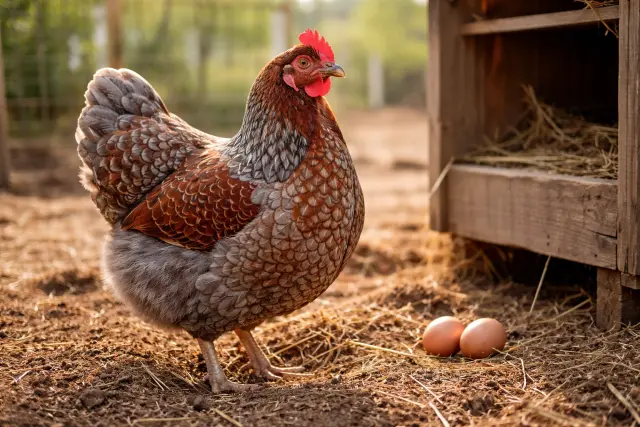
If you have ever stopped mid scroll because a chicken looked too pretty to be real, there is a good chance it was the Blue Laced Red Wyandotte. This bird is famous for its rich red feathers edged in smoky blue lacing, but looks are only half the story. The Blue Laced Red Wyandotte is also known as a calm, cold hardy, family friendly chicken that can do a solid job in the egg basket when you meet its basic needs. In this guide, I will walk you through temperament, daily care, housing, feeding, and what to realistically expect from egg production, so you can decide if the Blue Laced Red Wyandotte belongs in your flock.
- Quick breed snapshot
- What makes the Blue Laced Red Wyandotte special?
- Blue Laced Red Wyandotte temperament
- Care basics that actually matter
- Feeding the Blue Laced Red Wyandotte for steady eggs
- Egg production: what to realistically expect
- Health concerns and prevention
- Real world scenarios: what it is like to keep them
- Blue Laced Red Wyandotte care checklist
- FAQs
- Conclusion
Quick breed snapshot
Here is the short version before we go deeper. The Blue Laced Red Wyandotte is a color variety of the Wyandotte breed, typically kept as a dual purpose bird for eggs and occasional meat. Many keepers choose the Blue Laced Red Wyandotte for backyard flocks because it combines beauty with a generally steady, manageable personality. Hatchery descriptions commonly label Wyandottes as quiet, easy to handle, and winter hardy.
What makes the Blue Laced Red Wyandotte special?
The “blue lacing” is the showstopper. Each feather has a red center with a bluish border, creating that crisp outlined look people love in photos. Because the pattern is the headline feature, birds can vary a lot by line. Some flocks produce tight, dramatic lacing while others look softer or more mottled. That is normal, especially if you are buying for backyard enjoyment instead of show standards.
Beyond looks, the Blue Laced Red Wyandotte tends to share classic Wyandotte strengths:
- Solid body size and sturdiness
- Generally calm demeanor compared with flightier breeds
- Winter friendliness thanks in part to the rose comb, which is less prone to frostbite than tall single combs
- Respectable egg production for a dual purpose chicken
Blue Laced Red Wyandotte temperament
Most people who keep a Blue Laced Red Wyandotte describe it as calm, steady, and not overly noisy. Hatchery and breed guides often use words like docile, friendly, and quiet.
That said, temperament is never one size fits all. What you will see depends on three big things:
1) Genetics and line
Some breeder lines are selected for show pattern first, and temperament second. Some hatchery lines prioritize hardy backyard traits. If you buy a Blue Laced Red Wyandotte from a reputable source that tracks behavior, you will usually get a more predictable bird.
2) Your handling habits
Chicks that are gently handled a few minutes a day tend to grow into calmer adults. If you want a friendly Blue Laced Red Wyandotte, start early with simple routines: sit near the brooder, offer tiny treats from your hand, and pick them up briefly and safely.
3) Flock dynamics
Wyandottes can be confident birds. In some flocks, a Blue Laced Red Wyandotte may sit in the middle to upper part of the pecking order. If your run is tight, that confidence can turn into bossiness. Space and boredom are usually the real problem, not the breed.
Are they good with kids?
Often, yes, with the usual backyard rules. A well handled Blue Laced Red Wyandotte hen is typically calmer than light, flighty breeds. Teach kids to:
- Approach slowly from the side
- Support the bird’s body when holding
- Avoid chasing, cornering, or grabbing tail feathers
Roosters: calm protector or drama?
Many keepers report that Blue Laced Red Wyandotte roosters can be calm and protective rather than aggressive, especially when raised with regular human contact. Still, any rooster can become rough if he is stressed, overcrowded, or constantly challenged by other males. If you plan to keep one, keep your adult rooster count low and your space generous.
Care basics that actually matter
A Blue Laced Red Wyandotte does not need fancy care, but it does need consistent basics. When people struggle with egg production or behavior, it is usually because one of these foundations is missing.
Housing: coop size, ventilation, and roost comfort
Space is not just a comfort issue. It affects cleanliness, respiratory health, bullying, and egg consistency.
A widely repeated guideline for standard size chickens is about 3 to 4 square feet per bird inside the coop and about 8 to 10 square feet per bird in the run.
For a Blue Laced Red Wyandotte, I like to aim toward the more generous end because they are broad birds and feathered beauty can get messy fast in tight quarters.
Minimum space targets (practical, backyard friendly)
| Area | Per bird target | Why it helps |
|---|---|---|
| Coop floor space | 4 sq ft | Less ammonia, fewer squabbles, cleaner feathers |
| Outdoor run | 10 sq ft | More foraging, less boredom pecking |
| Roost space | 10 to 12 inches | Shoulder room for wide bodied birds |
| Nest boxes | 1 box per 3 to 4 hens | Less egg damage and fewer “nest wars” |
Ventilation tip that saves you headaches: You want air exchange without a cold draft blasting the roost. If you smell ammonia when you open the coop, ventilation and litter management need work.
Bedding and cleanliness
Wyandottes have dense feathering. The Blue Laced Red Wyandotte in particular can look rough quickly if bedding stays damp. Wet litter increases ammonia, and ammonia stresses the respiratory system.
Simple routine that works:
- Stir bedding daily if you use deep litter
- Spot clean droppings under roosts a few times a week
- Replace bedding when it stops smelling like “wood” and starts smelling like “barn”
Predator proofing
This is non negotiable. The prettiest Blue Laced Red Wyandotte in the world is still an easy meal.
Checklist:
- Hardware cloth on vents and openings (not chicken wire)
- Locking latches that raccoons cannot flip
- A covered run if hawks are common
- Dig protection around the run perimeter
Heat and cold hardiness
Wyandottes are widely described as winter hardy, and the rose comb can reduce frostbite risk compared with tall comb breeds.
Even so, cold hardiness does not mean “no work.” Your Blue Laced Red Wyandotte will do best when:
- The coop stays dry and ventilated
- Water does not freeze all day
- Drafts do not hit the roost directly
In summer, watch for heat stress. Shade, cool water, and airflow matter more than misting. A wide bodied bird can struggle faster in high heat.
Feeding the Blue Laced Red Wyandotte for steady eggs
Feed is where egg production is won or lost. Most healthy adult hens do well on a complete layer feed once they are laying, with access to grit and clean water at all times.
Simple feed plan by age
Chicks (0 to 6 weeks)
- Starter feed (higher protein)
- Clean water, always
- Grit only if you offer treats or greens
Growers (6 weeks to point of lay)
- Grower feed
- Do not push layer feed too early, it is not ideal before laying begins
Laying hens
- Layer feed
- Free choice oyster shell for calcium support if shells thin
Treats without hurting production
A Blue Laced Red Wyandotte will happily take treats, but treats should stay modest. If treats become “most of the diet,” you will see it in softer shells and fewer eggs.
Good treat ideas in small amounts:
- Leafy greens
- A little scrambled egg
- Mealworms as a training treat
- Kitchen scraps that are not salty or moldy
Egg production: what to realistically expect
Let’s talk numbers, because this is what most people really want to know.
Many Wyandotte sources place egg production around 200 to 240 brown eggs per year, depending on line and management. Hatchery listings for the Blue Laced Red Wyandotte commonly advertise about 200 eggs per year.
That means a well managed Blue Laced Red Wyandotte might average roughly 4 to 5 eggs per week during strong seasons, with natural slowdowns during molt, winter darkness, or stress.
When do they start laying?
Wyandottes are often reported to start laying around 20 to 22 weeks, though it can vary by season and growth rate. Your Blue Laced Red Wyandotte pullet may start later if she grows slowly, goes through a cold season, or if daylight hours are short.
Egg color and size
Expect brown eggs. Size is often described as large in many Wyandotte guides, though hatchery lines may list medium to large.
Why some Blue Laced Red Wyandottes lay less than expected
If your Blue Laced Red Wyandotte is healthy but not laying well, these are the usual suspects:
- Daylight is too short
- Hens often slow down with fewer daylight hours
- Molting
- Feather regrowth takes energy
- Protein or calcium issues
- Thin shells, soft shells, or stopped laying can show up
- Stress
- Predator visits, moving coops, bullying, overheating
- Hidden nest
- Classic backyard mystery: she is laying, just not where you want
A practical egg boosting checklist
Without forcing anything unnatural, you can support better output by keeping basics tight:
- Keep fresh water available all day
- Feed a consistent layer ration
- Provide nest boxes that feel safe and dim
- Reduce bullying by giving more space and visual barriers
- Watch body condition: too fat can reduce laying
Health concerns and prevention
A Blue Laced Red Wyandotte is typically hardy, but all chickens share similar disease risks. Prevention is mostly boring stuff done consistently, which is honestly the best kind.
Marek’s disease: why people mention it so often
Marek’s disease is widely described as common in small flocks and not treatable once clinical signs begin, but preventable with vaccination. The American Poultry Association also discusses Marek’s as extremely contagious and a frequent topic in poultry circles.
Many extension and poultry health resources recommend giving Marek’s vaccine at the hatchery for best results.
If you are buying Blue Laced Red Wyandotte chicks, ask whether they were vaccinated at hatch. It is one of those small decisions that can save a flock later.
Common issues in backyard flocks
These are not specific to the Blue Laced Red Wyandotte, but you should know them:
- External parasites (mites, lice)
- Respiratory irritation from damp litter or poor ventilation
- Bumblefoot from rough roosts or dirty wet ground
- Crop issues from spoiled feed or lack of grit
Simple weekly health routine
Take five minutes once a week and you will catch most problems early:
- Look at comb and eyes: bright and alert is good
- Check feathers near the vent for mess or pests
- Feel the keel bone: not razor sharp, not buried in fat
- Observe walking: limping early is easier to treat
Real world scenarios: what it is like to keep them
Scenario 1: the winter layer you actually appreciate
Many keepers notice Wyandottes stay more consistent through cold months than some breeds, helped by their winter friendly build and rose comb. If your goal is to keep eggs coming when it is chilly, a Blue Laced Red Wyandotte can be a smart pick, as long as the coop is dry and draft safe.
Scenario 2: the pretty bird that needs space
That dense feathering and broad body look amazing, but it also means mud shows fast. If your run turns into a mud pit, your Blue Laced Red Wyandotte will look rough and can develop foot problems. A simple fix is adding dry areas, rotating runs, or using deep mulch.
Scenario 3: the confident hen that claims the best nest box
Some Blue Laced Red Wyandotte hens are chill, some are quietly bossy. If one hen guards the favorite nest, add another nest box in a different corner. Small changes like that reduce daily flock drama.
Blue Laced Red Wyandotte care checklist
If you like “tell me what to do” lists, here is a clean routine.
Daily
- Fresh water
- Feed check
- Quick headcount and behavior scan
Weekly
- Spot clean droppings under roost
- Refill grit and oyster shell as needed
- Quick parasite and foot check
Monthly
- Replace or refresh bedding
- Inspect coop hardware and locks
- Review run condition and fix muddy spots
FAQs
Is the Blue Laced Red Wyandotte good for beginners?
Yes, in most cases. The Blue Laced Red Wyandotte is typically described as docile and easy to manage, and the breed is known for cold hardiness. Beginners do best when they start with enough space and a predator safe setup.
How many eggs does a Blue Laced Red Wyandotte lay per year?
Many Wyandotte references place production around 200 to 240 eggs per year, and hatchery listings for the Blue Laced Red Wyandotte often list about 200 annually. Real world results depend heavily on nutrition, daylight, stress, and line quality.
Are Blue Laced Red Wyandottes noisy?
They are usually considered quieter than many high energy breeds, though any chicken can get loud around treats, laying, or predator alarms.
Do they do well in cold climates?
Wyandottes are widely described as winter hardy, and the rose comb can reduce frostbite risk. They still need a dry, well ventilated coop.
Do they go broody?
Broodiness varies by line. Some Wyandottes show moderate broodiness, while others rarely sit. If you want chicks, a broody Blue Laced Red Wyandotte can be a steady mother. If you want nonstop eggs, you may prefer a line that is less broody.
Conclusion
If you want a chicken that looks like a living piece of art but still behaves like a practical backyard bird, the Blue Laced Red Wyandotte is hard to beat. You can expect a generally calm temperament, good cold weather toughness, and egg production that is respectable for a dual purpose breed, often around the 200 eggs per year range with good management. Give your Blue Laced Red Wyandotte enough space, keep the coop dry and ventilated, feed a consistent layer diet, and you will usually be rewarded with steady brown eggs and a flock member you genuinely enjoy watching every day.
In the end, the Blue Laced Red Wyandotte shines when you treat it like what it is: a sturdy heritage style chicken that thrives on simple routines, clean living, and enough room to be a chicken. If you are building a flock you want to admire as much as you want to collect eggs from, this bird is a strong contender, and it fits beautifully into the bigger story of chicken keeping as a heritage breed.