



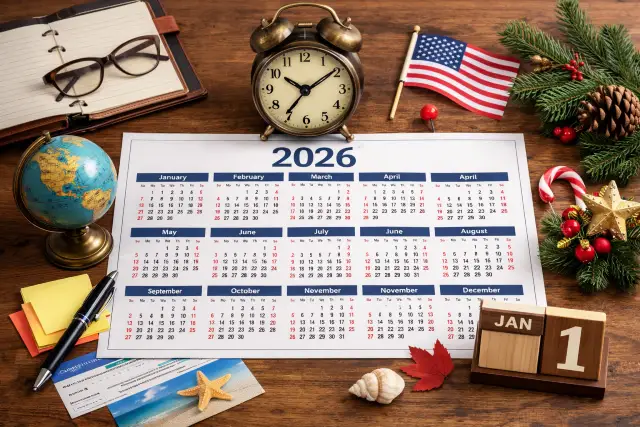
A 2026 Calendar sounds like a simple thing, until you actually need it. One minute you are trying to confirm what day January 1 lands on, the next you are juggling school terms, project deadlines, family events, travel plans, and a couple of holidays you forgot were coming.
- Quick facts you should know before using a 2026 Calendar
- 2026 Calendar year-at-a-glance overview
- The holidays question: which holidays belong on your 2026 Calendar?
- 2026 Calendar holidays (US federal holiday list)
- International observances you can add to a 2026 Calendar
- Key dates beyond holidays: what most people forget to plan for
- How to use a 2026 Calendar for real planning (not just looking at dates)
- 2026 Calendar planning scenarios (real-world examples)
- Month-by-month planning ideas for a 2026 Calendar
- Digital vs printable 2026 Calendar: which one is better?
- Common mistakes people make with a 2026 Calendar
- 2026 Calendar FAQs
- Conclusion: make the 2026 Calendar work for you
That’s why a 2026 Calendar is more than a grid of dates. It’s a quick “big picture” view of the year that helps you plan with fewer surprises and less last-minute stress. In this guide, you’ll get a clean year-at-a-glance overview, key planning facts, and a practical list of holidays and notable dates you can actually use.
For accuracy, I’ll reference official and widely used calendar sources for holiday rules and observances where it matters, because holiday schedules can affect everything from office closures to deliveries and school calendars.
Quick facts you should know before using a 2026 Calendar
Let’s start with the basics that make planning easier:
- 2026 is not a leap year, so it has 365 days.
- January 1, 2026 is a Thursday, which sets the pattern for the whole year.
- If you use week-number planning (common in workplaces and project management), many online calendar views for 2026 include week numbers right inside the monthly layout.
A good 2026 Calendar helps you see patterns fast: long weekends, quarter boundaries, exam seasons, major travel months, and those stretches where deadlines always seem to bunch up.
2026 Calendar year-at-a-glance overview
When people say “year-at-a-glance,” they usually want one of two things:
- A single-page view of all months (great for printing and pinning up).
- A planning view that highlights quarters, weekends, and key date clusters (great for work and study).
Here’s a simple, usable overview you can copy into a planner, notes app, or project doc.
2026 Calendar months and days
| Month | Days |
|---|---|
| January | 31 |
| February | 28 |
| March | 31 |
| April | 30 |
| May | 31 |
| June | 30 |
| July | 31 |
| August | 31 |
| September | 30 |
| October | 31 |
| November | 30 |
| December | 31 |
This looks basic, but it helps more than you’d think. When you’re mapping deadlines (like “first week of May” or “end of Q3”), knowing which months are shorter saves time.
The holidays question: which holidays belong on your 2026 Calendar?
Here’s the honest truth: there is no single “one-size-fits-all” holiday list that works for everyone worldwide. Public holidays vary by country, and sometimes even by state or province.
So the best approach is:
- Put the official holidays for your country into your 2026 Calendar first.
- Add international observances you care about (useful for schools, awareness campaigns, and global teams).
- Then add your personal key dates: exams, renewals, trips, goals, and family events.
To keep this article genuinely useful, I’m going to give you:
- A reliable set of US federal holidays for 2026 (since many readers use them for business planning, shipping expectations, and school schedules).
- A way to add UN international observances for awareness and education calendars.
- A “key dates” checklist you can apply in any country.
2026 Calendar holidays (US federal holiday list)
If your work, business, or clients connect with the United States, federal holidays matter. They often affect government offices, banks, and postal services, and they can also influence timelines and customer expectations.
The U.S. Office of Personnel Management (OPM) explains how federal holidays are established and how “observed” days work when a holiday falls on a weekend.
Here are the commonly recognized US federal holidays you’ll want on a 2026 Calendar (with the typical observed pattern). The dates below are consistent with widely used published holiday calendars.
US federal holidays to mark on your 2026 Calendar
- New Year’s Day: Thursday, January 1
- Martin Luther King Jr. Day: Monday, January 19
- Washington’s Birthday (Presidents Day): Monday, February 16
- Memorial Day: Monday, May 25
- Juneteenth National Independence Day: Friday, June 19
- Independence Day (observed): Friday, July 3 (since July 4 is Saturday)
- Labor Day: Monday, September 7
- Columbus Day: Monday, October 12
- Veterans Day: Wednesday, November 11
- Thanksgiving Day: Thursday, November 26
- Christmas Day: Friday, December 25
If you’re using a 2026 Calendar for operations, one practical tip is to mark the holidays that cause the biggest “ripple effects”:
- Banking and payment processing
- Shipping and mail delivery
- School closures
- Court and government office closures
For example, Presidents Day is widely treated as a closure day for many government offices and financial services.
International observances you can add to a 2026 Calendar
If your 2026 Calendar is for education, content planning, HR, or community programs, international observances can be surprisingly helpful. The United Nations maintains a list of International Days and Weeks that many schools and organizations reference.
You do not need to add hundreds of observances. Instead, pick what matches your life or your website’s focus. A few examples of why these can matter:
- Teachers often align classroom activities with awareness days.
- Businesses schedule CSR campaigns around them.
- Health and fitness communities use them for challenges and group events.
- Bloggers use them for timely posts that don’t feel forced.
If you run a content calendar, using a 2026 Calendar with a few carefully chosen observances can keep your publishing schedule consistent without scrambling for ideas.
Key dates beyond holidays: what most people forget to plan for
A strong 2026 Calendar includes more than holidays. Some of the most stressful “surprise” dates are not holidays at all.
Here are key date categories worth adding:
1) Personal life dates
- Birthdays and anniversaries (obvious, but still easy to miss)
- School admissions deadlines
- Exam windows and result dates
- Medical checkups, renewals, and follow-ups
2) Money dates
- Rent or mortgage due dates
- Subscription renewals (streaming, software, gym)
- Insurance renewal periods
- Savings milestones (monthly targets)
3) Work and business dates
- Quarterly reviews (Q1, Q2, Q3, Q4)
- Client contract renewals
- Project kickoff and delivery windows
- Tax prep milestones (varies by country)
4) Travel and seasonal planning
- Peak travel seasons
- Weather-sensitive plans (home improvement work, outdoor events)
- Visa renewal windows (if relevant)
When your 2026 Calendar holds these dates in one place, planning stops feeling like guesswork.
How to use a 2026 Calendar for real planning (not just looking at dates)
Here’s a simple way to make your 2026 Calendar do something useful in under 30 minutes.
Step 1: Mark “fixed dates” first
These are non-negotiable dates:
- Federal or public holidays you observe
- Exams, major deadlines, booked trips
- Appointments that are already confirmed
Step 2: Add “floating priorities”
These are important, but flexible:
- Deep work blocks
- Study plans
- Fitness targets
- Home projects
Step 3: Create a monthly rhythm
Instead of trying to “be productive every day,” aim for a repeatable monthly pattern:
- First week: planning, budgeting, setup tasks
- Mid-month: execution and progress
- Last week: review and cleanup
This matches how many workplaces operate anyway, especially around reporting cycles.
Step 4: Build a buffer for reality
Even the best 2026 Calendar plan fails if it has no breathing room. Put in buffer time for:
- Admin tasks
- Rest days
- Catch-up slots
- Family and social obligations
Research consistently links better time management with positive outcomes like reduced stress and improved performance, especially in education and workplace contexts.
2026 Calendar planning scenarios (real-world examples)
Sometimes it helps to see how different people use the same year view.
Scenario 1: Student planning the academic year
A student uses a 2026 Calendar to map:
- Exam months
- Assignment deadlines
- Study blocks (2 weeks before exams)
- Breaks and travel
This avoids the classic problem: cramming everything into the final week because the earlier weeks “looked empty.”
Scenario 2: Small business owner managing deadlines
A business owner sets up a 2026 Calendar with:
- Quarter start and end dates
- Launch windows
- Tax prep reminders
- Holiday shipping cutoffs
US federal holidays can affect operations and customer expectations, so marking them early reduces last-minute chaos.
Scenario 3: Family organizing home and life routines
A household uses a 2026 Calendar for:
- School schedules
- Medical appointments
- Family visits
- Home improvement weekends
If you do home projects, the “year view” makes it easier to pick realistic months for painting, repairs, or renovations, instead of choosing dates that clash with holidays or heavy work periods.
Month-by-month planning ideas for a 2026 Calendar
This is not about rigid rules. It’s about using the year view to plan smarter.
January: Reset and simplify
- Set 2 or 3 goals, not 12
- Create a weekly routine you can actually repeat
- Put major dates into your 2026 Calendar before the month gets busy
February to March: Build momentum
- Choose one project you can finish
- Use the shorter month to tighten routines
April to June: Strong execution window
- Great months for steady progress
- Add mid-year reviews on your 2026 Calendar so you do not drift
July to August: Rebalance
- Plan travel, family time, or rest
- If you have long projects, schedule a check-in point here
September to November: The “serious work” season
- Schools and businesses often ramp up
- Mark deadlines early so October and November do not become panic months
December: Close the year cleanly
- Finish what matters
- Plan next year lightly
- Keep your 2026 Calendar honest: fewer commitments, more closure
Digital vs printable 2026 Calendar: which one is better?
Most people end up using both.
Printable 2026 Calendar works best when:
- You like seeing the full year at once
- You want a visible reminder on a wall or desk
- You plan as a family or a team in one shared space
Digital 2026 Calendar works best when:
- You need alerts and reminders
- Your schedule changes often
- You manage recurring events and time zones
A practical compromise is simple:
- Keep a year-at-a-glance 2026 Calendar printable view for strategy.
- Use a digital calendar for day-to-day execution.
Common mistakes people make with a 2026 Calendar
If you want your 2026 Calendar to actually reduce stress, avoid these traps:
- Overstuffing every week
If every week is full, you have no space for the unexpected. - Only adding work dates
A year view is supposed to include life, not just tasks. - Ignoring review points
Without a monthly review, your calendar becomes a list of promises you do not keep. - Treating holidays as “free time” without planning
Holidays often include travel, family, errands, and cost. They are not automatically restful.
2026 Calendar FAQs
What day does 2026 start on?
January 1, 2026 is a Thursday, which shapes how weeks and weekends align across the year.
Is 2026 a leap year?
No. A standard 2026 Calendar has 365 days.
Where can I verify official holiday rules?
In the United States, the U.S. Office of Personnel Management explains federal holiday rules and how observances shift when holidays land on weekends.
How do I keep a 2026 Calendar from becoming overwhelming?
Use layers: fixed dates first, then flexible priorities, then buffers. That way your plan can survive real life instead of collapsing the first time something changes.
Conclusion: make the 2026 Calendar work for you
A 2026 Calendar is at its best when it gives you clarity, not pressure. The year-at-a-glance view helps you see the story of your year before you live it: the busy seasons, the breathing space, the deadlines that matter, and the holidays that can either support your plan or disrupt it.
Start simple. Mark the holidays and key dates that truly affect your life, then build routines around them. Your calendar does not need to look impressive. It needs to be usable.
And remember, the calendar system most of us use is the Gregorian calendar, which is designed to keep dates aligned with the solar year. When you understand that structure, planning with a 2026 Calendar becomes less mysterious and a lot more practical.